It was snowing in Witney; the mercury had fallen to minus four the previous evening; there were warnings of freezing fog, and England were out of the World Cup. On top of that there was a report that the lake was almost completely frozen. It didn’t look good for our birding visit to Pit 60.
It didn’t look good but, it’s an ill wind as they say, and the freezing weather turned out to be an advantage for the seven hardy – or foolish – Club members who met in Standlake on the morning of 11 December for a visit to the hides at Pit 60, part of the Standlake Common Nature Reserve.
Pit 60 is one of the many old gravel pits in the Lower Windrush area and is managed by LWVP as part of a restoration project. There is no public access to the reserve but the lake can be viewed from two hides, which are about twenty minutes walk in and give good views of the large populations of over-wintering wildfowl that the lake supports.
It was about zero degrees when we left Standlake to walk to the reserve. Three roe deer (and a rabbit) were grazing in a field north of Shifford Lane; the frost was thick on the trees and we discussed whether it was rime or hoar frost. (Some later research of the Met Office website suggested it was probably hoar frost.) Apart from numerous robins and a some tits, there were few birds to be seen in the hedges.
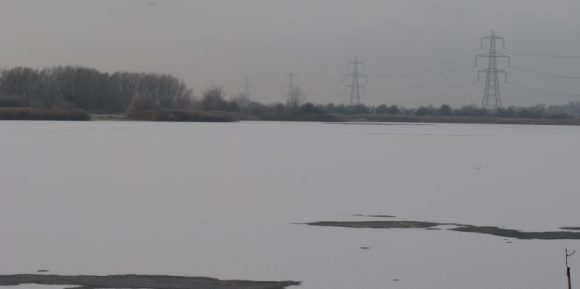
We had the Langley’s Lane hide to ourselves, hardly surprising because the lake was, indeed, almost completely frozen with patches of open water – and all the ducks – only in the distance. After twenty minutes drinking coffee and sharing biscuits, some of the murk had cleared, the sun appeared and we moved on, but not before we had ‘ticked’ a heron, some mallards, and several fieldfares and redwings poking in the mud by the edge; someone saw a fox cross one of the bays on the far side of the lake.
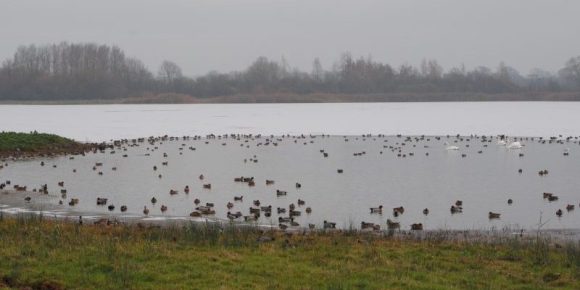
The North Shore hide was much more productive because it looked out over the remaining open water. We had excellent views of the ducks, which were plentiful and close by. They were mainly teal and wigeon (a couple of hundred of each had been counted a few days before) as well as mallards and gadwall. We also got good views of a male goldeneye preening itself and – unusually – spending much more than half its time on the surface.
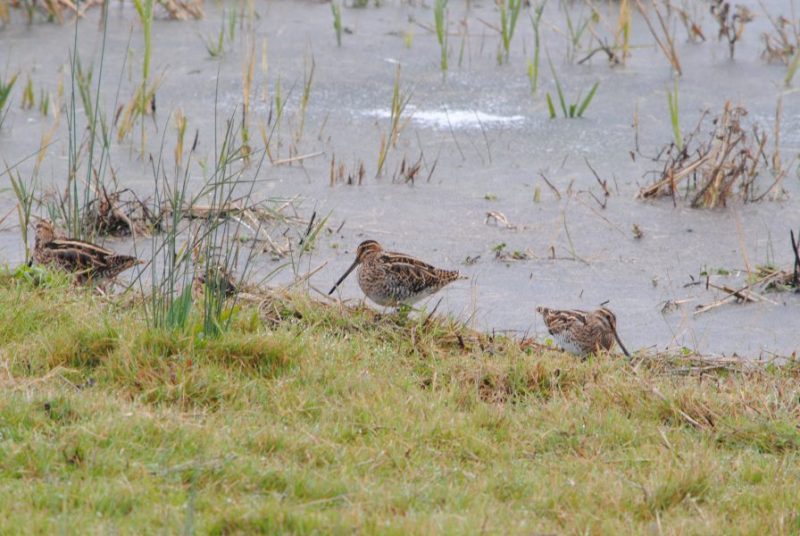
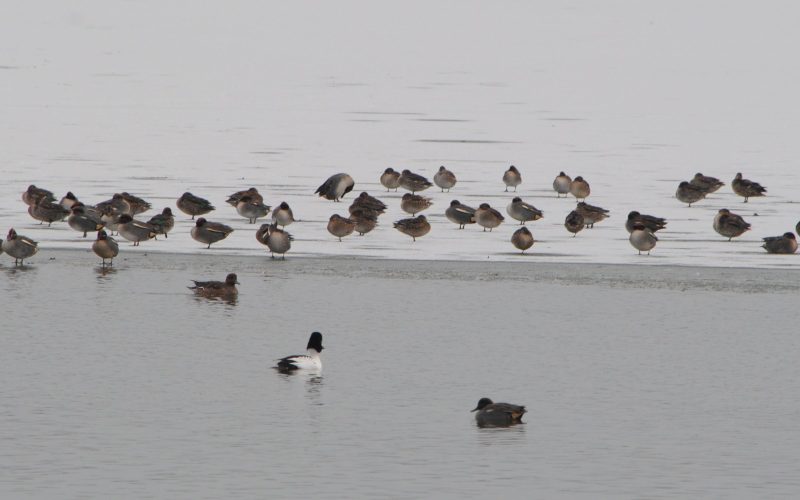


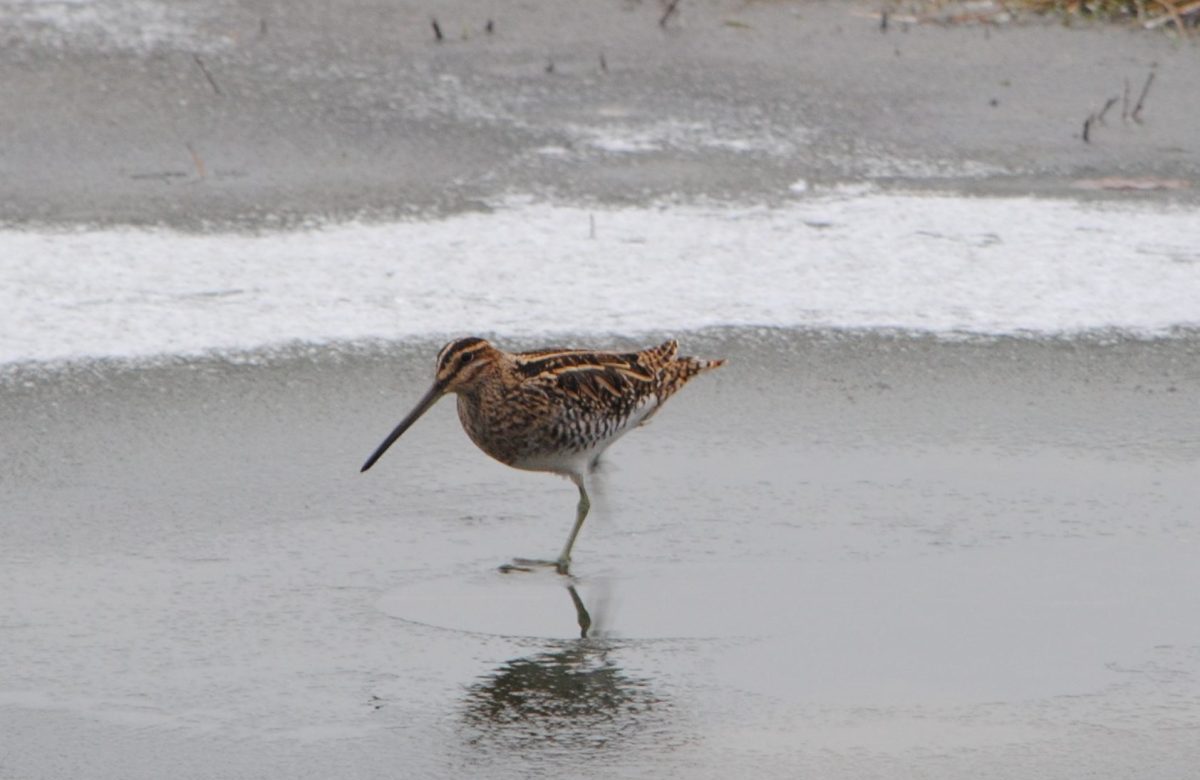
But the real treat was the all the snipe poking around right in front of the hide. They had obviously come there because the mud wasn’t yet frozen hard; they even ventured out onto the ice. We counted eleven but there were probably more, given how superbly they’re camouflaged. A further bonus was a handsome male stonechat, with one or two females, flitting around on the sedges and reeds.
Most people left around 1:30pm but Sue and I stayed for another half-hour or so but nothing else of interest appeared. On the way back we made a detour to the ‘pylon field’ where there were distant flocks of greylag and canada geese. A quick scan with a telescope of the ‘3Ts’ lake (a boating lake, not part of the reserve), also mainly frozen, revealed large numbers of tufted ducks and red-crested pochards, and four more herons.
By this time our ears were begining to resemble the frosted jelly ear that we had found on a rotting log, and we made our way back along Shifford Lane where a small flock of longtailed tits was flitting along the hedges.
Even though it was cold, it was a rewarding visit. We might have seen a few more species of wildfowl and waders had the weather been warmer, but we had very good views of those that were there. Seeing the snipe at close hand was a real highlight and we hope that they managed to find somewhere with soft mud and have survived the last few days’ arctic conditions. Overall the species count came to 36; a full list can be found here.
John Cobb and Sue Morton, 17 December 2022.
 WEST OXFORDSHIRE FIELD CLUB