David Rolfe writes:
During the spring of this year, I carried out a breeding bird survey for the Wychwood Forest Trust at Gibbets Close Farm. The site comprises approximately 50 acres of permanent grassland, that has been left to go wild, and a small farmyard. Main field boundaries comprise untrimmed hedgerows, with many mature oak and ash trees. There are also extensive rows of mainly dead elm trees on higher ground.
The survey was based on the national Common Bird Census (CBC) and involved making ten visits earlyish in the day between mid-March and Mid-June. CBC standard rules were applied. Briefly, observations of wild birds’ typical breeding behaviour were recorded, plotted on maps for each species and then clusters of records converted into territories.
The weather during the first couple of months was mainly dry, but winds were mainly from the north-east, with cold nights and frosts, delaying the arrival here of wild birds migrating through Iberia from Africa, possibly in lower numbers than usual.
Seventeen different species were found to have bred there, with a further eight species possibly having done so. Wrens had the largest number of territories, 11; followed by blue tit and blackcap, each with 5, and song thrush with 3. Each of great-spotted woodpecker, lesser whitethroat and yellowhammer had one territory.
During one visit, two families of great-spotted woodpecker were seen simultaneously feeding in dead elm trees. A little later, a family of green woodpeckers was seen doing the same.
Prior to carrying out the survey, I drew up a list of 42 different bird species expected to be seen on the site, and at the end of the last visit I had seen 39 of them. Species on the list not seen were, surprisingly, collared dove and rook, plus hobby. During my last visit, a charm of around forty goldfinches was constantly feeding on large expanses of thistles.
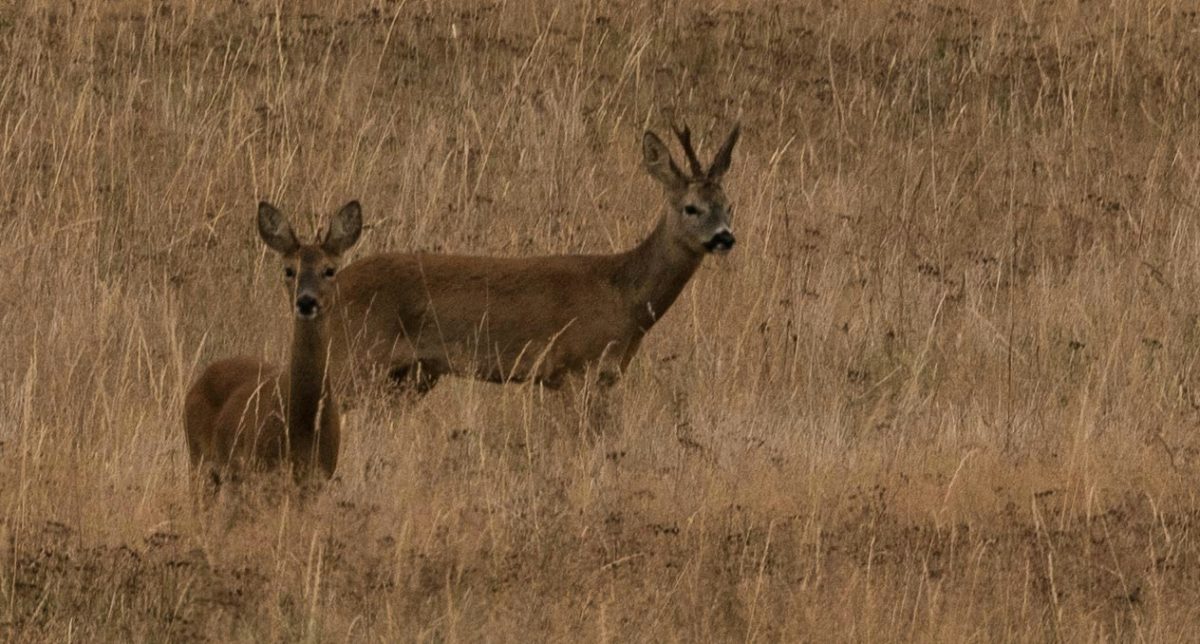
Mammals seen were roe deer, Reeves muntjac deer and rabbit. During a May visit, a doe roe deer barked loudly and dog-like continuously at me for at least ten minutes. She must have had a fawn nearby to protect and followed me at a distance until I approached the farmyard. After that, she must have accepted me because during following visits she just kept an eye on me from a distance.
David Rolfe 10 December 2022
The Club visited Gibbets Close Farm in November 2021 and David Rolfe volunteered to survey the breeding bird population for the Wychwood Forest Trust.
Members are very strongly encouraged to share their interests and observations via these blogs by sending items – a picture or two and some words – to Blog @ thefieldclub.org.uk (omitting the spaces around the @ symbol).
 WEST OXFORDSHIRE FIELD CLUB