Sue Morton writes: How about a trip to the seaside? My old colleague Emma Woolfenden now lives in Cornwall and volunteers with the the Cornwall Seal Research Group Trust. It was through her that we were able to arrange Sue Sayer’s zoom talk to the Club on seals during lockdown. Emma likes to visit the local beaches, and sends us this fascinating blog about some of the creatures she has met on her walks. It’s nice to learn about things we don’t normally see in land-locked West Oxfordshire!
Emma writes: Living where we do we are very fortunate to be able to visit local beaches daily to walk our dog. We have two beaches within a 10 minute drive from our house: Rock Beach (situated opposite Padstow) and Hayle Bay (situated below Polzeath), both on the North Cornish coast. The following shows a selection of the creatures we have encountered since moving down here.
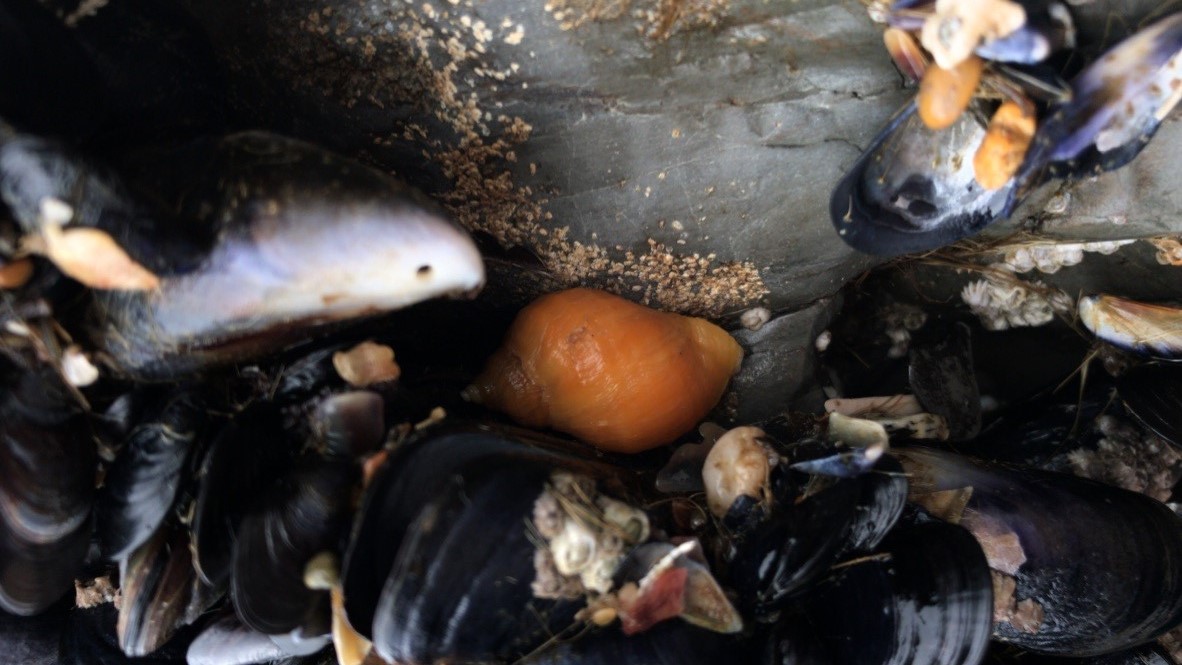
Dog Whelks come in some amazing colours. The main picture (at the top of this page) shows one surrounded by mussels and acorn barnacles. Dog whelk eggs attach themselves to rocks. The ones below are within a rock fissure, which was fully immersed at high tide but left open to the elements for many hours during low tide.
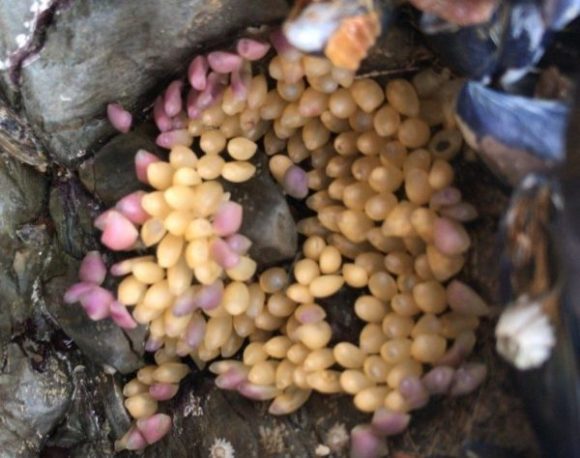
Dog whelks are quite voracious predators. They climb onto other marine creatures, in particular mussels and limpets, drill a hole through their prey’s shell, inject an enzyme which causes their prey to turn to liquid and then suck out the soup-like contents. It can take days to eat one mussel or limpet.
If you find an empty mussel or limpet shell on the beach, look for the tell-tale sign of a tiny hole and you will know that it has been had by a dog whelk.
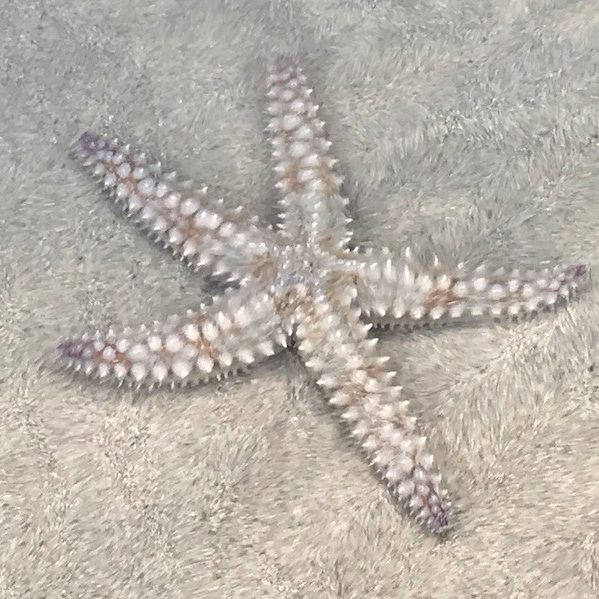
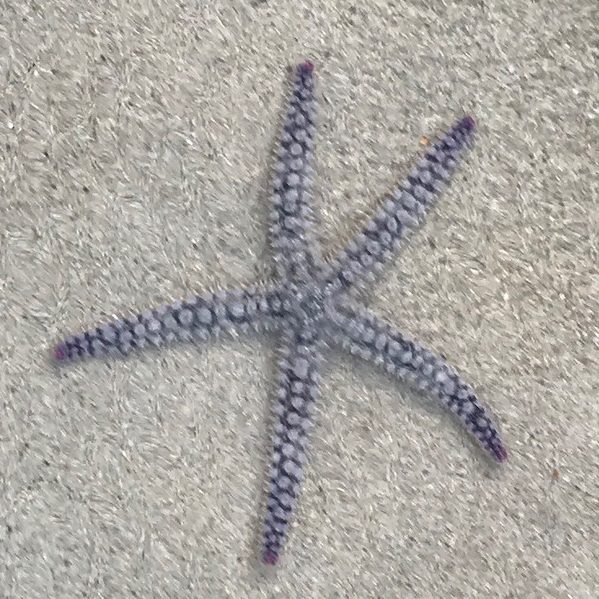
I have a particular liking for starfish and these were the first two I found on the beach one morning, both in the same sand pool left by the outgoing tide. They are both spiny starfish although were completely different in colour and size. They are incredibly quick movers when the mood takes them.
Starfish have an amazing way to eat their prey. They also eat mussels and limpets by enclosing them with their arms and drawing them underneath. They then eject their stomach through their mouth and engulf their prey before sucking it all back in.
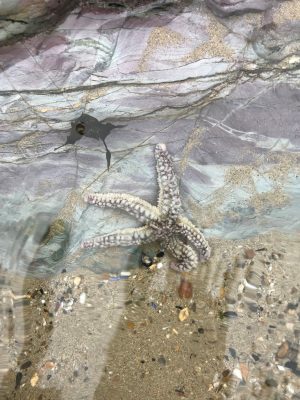
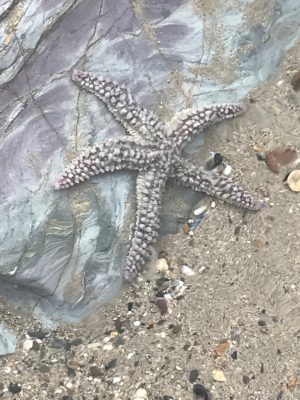
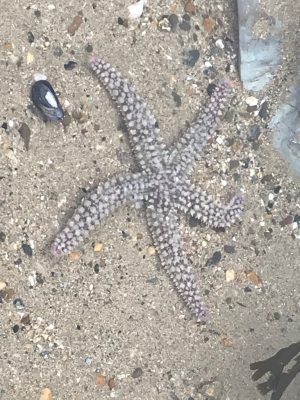
This particular starfish had become petrified on the rocks having been left out of water by the receding tide. I can’t abide seeing any creature suffer so decided I would try to get it back to water. I was amazed at how strongly it adhered itself to the rock with its suckers but I gradually managed to ease it away and placed it on a rock just under the water in a nearby rockpool. I wasn’t sure if I had been in time or whether it was already dead, but I went back to check on it 10 minutes later and was delighted to see it starting to flex its arms and move. Another 10 minutes on and it was crossing the sandy floor of the rock pool at a good speed and I knew it was going to be fine until the tide swept back into that rock pool and took it back out to sea.
I had a similar experience when I went to retrieve a large fishing crate which had been washed up on Rock Beach. I went to attach some rope (also found on the beach) through a hole in the crate in order to drag it because it was heavy, and then discovered a beautiful spiny starfish petrified in the corner of the crate. I eased it away from the plastic and walked it some way down the beach to a sand pool where I settled it on the bottom. Again, it only took a few minutes for it to start moving. I then continued my walk and collected the crate on the way back up to deposit it with the rest of the rubbish I had collected by the bins. Every beach walk I do involves collecting rubbish, mainly fishing detritus. A very sad but true fact of our beaches today.
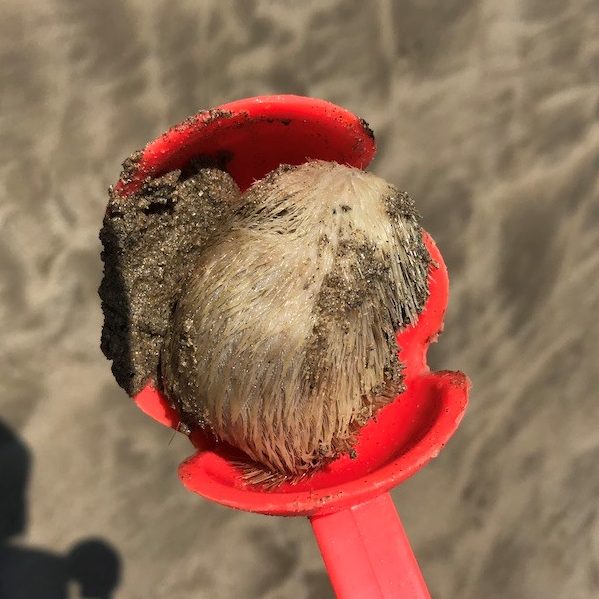
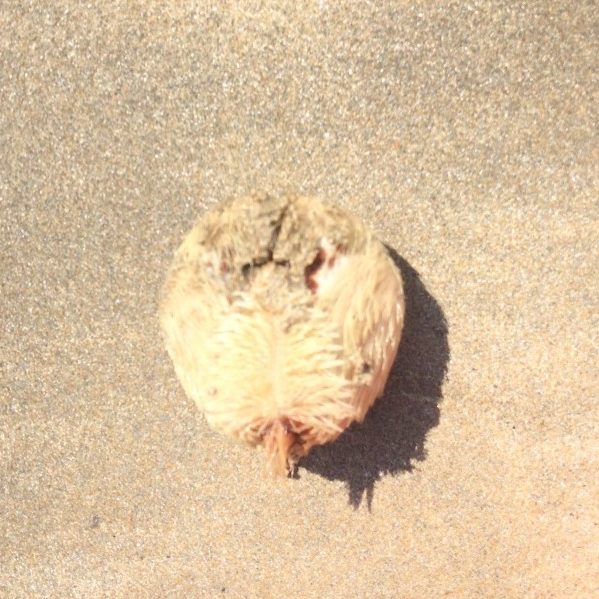
This was one of the strangest looking creatures I had come across on the beach to date. It looked rather like an albino hedgehog all curled up in a ball but, on further investigation, it turned out to be a Sea Potato! Having never heard of a sea potato before I was fascinated by this amazing creature. Sadly, the majority of times I come across them now they are what remains of a very delicate shell so I feel privileged to have found a live one the first time and was able to return it to the sea. They are part of the Urchin family and live in sand burrows. Their other name is Common Heart Urchin. They are harmless and really rather cute. They feed on dead animals and plants using tube feet .
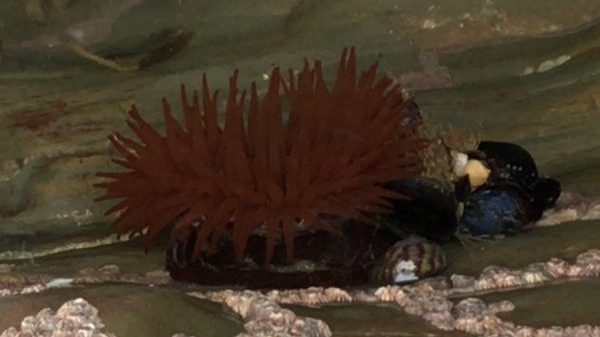
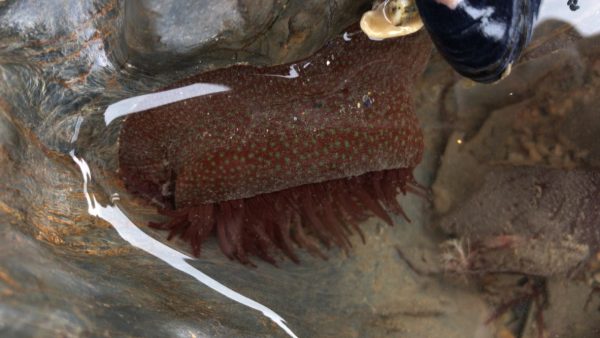
There are a number of sea anemones found in rock pools around our coastline but here are two of my favourites: the Strawberry Anemone (right) and the Beadlet Anemone (left). Now these do have a mild sting and are best avoided but they are great to watch, particularly once under water, as their tentacles come out to catch passing prey such as crabs, shrimps and small fish.
Beadlet Anemones get their name from the ring of blue spots around the top of their stalks resembling a bead necklace.
Strawberry Anemones are slightly more obvious in how they get their name. They simply look like a funny shaped strawberry with their speckled surface.
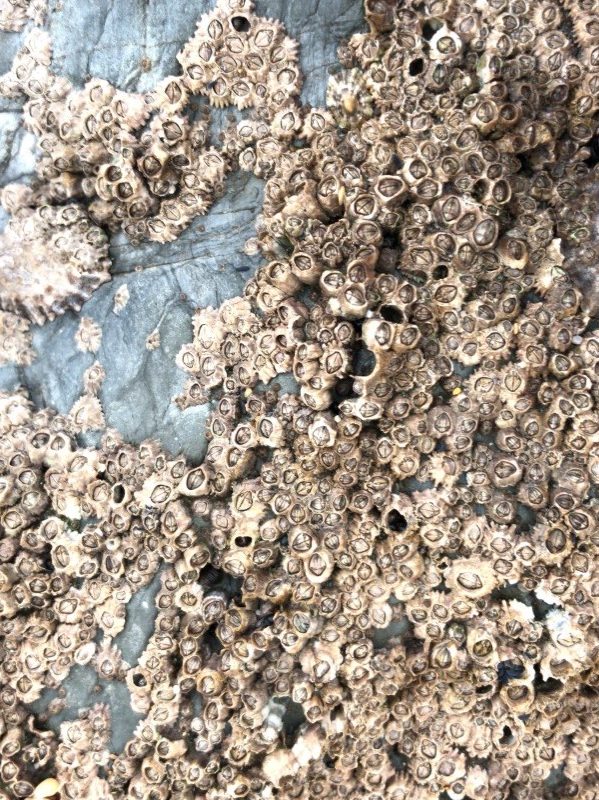
Acorn Barnacles (left) are a very common sight on our rocky shores and are actually tiny crustaceans, so are related to crabs. They will adhere to almost anything on the shoreline, including other creatures! They are positioned upside down with their legs at the top so when the tide comes in they can open the plates at the top of their shell, extend their legs and catch their prey, mainly plankton, as it floats past.
A fascinating fact is that they are hermaphrodites but individual barnacles function as either male or female and the males have an enormous male member in relation to their overall size! Once they have mated the member falls off and they don’t grow another one until the following November!
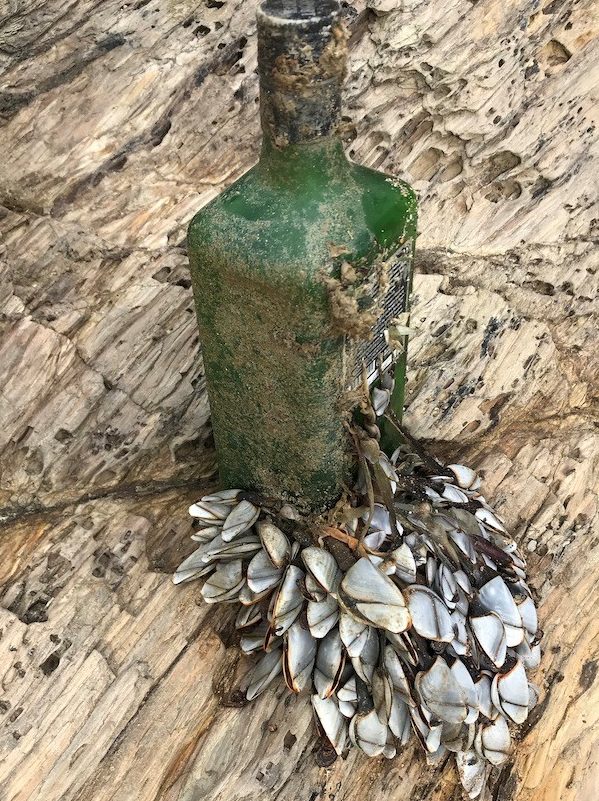
Goose Barnacles (right), sometimes known as Gooseneck Barnacles, will attach themselves to just about anything, including this old bottle (I’ve even found them on a washed up flip flop!). They are amazing to watch under water but often when I find them they have been washed up for too long and have sadly died. They attach themselves using a long stem known as a peduncle. The main body of the barnacle is in the shell and when in water, they too extend their legs to catch prey.
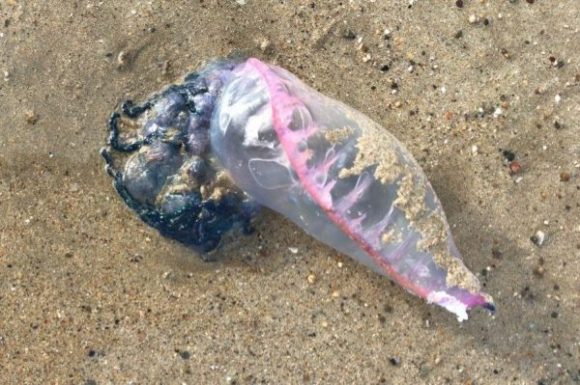
This Portuguese Man O’ War is a very interesting creature, or should I say creatures! It is a hydrozoan so is made up of many organisms. It has a very nasty and painful sting, which can kill fish and certainly deliver a very painful reaction in a human so they are best avoided. Apparently, their tentacles can still sting even once dead. I have seen live ones whilst out on a survey boat but this particular one was washed up dead on a local beach. We tend to have years when lots appear in our local waters and then other years when few or none are sighted. This dead specimen shows the pink coloured sail, which looks like a sausage shaped balloon but only a small amount of the purply blue tentacles, which are very long when it’s alive and swimming.
The first one we came across washed up on the beach had been picked up by another member of public who was asking if we knew what it was. At the time we didn’t and fortunately for her, she only had the sail part and not the tentacles so she didn’t get stung. Once we had googled it she was very happy to return it to the sand!
Emma Woolfenden, January 2023
 WEST OXFORDSHIRE FIELD CLUB