It was noticeably an all-female group of eleven who visited the Oxford University Herbaria on the 17th of February, where we enjoyed a fascinating afternoon led by Professor Stephen Harris from the Department of Plant Sciences.
The Collection contains more than one million specimens collected since the seventeenth century to the present day. It is used to determine species and provides a fundamental tool for investigating and recording plant diversity and evolution. The importance of plants’ commercial potential was highlighted too, an example of which are the four grasses which provide 60% of our daily calorific intake, i.e. Rice, Wheat, Maize and Sugar.
Pressing of specimens hasn’t really changed since the mid-1500s. Initially, boards and weights were used, and it was only at the start of the nineteenth century that wooden presses were introduced. The varieties of pesticide chemicals used in preservation have changed however. Mercury, arsenic, mustard bromide, even nicotine bombs were used. Even now the Collection space has extractor fans to remove mercury levels.
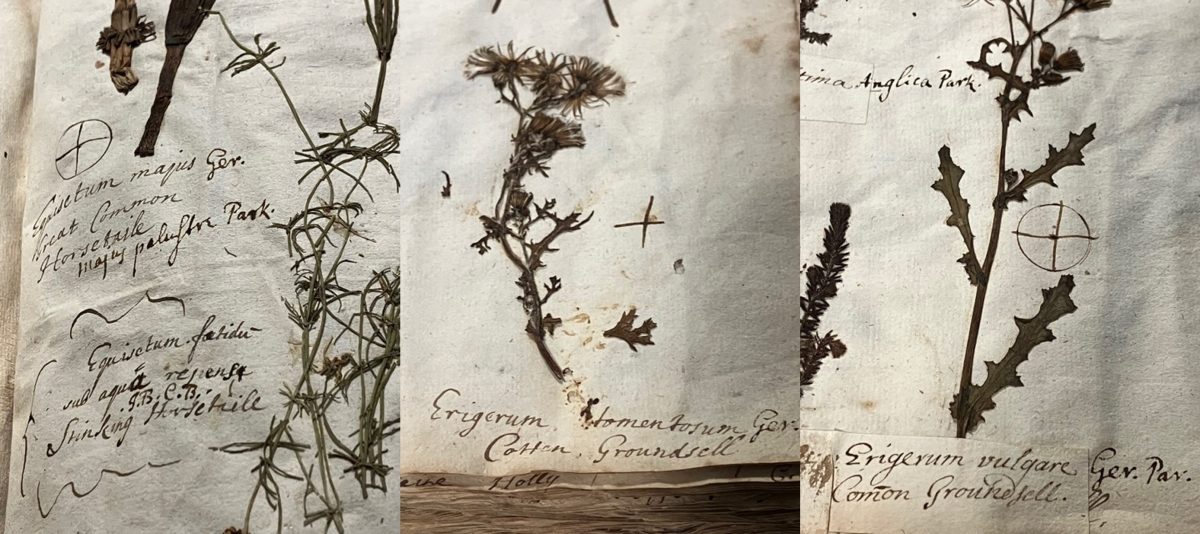
During the second part of our tour we were shown the amazingly beautiful 1660 Flora of Oxfordshire by Jacob Bobart, the original herbaria, containing 500 specimens.
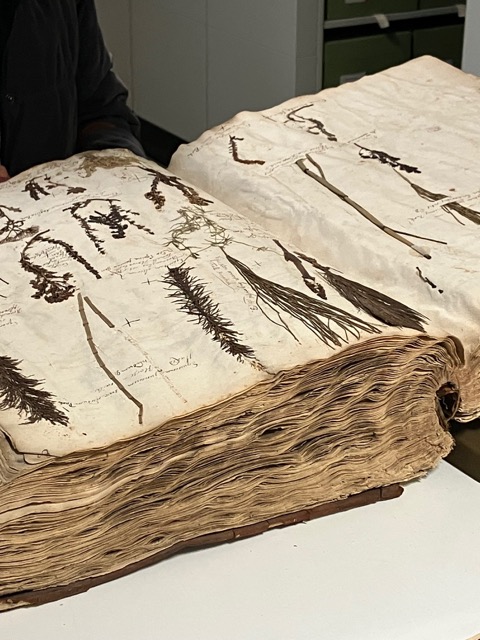
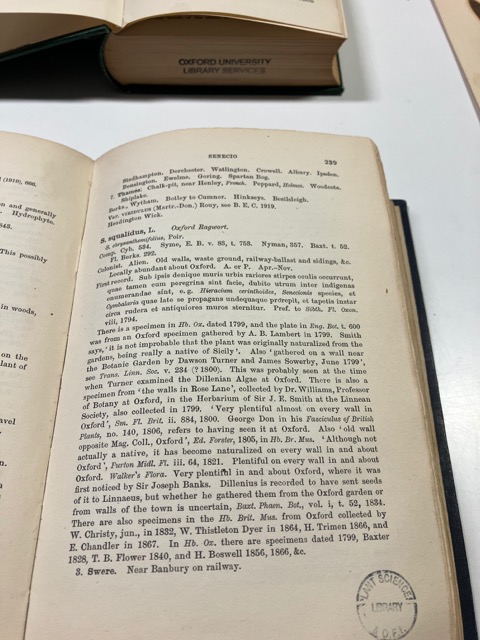
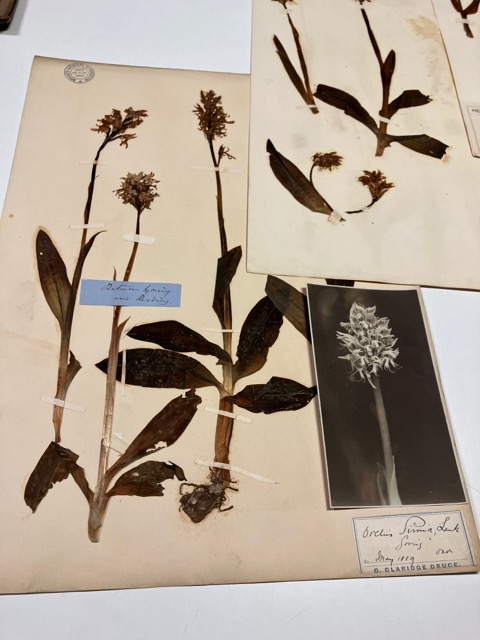
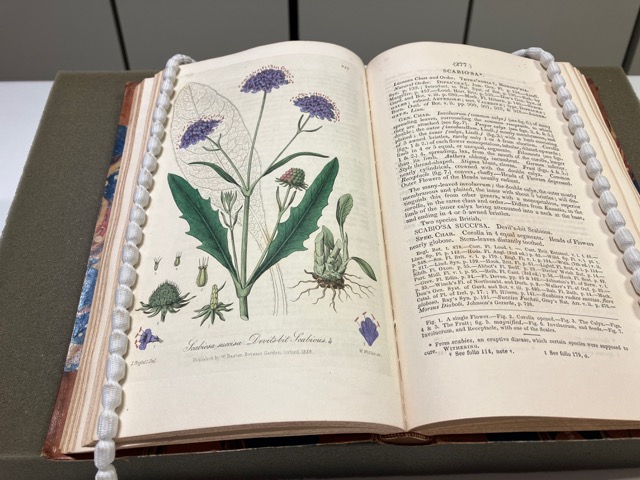
Professor Harris went on to show us subsequent volumes, which cover Oxfordshire flora until the present day, adding fascinating anecdotes and histories of these wonderful books and their collectors.
We learned the history behind the Oxford Ragwort, the origins of which came from different areas on Mount Etna and were introduced to Oxford in 1674. DNA has revealed that the Oxford Ragwort hybridised from these two original species. It remained in the Oxford Botanical Gardens until around 1794 then, after the railway expansions of 1840s, it spread to a few other specific areas of the UK.
This was a truly educational visit and much appreciated. We each came away with a fabulously illustrated booklet about the Herbaria.
Julia Reid 22 February 2023
 WEST OXFORDSHIRE FIELD CLUB