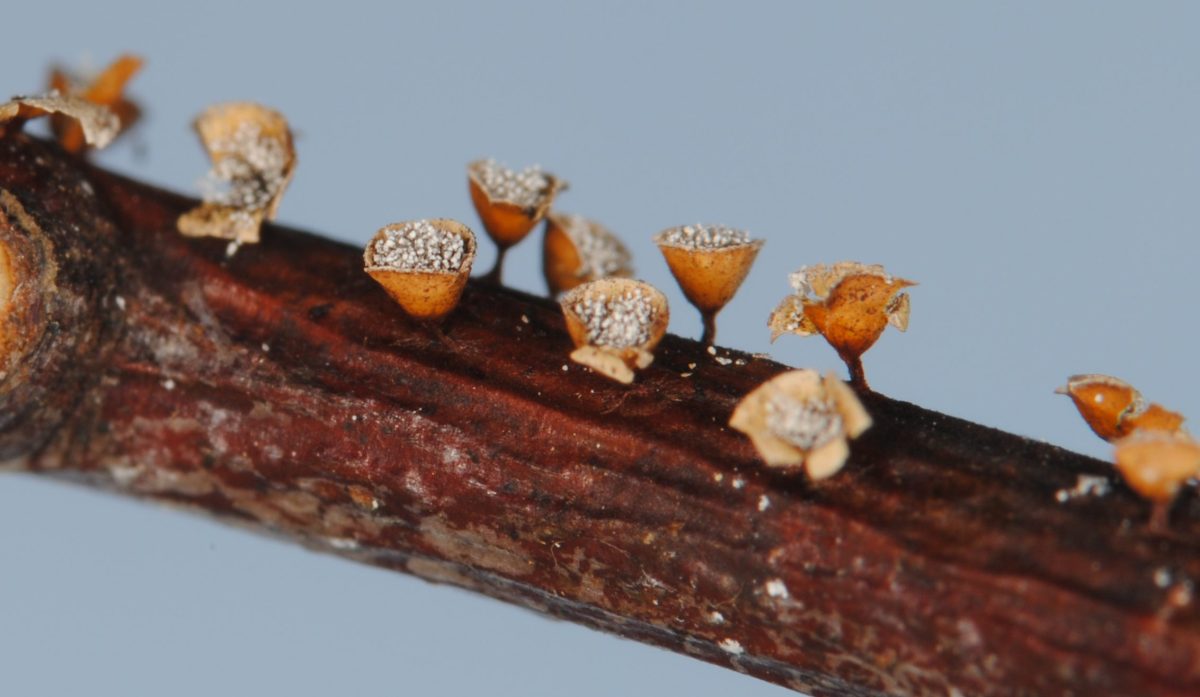
John C. writes: Don’t be put off by the name! Slime moulds, or Myxomycetes to give them their posh scientific name, are perhaps some of the natural world’s most weird and wonderful organisms. They are everywhere but usually overlooked. They are not animals, nor plants, nor fungi. They move and display some sort of intelligence; their small fruiting bodies can strangely beautiful. Over the past year I have become fascinated (some would say obsessed) by them. It’s a real pity that they are cursed with such a terrible name because they really are worth a close look – it’s a new world.
Because slimes are rather unfamiliar, some background might be helpful. Their life starts with a spore which germinates into an amoeba. The amoebae swim around and eventually get together to form what is called a plasmodium which is an enormous single cell that moves around and feeds by hoovering up micro-organisms such as bacteria. The plasmodium is a slimy blob (hence the name) that can move (at a few millimetres an hour) hunting for food; it remembers where it has been. Plasmodia can be brightly coloured and get quite large – reputedly up to a few metres across; science fiction films such as The Blob were inspired by them. At some point – and no-one seems to know why – the plasmodium decides that it has had enough and produces its fruiting bodies. These can take various forms but are mainly what are known as sporangia, a bit like mushrooms, generally with a stalk and a spore-bearing head called the sporotheca. The sporangia range in size from less than half a millimetre up to about fifteen millimetres tall; they can take many shapes and colours.
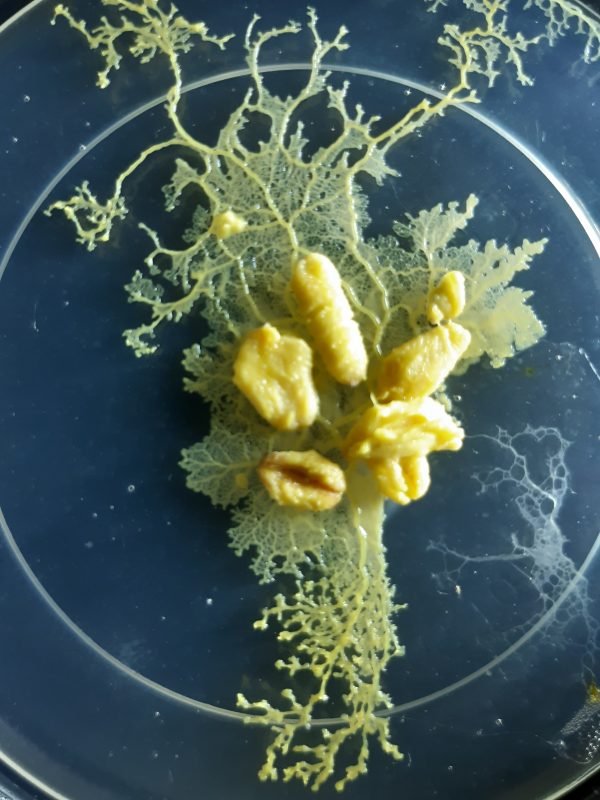
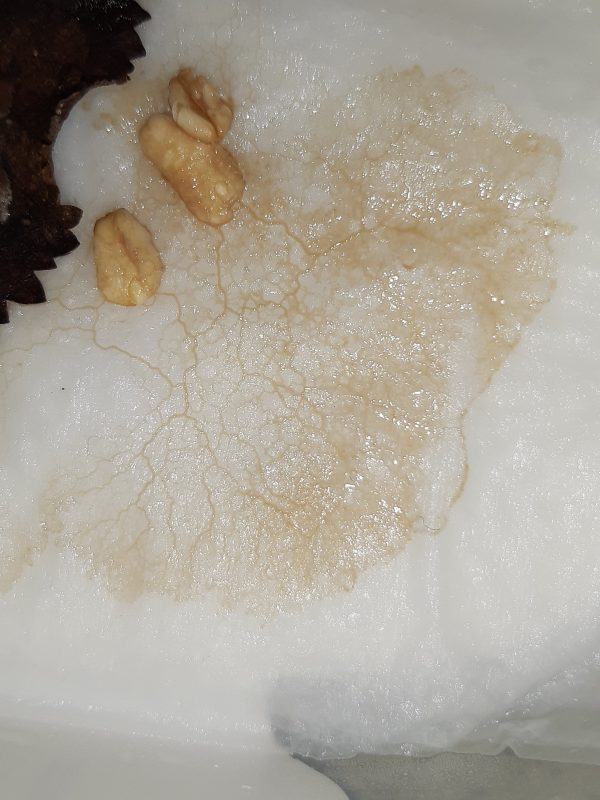
Around last Christmas, I cultivated two species of slime at home. The first (an unusual birthday present!) was Physarum polycephalum, the species commonly studied in laboratories because of its ability to do tricks such as find the shortest route through a maze.
The second slime, which I christened Garden Slime 1, emerged from some damp leaves and rotting twigs that I put in a plastic pot with some damp compost. (It’s a standard technique used by professionals who call it ‘humid chamber’ culture.) It was probably beginner’s luck, but after two or three weeks I noticed some slimy stuff on a leaf which I tempted on to damp kitchen paper with the help of some oat flakes (slimes like oats!).
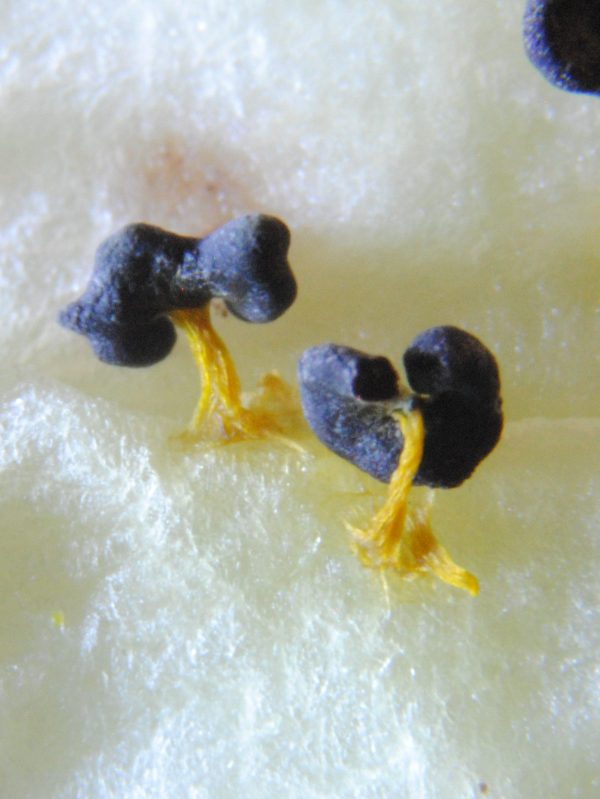

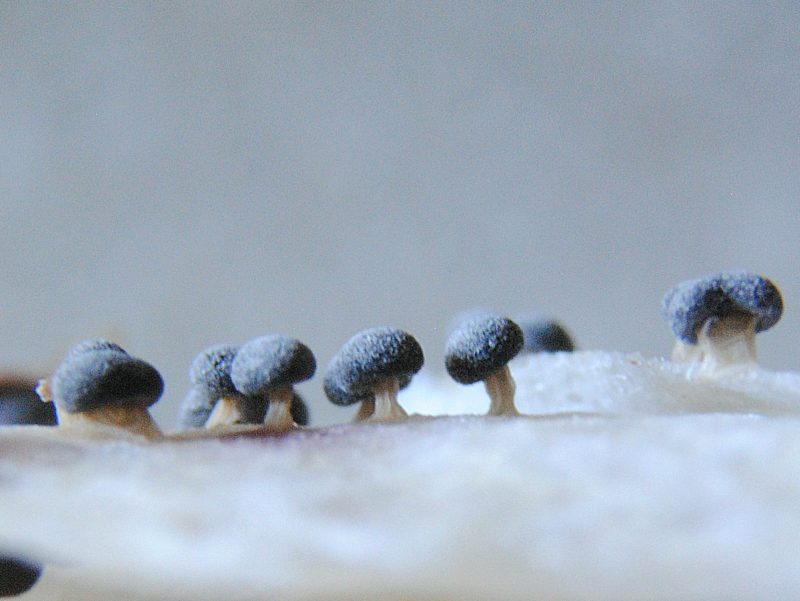
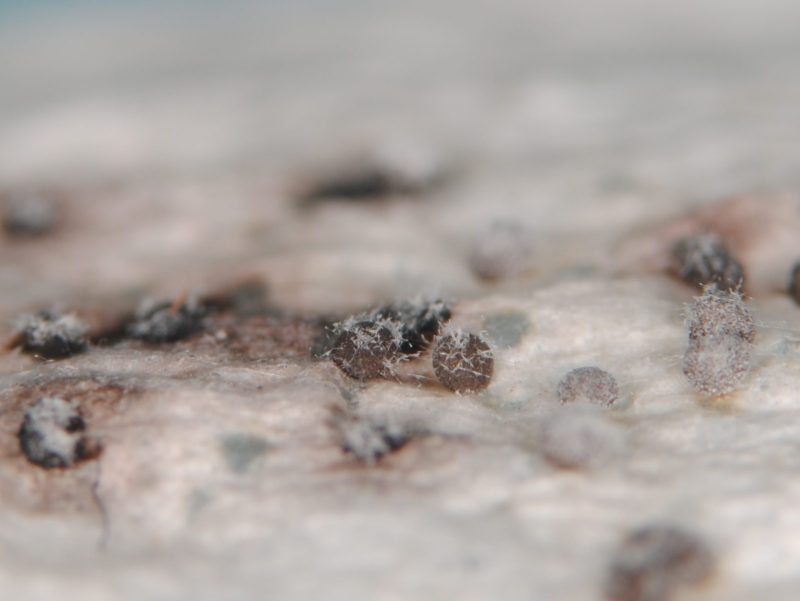
Both slimes yomped around eating oat flakes, sometimes trying to escape from their containers; eventually they both decided it was time to sporulate and produced tiny – about the size of a poppy seed – sporangia. A quick look through a hand lens was enough to convince me to try to take some pictures for a closer look.
The photos were tricky (the professionals do much much better) but absolutely fascinating to see them in close up. I took two sets of pictures, about six week apart. The sporangia were initially fresh and contained the spores. After a few weeks the spores had dispersed and what was left were just the structures which held the spores. Note especially the hair-like structures on the sporangia of Garden Slime 1 – I assume that they ‘dehisc’ (shed their spores) somewhat explosively and the threads/hairs emerge. (I think they are called capellitia.) All quite extraordinary; I was hooked and determined to know slimes.
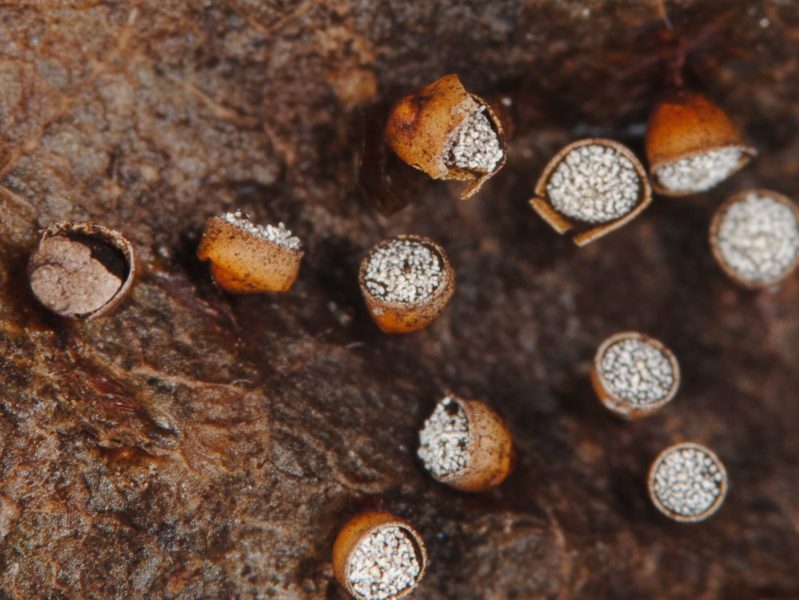
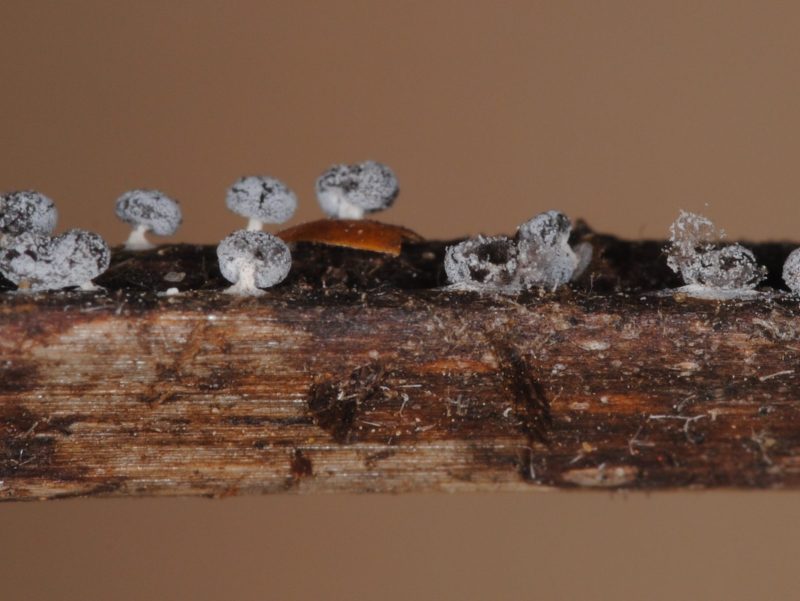

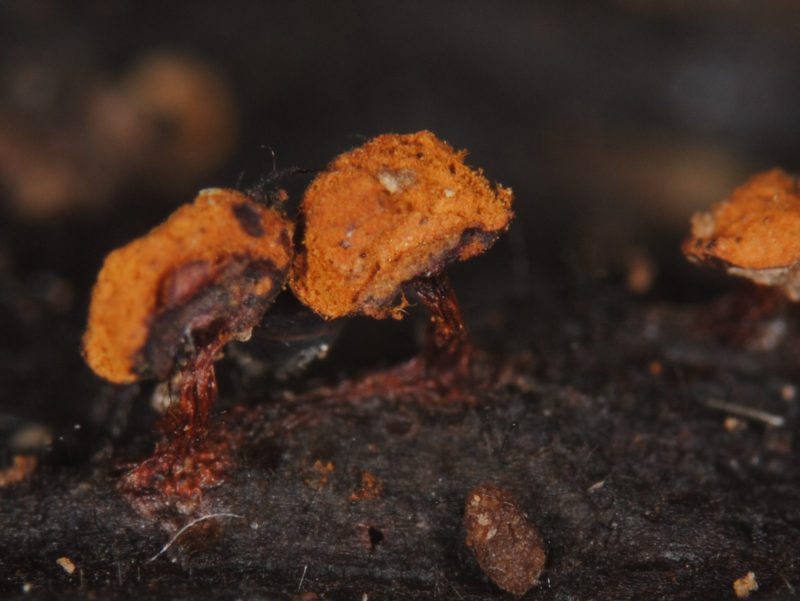
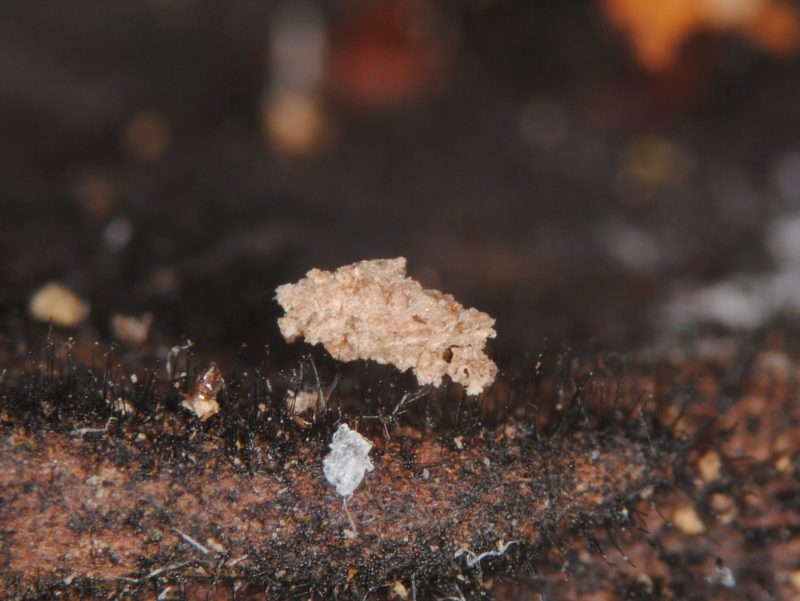
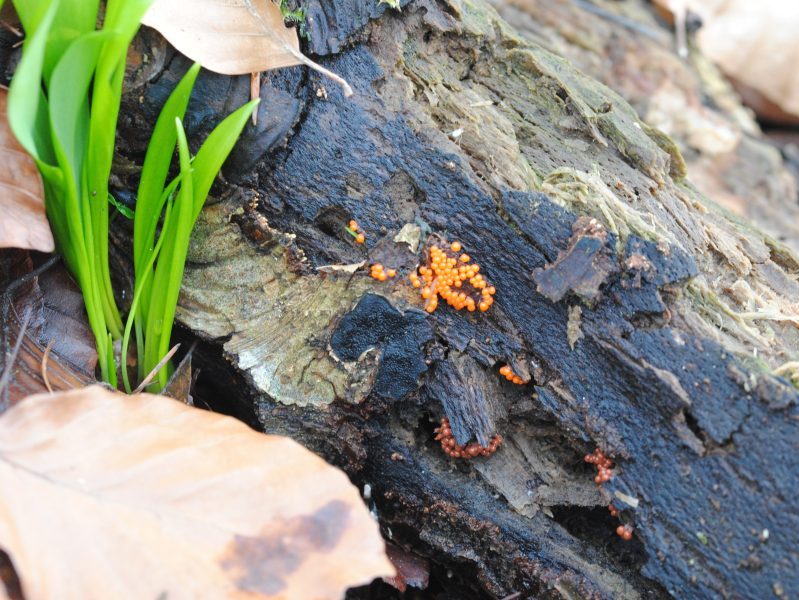
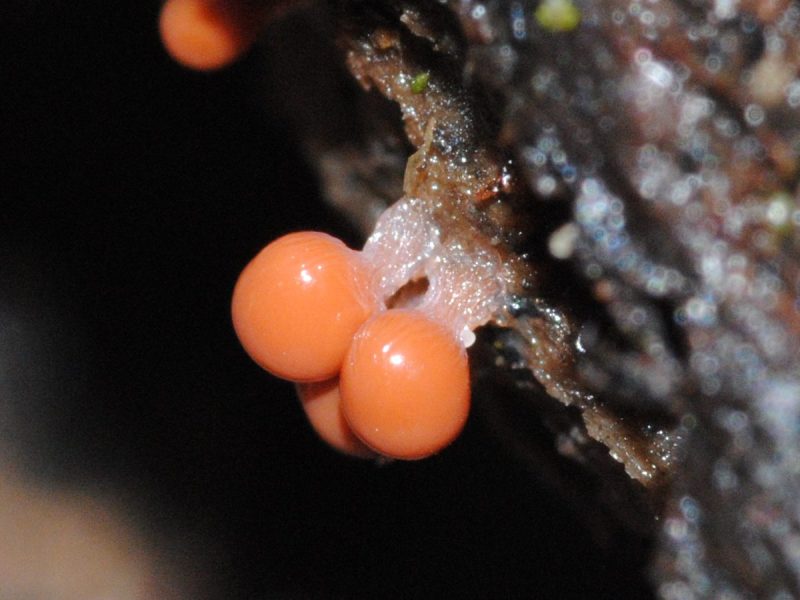
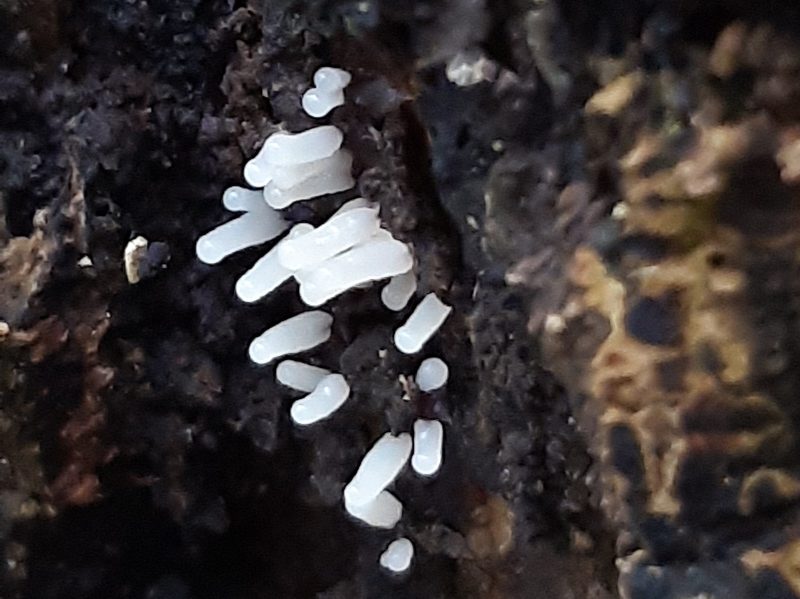
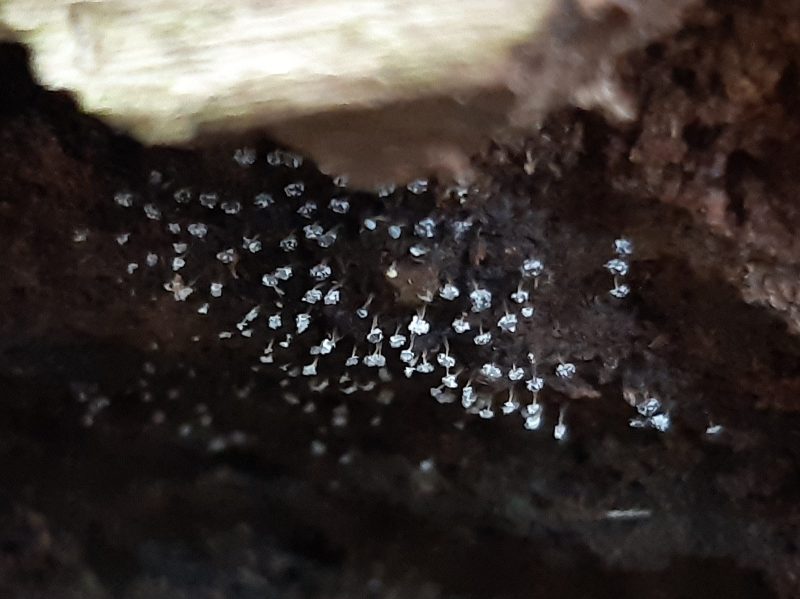
Since the start of this year I have kept my eye open for slimes – in particular the sporangia – and, without trying too hard, have had more luck than I was expecting as a beginner. Sue and I have found them at Rushy Common, Seacourt Park and Ride in Oxford, my garden, Hailey Road, in woods near Cherington in Warwickshire and, most recently, Whitehill Woods. The photos in the gallery are of the more interesting / strange / spectacular ones that I’ve found, with my best guesses at identification where I could.
Slime mould identification is difficult and is almost always based on the sporangia – and it doesn’t help that these change colour as they develop! Some species are pretty obvious but others are tricky and need examination with a microscope (and an expert – which I certainly am not). I haven’t been able to get a book with proper taxonomic descriptions – there are no field guides, and very few books in fact, so most of my identification is based on the fabulous pictures on two websites: here and here, backed up with the few books that I have. Although the second site is for Norwegian slime moulds, their distribution is quite cosmopolitan and many of the same species can be found throughout the world.
And now a confession: in a previous post I identified a slime we found in Whitehill Woods as Dog’s Vomit or Scrambled Egg slime mould. I was wrong. It was almost certainly a species of Stemonitis.
I have not been able to go out to look for slimes in the past week, but one thing is certain – any walks that Sue and I go on from now on will be much slower as I peer under leaf litter and poke around in rotting logs.
John Cobb 24 March 2023
Members are encouraged to send short write ups of their enthusiasms, sightings or items of interest to blog(at)thefieldclub.org.uk.
 WEST OXFORDSHIRE FIELD CLUB