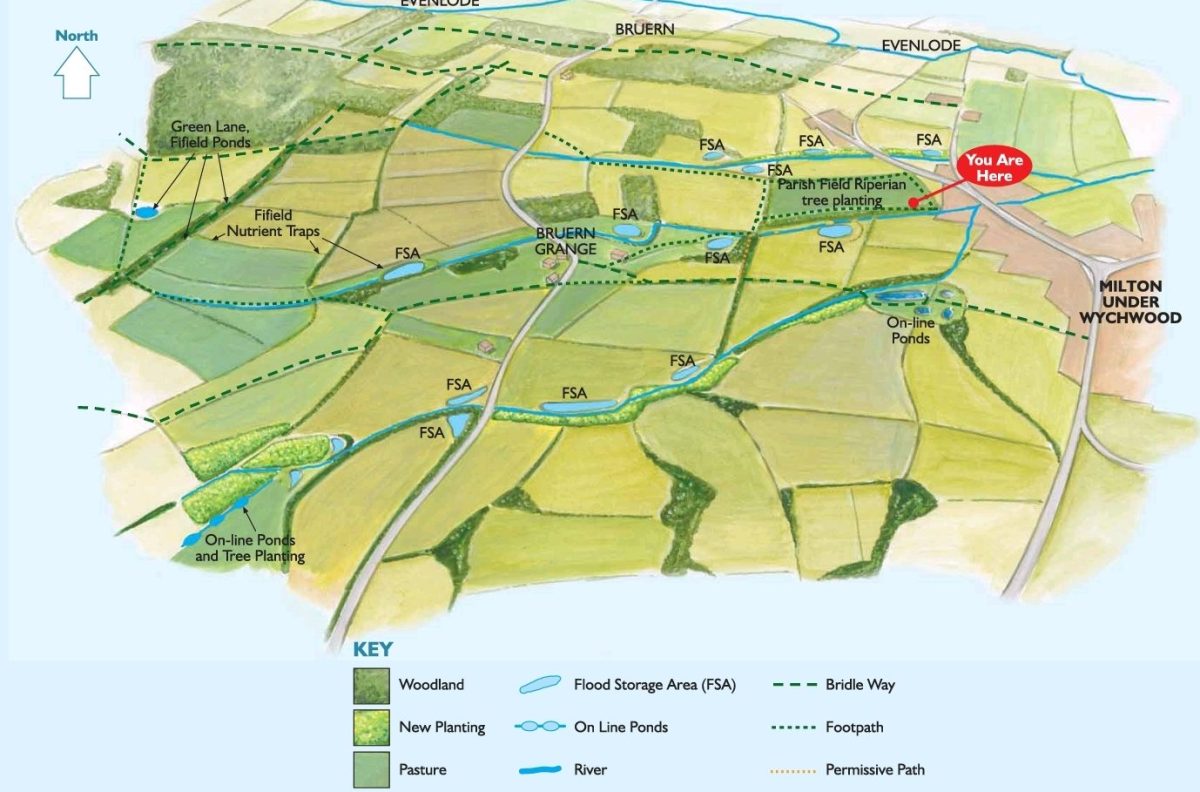
On Saturday 25 March twelve members met at Grange Farm, Bruern to learn about the Littlestock Brook natural flood management project. Ann Berkeley, who is the project manager of the Evenlode Catchment Partnership,
first explained the origins of the project and then gave us a tour of the key sites. Although it was a sunny morning, albeit with a cold wind, it was very muddy underfoot – as you might expect – as we followed Ann across the fields to look at the leaky dams, swales and bunds used for flood management!
The idea for the project was sparked by the severe flooding in Milton Under Wychwood in 2007. The fact that 300-year-old houses had been flooded for the first time in their history raised concerns about why this should be. The main reason was that three brooks, which join by a road-bridge culvert, became overwhelmed in a heavy storm, in part because of obstruction from cobbles brought downstream as well as from clay run-off.
In 2016, funds were raised to manage local flood risk, improve water quality and create new habitats. This project is trialing solutions which slow and store surface water to reduce flood levels in the village. It spreads across 17 fields in the Bruern Estate, four in Fifield and one in Milton. It has been delivered by Wild Oxfordshire and the Environment Agency in conjunction with the Evenlode Catchment Partnership.
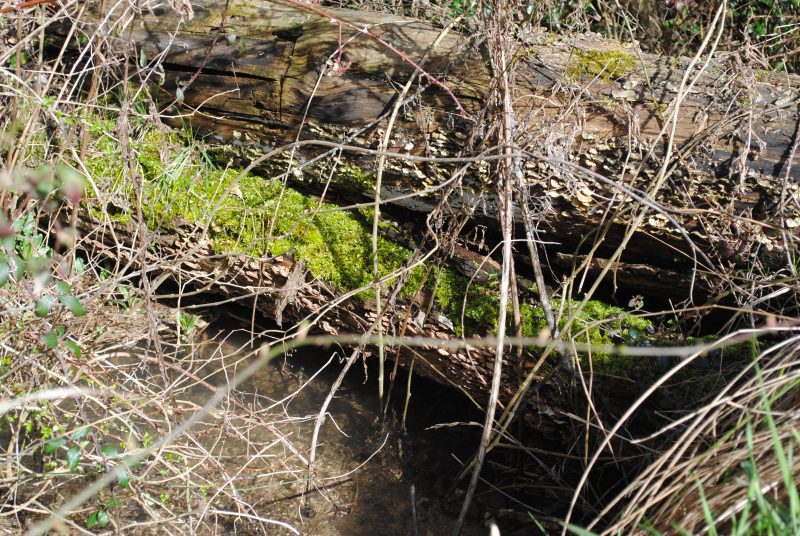
A variety of methods have been employed to reduce water flow. Bunds have been constructed, made of clay based soil formed into an embankment to retain water. In addition, 27 leaky wooden dams have been installed along the brooks to reduce flow, using swales (shallow ditches) to allow the water to run off into surrounding fields. Where feasible, the minor tributaries of the brook have been reconnected to their natural course across fields to form series of ponds which slow the water and capture sediment and nutrients which can then be spread back onto fields. A series of three online ponds illustrated the effectiveness this, with the upper pond clearly containing most sediment while the third was considerably clearer. The set of three ponds we looked at was known as ‘the tears of Bruern’, which are shown nicely in this short piece of drone footage.
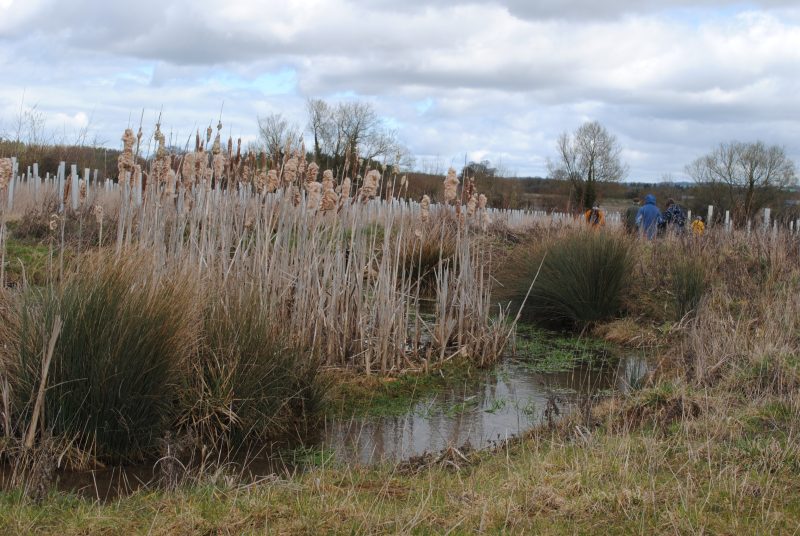
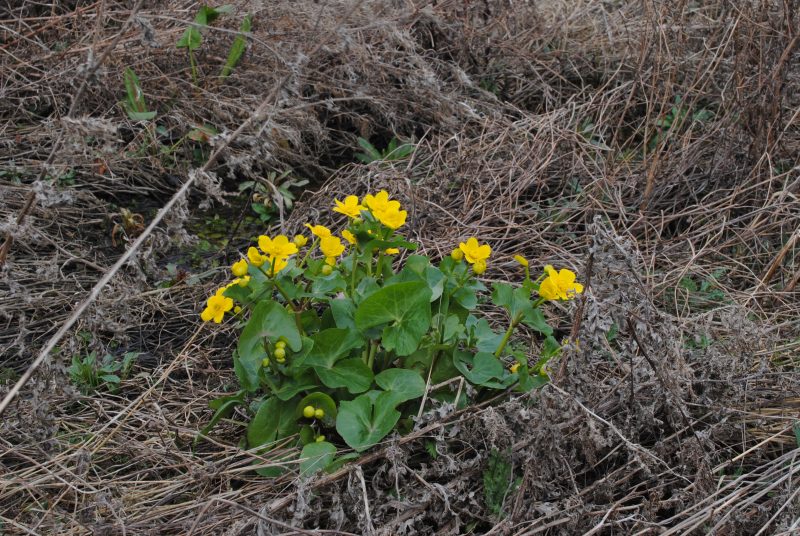
14.4 hectares of woodland has been created, with riparian tree planting of Alder, Rowan, Willow and Poplar in wetter areas. In addition, native wild flowers have been sown and appear to be thriving; some semi-aquatic plants, such as Marsh Marigold have been planted, and reeds have appeared in the wet areas behind the bunds.
An amazing thirty thousand cubic metres of flood water storage has been created – sufficient to cope with a once in thirty years flash flood – and these new natural flood management measures have already successfully reduced severe flooding in Milton, and resulted in a healthy increase in biodiversity.
Although we had come to look at the flood management, we couldn’t help but notice a large flock of yellow hammers and other finches in the the hedges behind the farmyard – great to see.
A huge thank you to Ann Berkeley and the landowner for this fascinating and really enjoyable visit.
Julia Reid 26 March 2023
 WEST OXFORDSHIRE FIELD CLUB