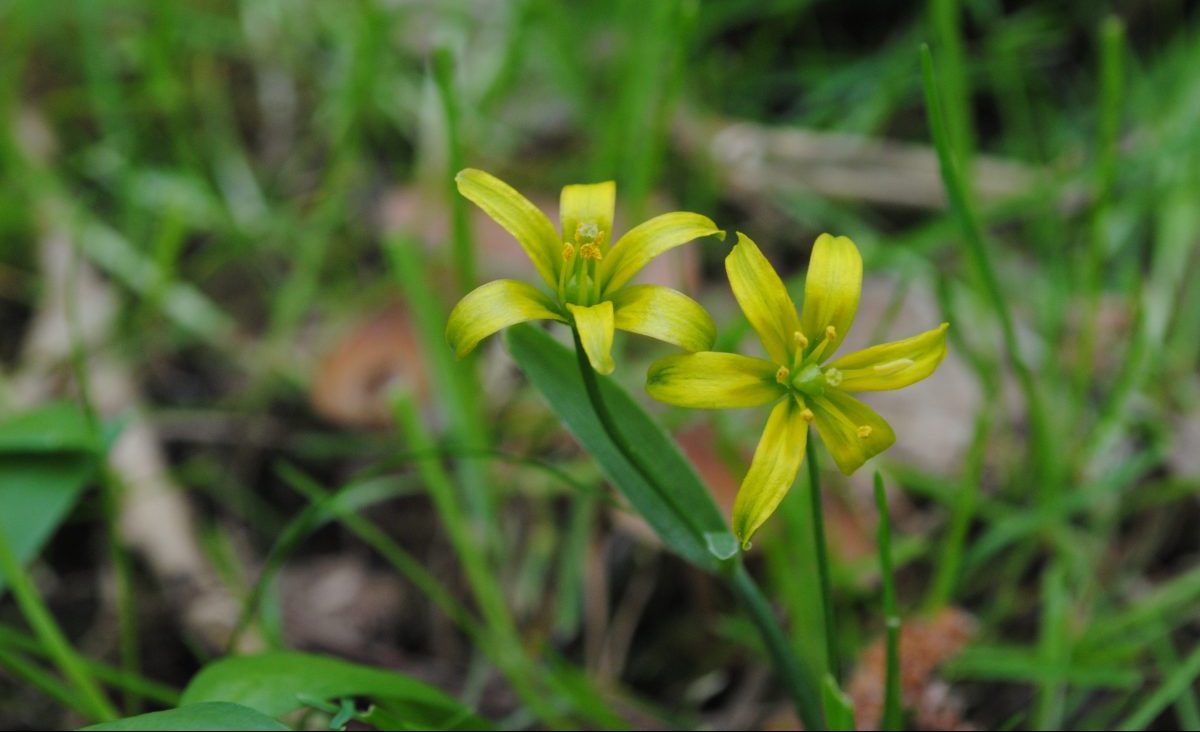
Maggie Collins writes: Several members of the Field Club joined the Wychwood Flora Group on Sunday, 26 March to survey the Yellow Star of Bethlehem, Gagea lutea, at Whitehill Woods, near Stonesfield. Genny Early’s report for the Flora Group follows:
“A wonderful turnout for our first survey of the year! Great to see so many members and new faces. The ground underfoot was squelchy, the sky was grey but not raining, and conditions generally 1-2 weeks behind the same time last year.
It is a good year for Gagea lutea. We found a total of 23 flowering plants, with a total of 74 flowers. Very few had been eaten or damaged. This compares very well with last year: 15 flowering plants with 39 flowers in 2022, and 22 flowering plants with 43 flowers in 2021.
Yellow Star of Bethlehem is uncommon nationally, preferring moist, deciduous woodland, on rich, calcareous soils. It has a scattered distribution in Britain, being most abundant in the Yorkshire Dales and the Lake District. It is one of the many British species that tend to follow watercourses, their seeds, bulbs or vegetative fragments being washed out of eroded riverbanks to establish in suitable locations downstream. It produces a moderate amount of seed which have oil-rich bodies, elaiosomes, to attract ants who drag them underground. It also spreads vegetatively through the small lateral bulbils that form in the axils of the bulb. Thus the species can form wide, dense stands of narrow strap-like leaves. The leaves can be distinguished from bluebell leaves – the leaf blade narrows at the end by in rolling of the leaf margins to form a hooded tip, looking like the keel of a boat.

We found the Townhall clock (Adoxa moschatellina) starting to flower. Also numerous Common Toothwort (Lathraea squamaria) growing adjacent to coppiced hazel, which is one of the tree species it is a parasite on. Wild garlic leaves, dogs mercury, violets, sweet woodruff, a clump of primroses and the buds of wood anemones were also beginning to emerge.” Genny Early
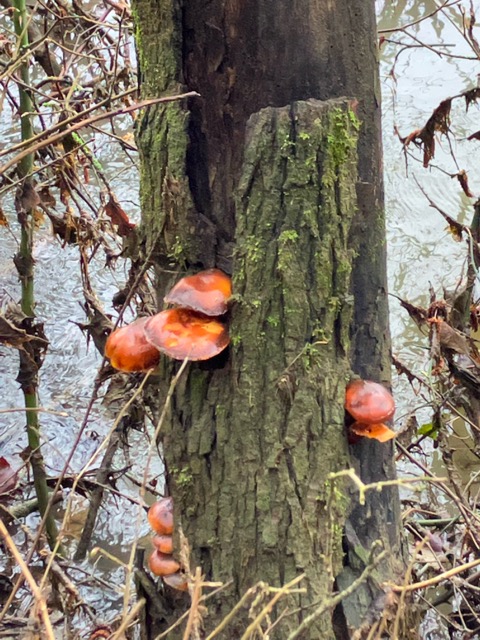
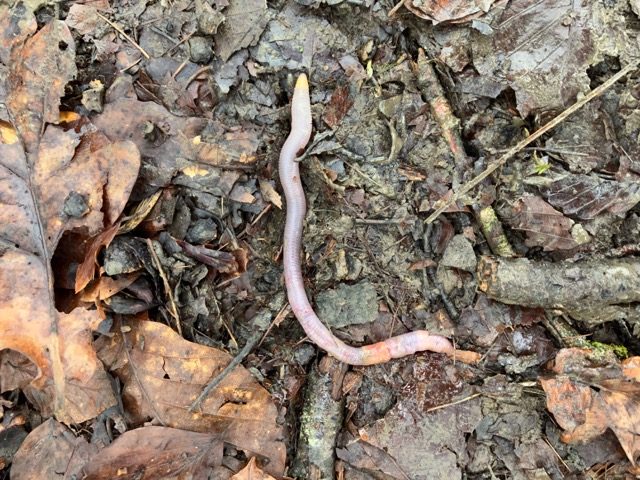
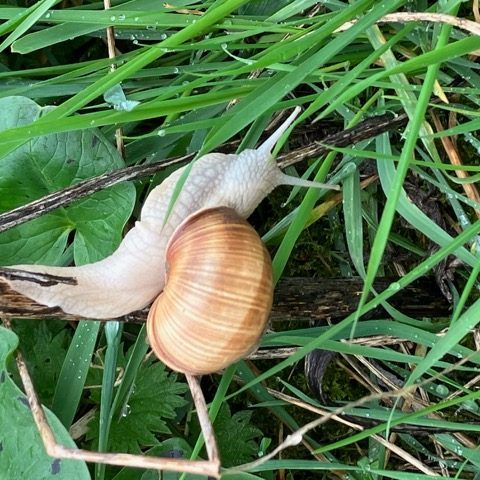
On our way out we found various fungi, earthworms and a little cluster of Roman snails.This is our idea of a good time!
Maggie Collins 26 April 2023
The Flora Group meets regularly to monitor the rare plants in West Oxfordshire and recently also went to check on the Cotswold Pennycress (near Stonesfield) and the wild Muscari neglectum/Grape Hyacinth at Chadlington. Upcoming visits to several sites to check on Meadow Clary/Salvia pratensis will take place in June We’re also involved in doing some general surveys, such as at Gibbets Close in Witney.
 WEST OXFORDSHIRE FIELD CLUB