Field Club walks are usually not very challenging, but this one was different: it was variously described as an obstacle course or even an adventure. Despite the challenges, we found what we had gone to look for and people enjoyed the adventure, or at least seemed to.
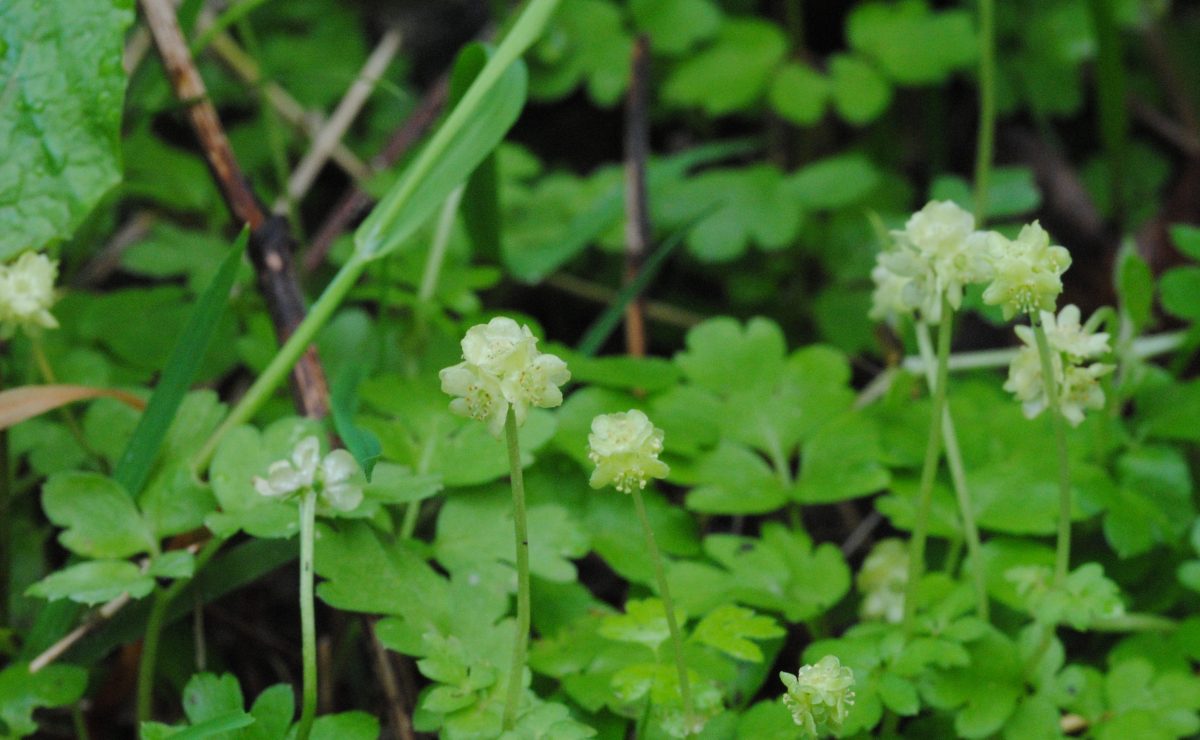
Ten of us met in late afternoon on Sunday 23 April for a three-mile walk at Appleton Lower Common SSSI, a 47 hectare, 400 year-old woodland, mainly oak and ash on clay soil (so rather different from the limestone or chalk we are more used to). The hope was to find Town Hall Clocks aka Moschatel (Adoxa moschatellina) and other spring flowers, and to hear some summer migrants singing.
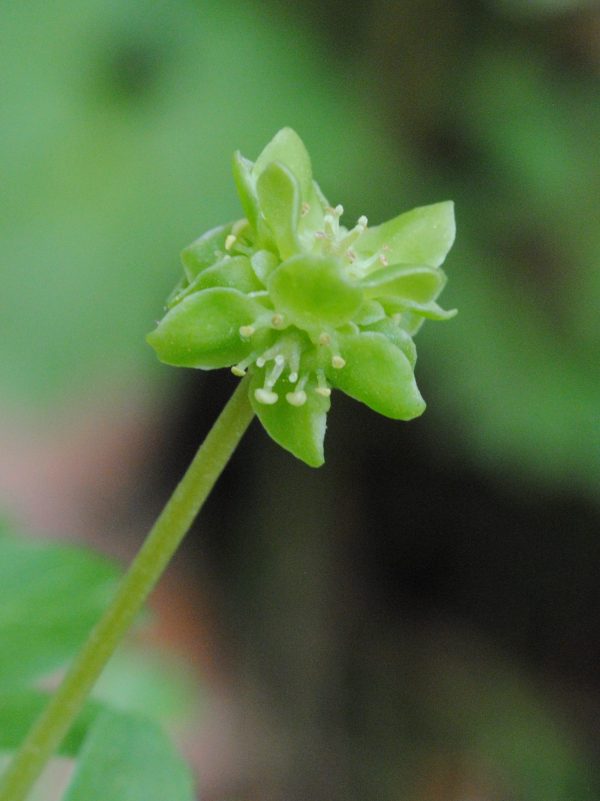
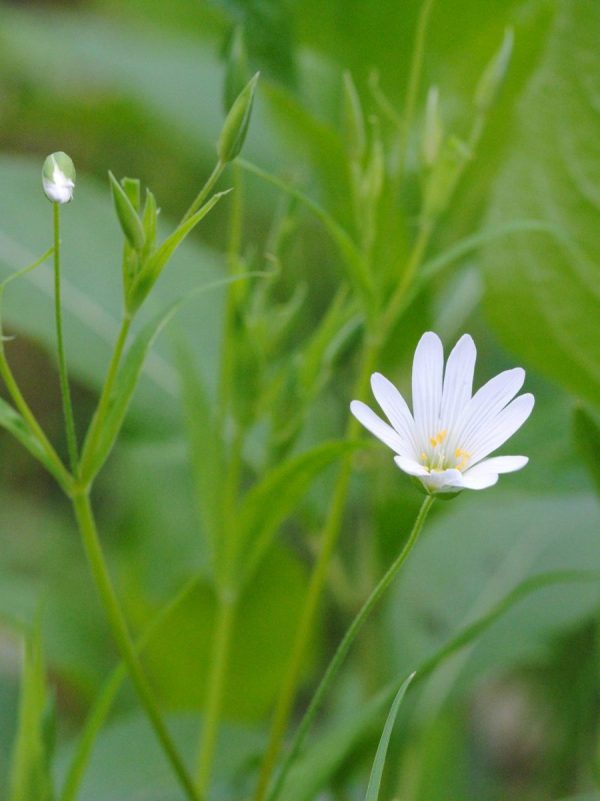
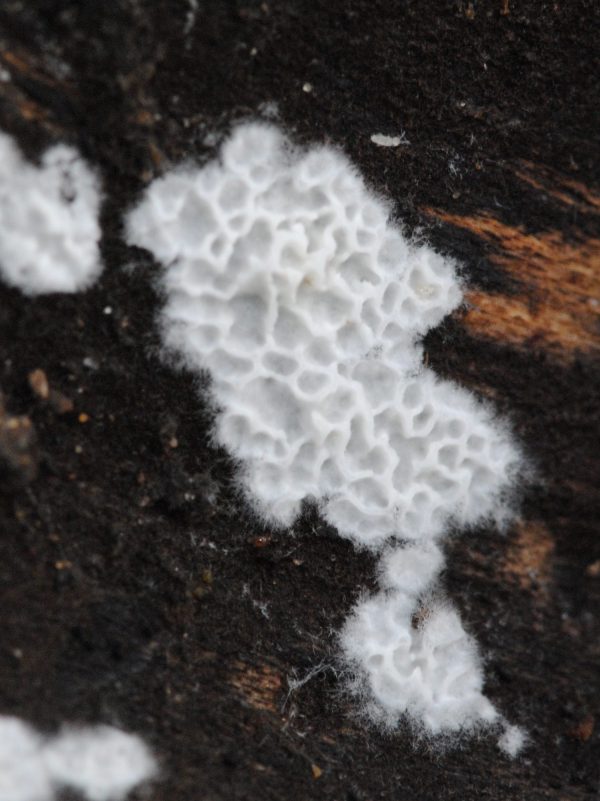
Fortunately everyone who came had heeded the rather panicky email I sent two days before and came equipped with wellies. It was clear to everyone why wellies were necessary as soon as we left the layby where the footpath was four inches of sticky mud. After we’d squelched a few hundred metres along the edge of the wood we came to a clearing where we found a few THCs at the base of the trees as well as violets and stitchwort. Some nearby rotting logs yielded two kinds of slime mould: Wolf’s Milk (Lycogala epidendrum) and the tiny white Ceratiomyxa fruticolosa var. porioides. The Wolf’s Milk had changed from orange-pink to khaki in the couple of days since I did the recce. (I went back three days later to check on it; it hadn’t changed a lot, as the pictures show.)
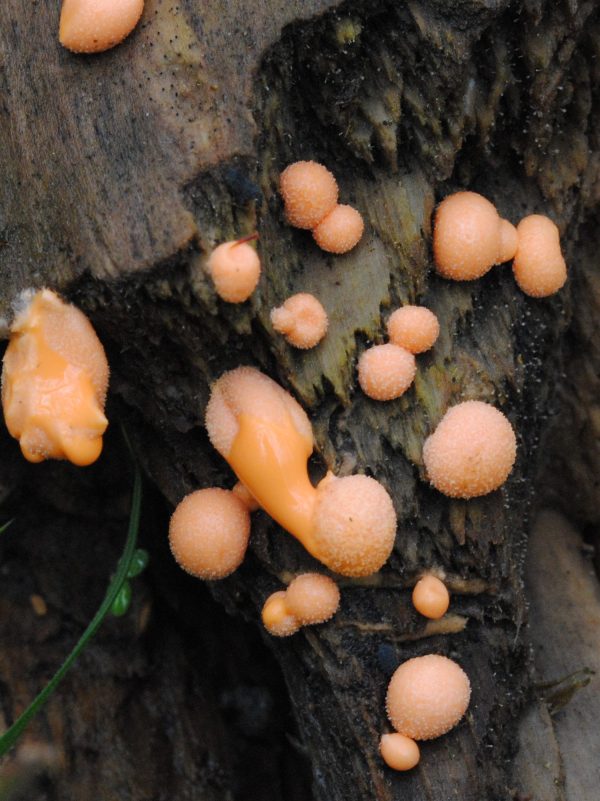
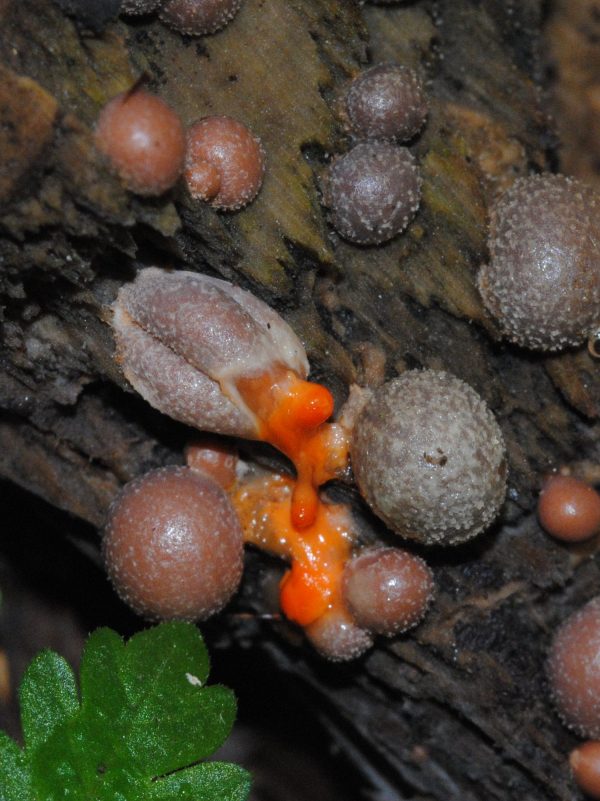

From there we entered an open field by the edge of the wood where the going was easier but it then started to rain heavily. At the bottom of the field we met our first real obstacle – a stile with the cross-piece (there must be a name for it) missing. Most of us clambered over but the thinner ones were able to slip through the dog gate at the side. We then made a quick detour to Hart’s Bridge (Rainbow Bridge) over the Thames. Lots of Lady’s Smock was flowering in the meadow on the far side although we didn’t go down to look at it.
People were curious about the ruins we passed close to Hart’s Bridge. There was originally a weir and they were probably the ruins of the weir keeper’s cottage, which used to be a pub for traffic on the river. (There’s a bit more information here.) I believe it was functioning until the mid-twentieth century.

An enormous clap of thunder had us jumping out of our skins before we got back to the woods and encountered the second major obstacle – the swamp! It’s always wet in that corner but I had never seen it that wet before in the forty years I’ve lived in the area. The water was at least six inches deep and there was no way round; the logs that someone had put down as a bridge were lethally slippery. Pete Bennion’s photo says it all! But we got across with dry feet – just.
After a few hundred metres of more muddy bridleway we reached a gravelled road where there was a very nice large group of THCs (picture at top of page) as well as primroses and violets. It had stopped raining, some blackcaps were singing and a willow warbler was heard in the distance.
A bit further on we were faced with the choice of returning by the road (not very interesting but dry) or taking another bridleway through the woods and then having to face the obstacles in reverse. Chocolate biscuits lifted everyone’s spirits; two people opted for the road and the rest of us headed back into the woods. There were quite a lot of fungi, including Oak Mazegill, King Alfred’s Cakes and logs stained green-blue by Green Elf-cups. Close to the entrance to the woods some Goldilocks buttercups were just about to flower. (They should have been flowering but everything is late this year.) We also found a rather attractive small sedge but weren’t able to identify it.
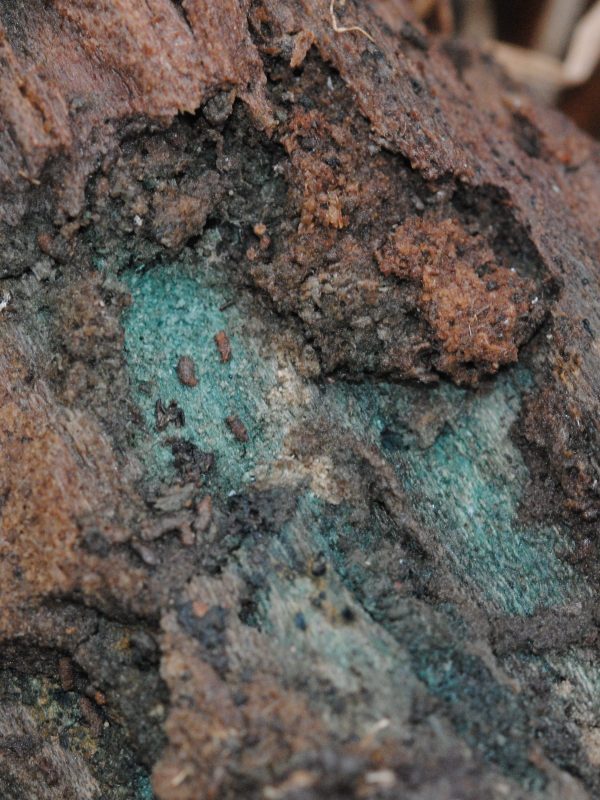
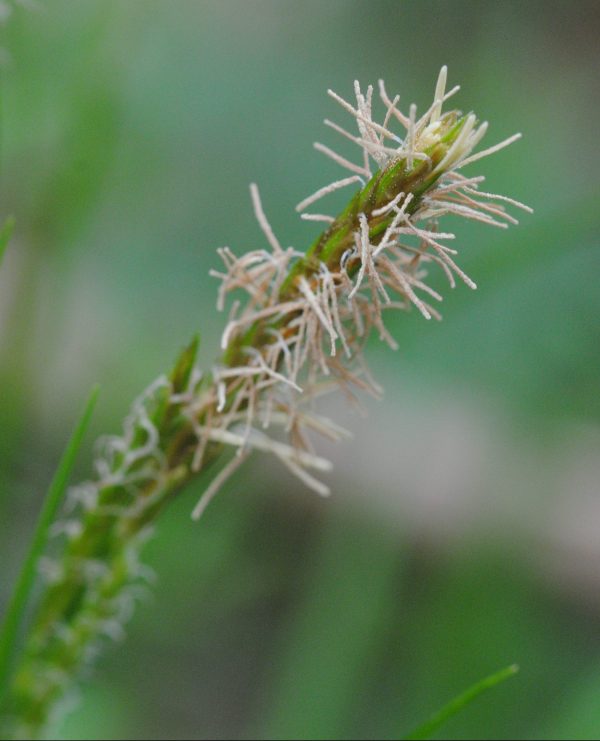

We negotiated the swamp and the stile successfully for the second time; on the way back through the field a couple of hares were seen and someone with very sharp eyes spotted an Orange Tip roosting on a dandelion clock. I had hoped to see a Barn Owl, which are often seen there – there’s a box nearby – but the damp weather had probably stopped them from flying.
Soon we were back at the layby and, although there were fewer plants in flower and less bird song than we had hoped for, we found the THCs and – remarkably! – everyone seemed to have enjoyed our rather unusual adventure.
The species list can be found here.
John Cobb 4 May 2023
 WEST OXFORDSHIRE FIELD CLUB