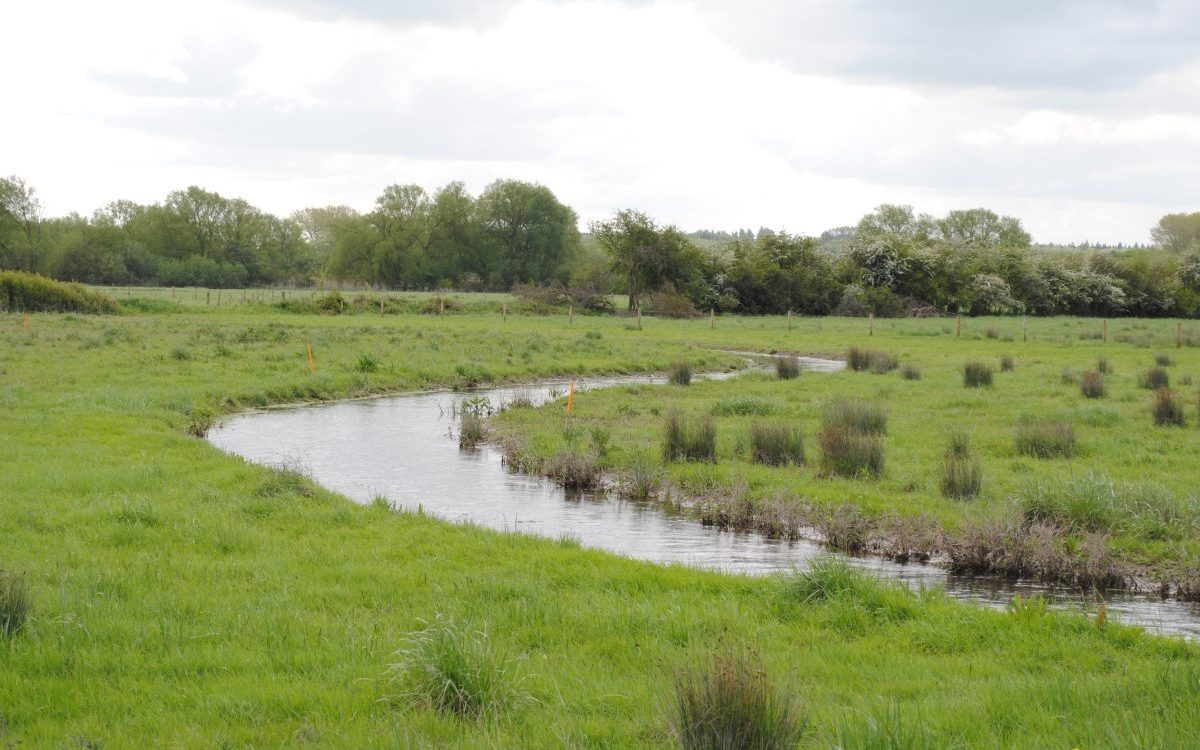
Following Lisa Lane’s excellent talk about the Chimney Meadows Restoration Project in February, on Monday 15 May 2023 thirteen Field Club members met with Lisa once again to see the Project for ourselves. We were lucky in that it was a dry, fairly sunny day, although the wind was chilly.
As we walked towards the wetland site, Lisa told us about her vision for Nature in the Thames Valley and how Chimney has become the hub for biodiversity at the centre of the Thames Valley.
The site was originally used for mixed farming, so once under BBOWT supervision, the aim was to revert the land back to hay meadows and species rich pasture. This initially involved fields being grazed by sheep, Glyphosate was then applied to kill off weeds. After that the land was harrowed, rolled and then seed-filled green hay from the National Nature Reserve was spread over the fields. The aim has been to keep the phosphate levels as low as possible to encourage a variety of wild flowers such as Cowslips, Meadow Rue and Knapweed. As a result insects and birds have increased in number, including Meadow Pipits, Snipe and Stonechats.
Lisa pointed out three slightly different methods of field management. In one field the hay is cut in late July and then grazed by either black Hebridean sheep or Dexter cattle. In another field, where ridge and furrow is apparent, the land is only grazed. On a third, the land is grazed once every two years with no revision. Temporary ponds lie on the land, acting as a draw for insects. Each field has its own ecology as a result of these different methods of management.
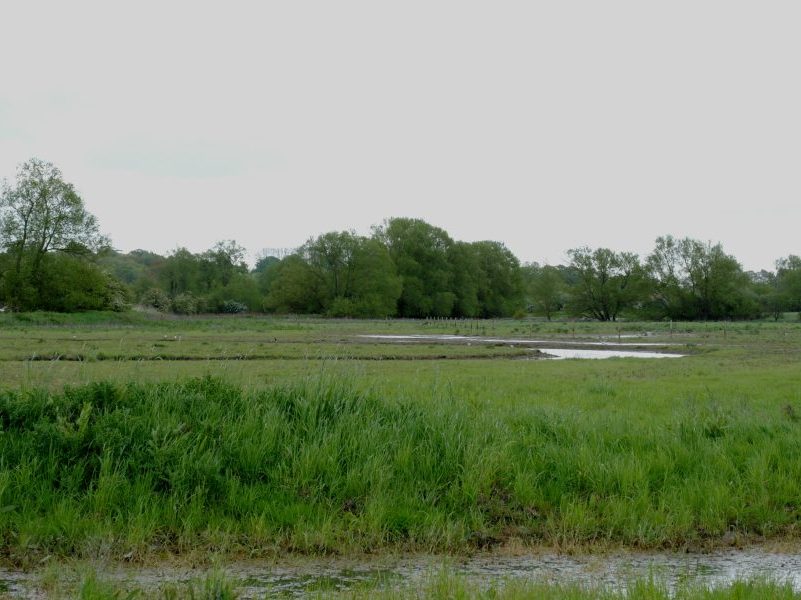

We walked on, crossing the cut to the South side of the Thames then towards the weir, stopping to watch the banded demoiselles flying near the water. Crossing the weir, we could now see the focus of our visit, the Duxford Loop, a 450-metre channel, created as a bypass to help fish get around the weir and lock and thus reach the upper Thames. It was a massive project, taking over two years and costing around two million pounds, but now it can be seen in its full glory, a meandering flow with plenty of life within it and attracting wildlife around it. The channel allows 50% out-of-bank flooding which then returns, leaving a layer of rich silt on the surrounding land and lowering the potential for major flooding downstream. As yet there are very few trees around the channel but some, such as alder and willow, may be planted. However, the intention is to manage as little as possible and to see what happens, allowing Nature to take its course.
Treading carefully over the marshy ground, we noticed several ‘collars and domes’. These small constructions aid research into carbon levels by measuring the release of carbon from wet and dry ground. Findings so far appear to suggest that less carbon is released from wet ground than from dry, highlighting the importance of increasing wetland areas.
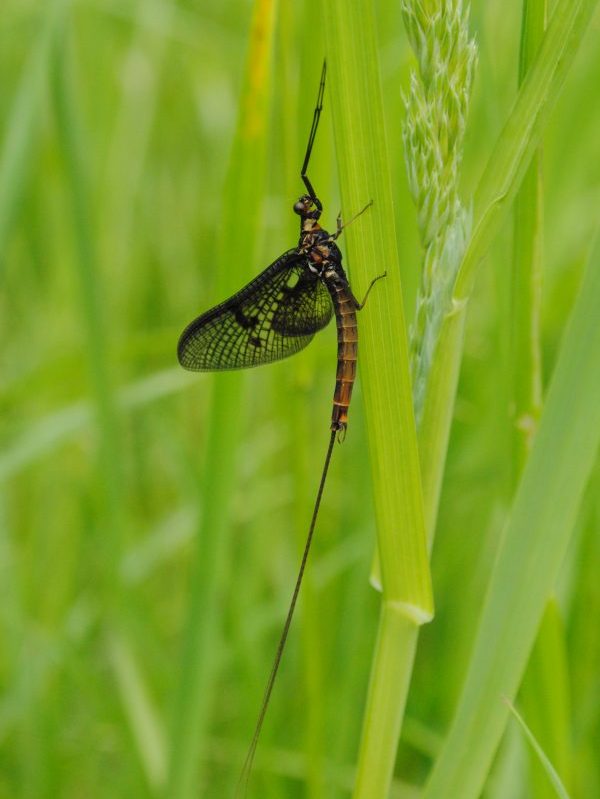
Looking over the previously flooded ground (there have been three flood events this winter), we spotted a Curlew, a pair of Oystercatchers, a Little Egret, Greylag and Canada Geese and Mallards. Wigeon, Snipe, Teal and Garganey have also been seen over the winter; Mayflies and Alderflies were starting to emerge.

We returned, stopping to look at two scrapes created (with some difficulty on soft clay!) and which should attract waders such as Lapwing and Golden Plover.
Taking a slightly different route back to the Office we stopped for a view from the small hide from which you get an idea of the enormous size of the wetlands. We were accompanied by the incessant song of a reed warbler.
It was a fascinating and inspiring morning. This has been a huge project with a brilliant outcome and hats off to those who have made it work. A particular thank you, too, to Lisa for her time and enthusiasm.
A species list can be found here.
Julia Reid 17 May 2023
 WEST OXFORDSHIRE FIELD CLUB