On the warm, balmy afternoon of Sunday 28 May, twenty-two of us wandered down Hill Valley at Aston Upthorpe. While we were being serenaded by blackcaps and whitethroats, we soon identified several butterflies: common blue, brimstone, peacock and small whites. Once we were on a rough chalk and flint hillside, there were the dingy skippers and to our delight what we thought was the rare grizzled skipper.
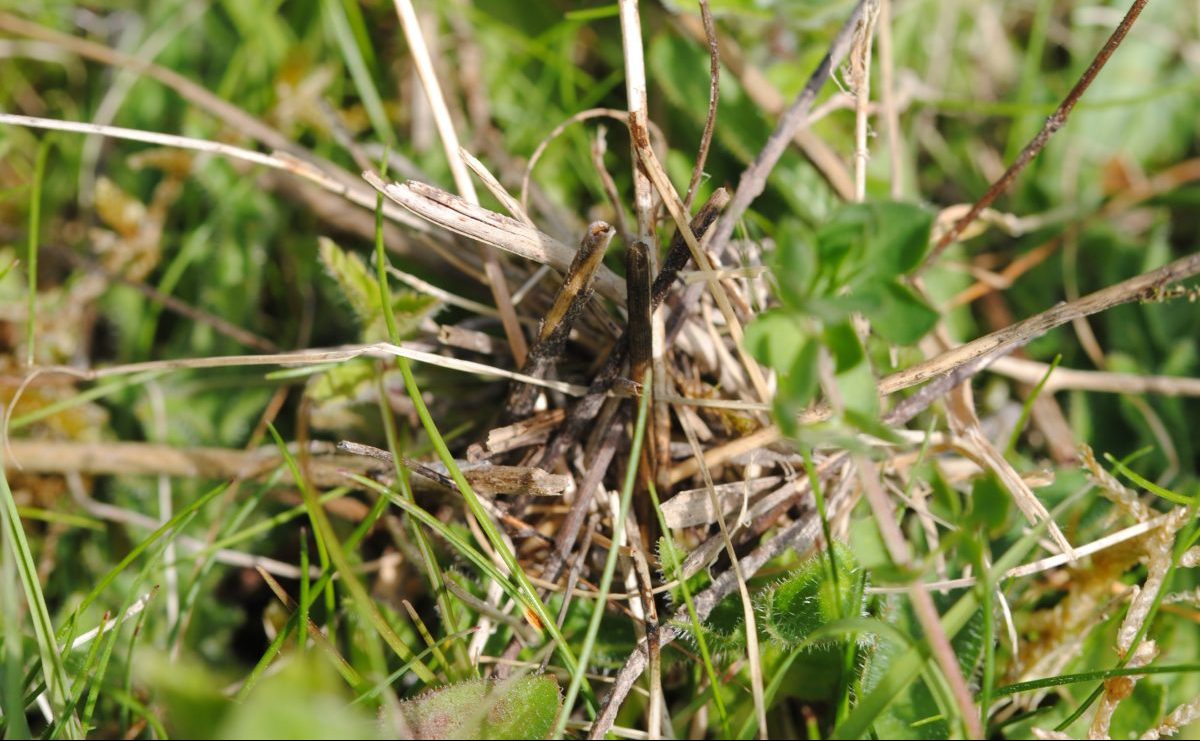
The newly opening flowers were also a delight, particularly big clumps of sweet rocket and the magenta-coloured clustered bellflower. However, it was mason bees who stole the show. We had noticed one carrying a little stick just as though riding on a broomstick, as in David Attenborough’s TV series of the Wild Isles. It carried the stick to its nest under a neat pile of tiny sticks. Alison broke up more tiny sticks to give it an easy supply. To our amazement, it ferried them the six-inch journey to the nest, picking up the sticks and putting them in a pile. The female two-coloured mason bee (Osmia bicolor) lays an egg in an empty snail shell which she then disguises with a pile of sticks. Extraordinary!
Further on in this thyme and marjoram carpeted SSSI, we found the desiccated but very recognisable form of a young adder.

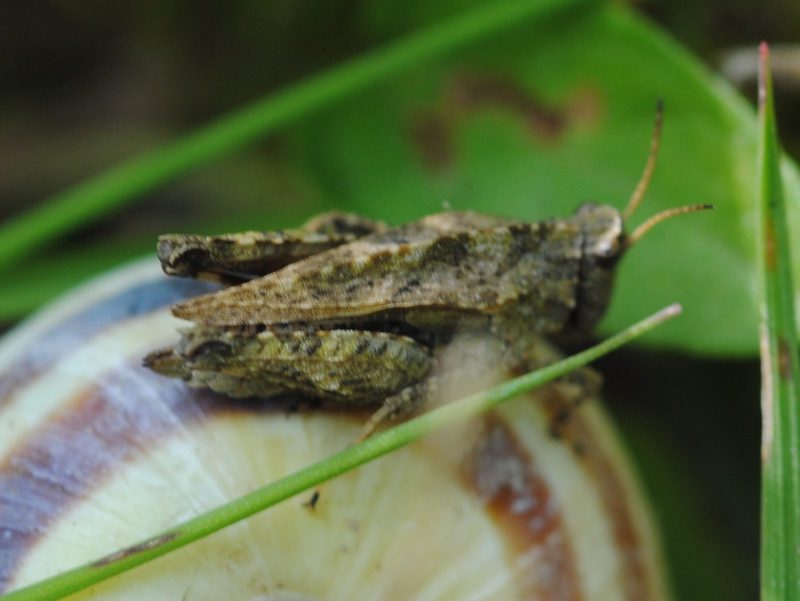


We crossed over to the open downland, where juniper trees and sheep sorrel grew. Wonderful views across to the Thames Valley. More newly blooming flowers – field pansies, fumitory (which is sown in seed mixes as a food source for turtle doves) and hay rattle to name just three. Back to the insects, I learned that the bright scarlet and black burnet moth contains cyanide in its body, hence the warning colour.
Our last treat, and following on from John and Sue’s blog, we spotted a glow-worm larva, making its slow but determined way across the path to get to the blades of grass ready to pupate and eventually glow in the dark.
A rich afternoon was rounded off by the warm welcome of tea and cakes in Malcolm and Valerie’s beautiful garden where we admired a crab spider on one of their doronicums.
It was all that the Field Club is famed for – camaraderie, team learning and enjoyment of the natural world. Thank you, Malcolm, for leading it.
The species list can be found here.
Elaine Steane 30 May 2023
 WEST OXFORDSHIRE FIELD CLUB