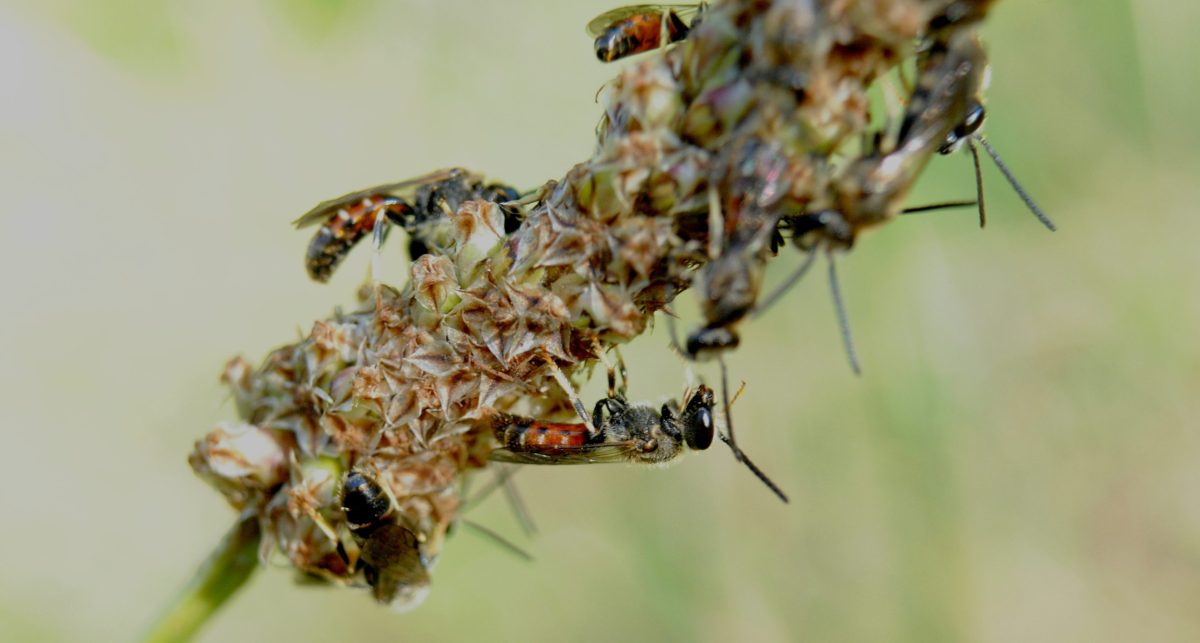
John C. writes: Late on a rather warm Sunday afternoon nearly three weeks ago we were intrigued by the behaviour of some small bees in the unmown ‘meadow’ area of Sue’s garden.
What intrigued us was that they were congregating on the flower head of a single ribwort plantain; there were plenty of other plantains nearby but they all chose the same one. Eventually the flower spike was black with bees. They were hard to count but there must have been twenty or thirty of them.
We couldn’t, then, work out what they were doing. The stamens of the plantain had long gone so they weren’t after pollen, and they didn’t seem to be mating.
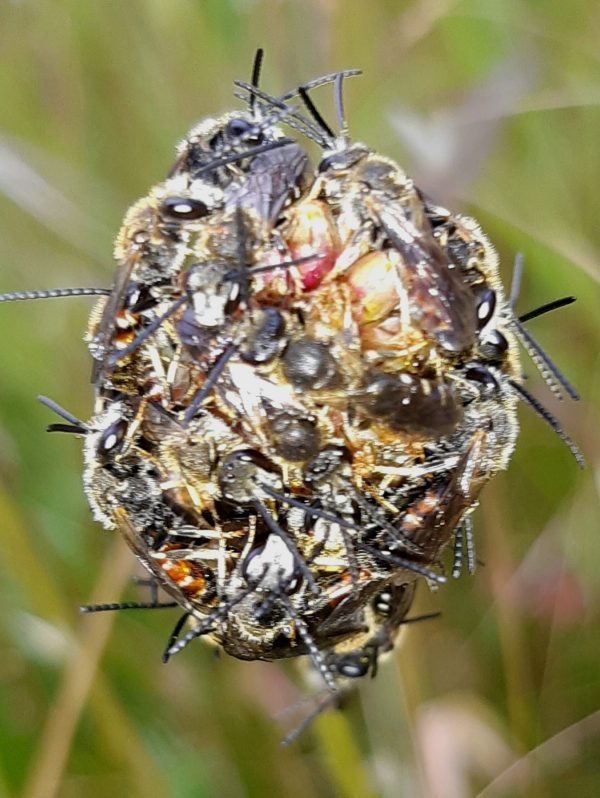
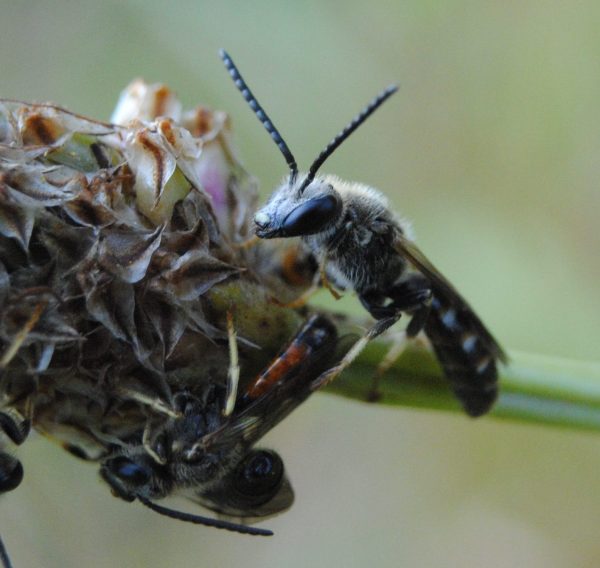
Over the course of a couple of weeks Sue noticed that the bees disappeared in the morning but would return in the early evening, usually to the same flower head or one close by, and the best explanation – obvious in retrospect – is that they were roosting communally.
Our tentative ID is that the bees were Common Furrow bees aka Slender Mining bees, Lasioglossum calceatum or possibly L albipes (although certain identification requires microscopic examination and an expert). These are solitary, but seemingly social, bees that nest in holes in turf and banks. Some research on the internet confirmed that the males of these species do roost communally, as do other bees, although there was not much about them. Some more information about their (somewhat complicated) life cycle can be found on the Bees, Wasp and Ants Recording Society website here.
We haven’t found their nests yet but at the time of writing the bees are still going in the mornings and coming back in the evenings although the numbers may be dwindling. The meadow must be scythed soon but we shall spare as many plantains as we can for the bees.
Fascinating! We must get a book about bees!
John Cobb and Sue Morton 14 July 2023
 WEST OXFORDSHIRE FIELD CLUB