
Thursday 24th August 2023 was one of those beautiful, warm days when eight of us gathered to visit Sydlings Copse, one of my favourite nature reserves, close to Oxford city. I was already worried that the flowers would be over so late in the season, but when I learned on a recce a week before that BBOWT’s roving sheep were going to be released to ‘mow the grass’, I really felt like cancelling the trip. However, with both Julia and Maggie’s optimism and the reassurance from the BBOWT warden that the sheep didn’t like the sharp taste of herbs, we went ahead.
Our Stone Age ancestors were using Sydlings Copse as a hunting ground since spearheads, used to hunt deer and wild boar, have been discovered there. A BBOWT volunteer also found bone evidence of wolves and grizzly bears.
Sydlings Copse is described as being one of the most biodiverse-rich habitats in middle England. The reserve supports over 400 plant species and ranges from broadleaf woodland, limestone grasslands, reedbed, fen, a stream and perhaps the most special – rare Oxfordshire heathland. There is also a rich variety of birds and insect life, with butterflies including the purple hairstreak, brown hairstreak, common blue and marbled white.
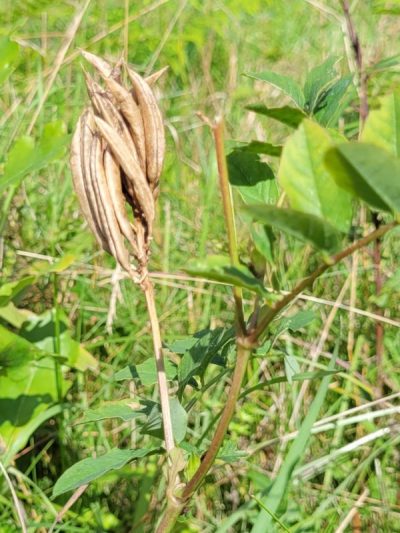
We started recording on the limestone, and soon, with the sight of the pink centaury, wild basil, wild liquorice, with its big seedheads, marjoram and yellow rockrose, we could have been on a Cotswold hillside, instead of just over a mile from the edge of Oxford city. The butterflies were out, including holly blues, brown argus, small tortoiseshell, gatekeepers, with dragonflies and grasshoppers, which we didn’t identify.
A sheepish flock of sheep paused in their ‘mowing’, but I forgave them as they’d only trampled a bit of the grass and flowers! A jay and wren were calling in the wood.
Further along the nature trail, we entered the wood and were delighted to see a clustered bellflower and enchanters’ nightshade. We descended the steep slope to the stream and fen, where Maggie spotted ragged robin, marsh thistle, purple loosestrife and bulrush.
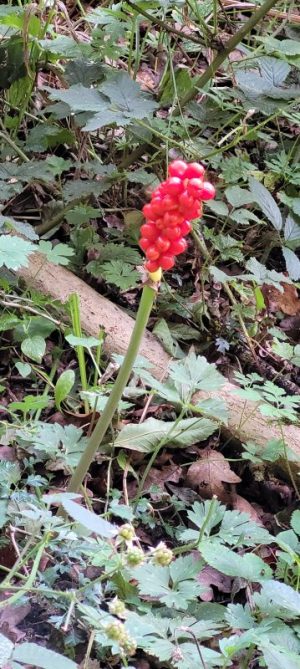

Up we climbed on the other side of the steep valley, to arrive at the heathland – honeysuckle, bracken, blackberries and, amazingly, heather growing with woodland germander (wood sage), foxglove and wild sorrel. We went off-piste across the bracken-covered slope, where we watched an emerald-coloured dragonfly patrolling to and fro, with puffball fungi on the slope. One of our two new members, Tim, who with Rosie, had travelled from Chipping Norton, was delighted to set up the SEEK app, so immediately started identifying everything that we passed! We ended our walk passing the tall Scots pine trees and under the sweet chestnut trees. Altogether, a very enjoyable, rich and varied walk, which I hope we can repeat next year.
Elaine Steane October 2023
The species list can be found here.
 WEST OXFORDSHIRE FIELD CLUB