If you don’t share my enthusiasm for the microscopic weird and wonderful, there’s no need to read on!
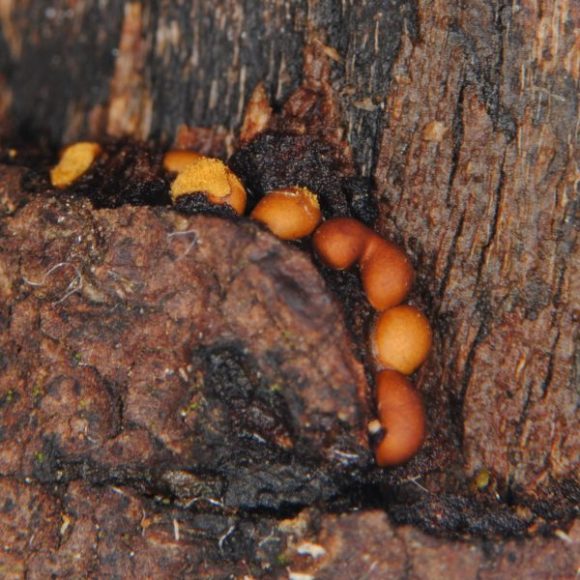
Some time before Christmas I picked up a bit of wood from an abandoned “eeyore house” (one of those things where kids lean sticks against a branch to make a den) in a Millenium park near where I live. It had some orange blobs that I thought might be the sporangia – fruiting bodies – of a slime mould, and, indeed, that’s what they turned out to be when I had a closer look, though very small and not very exciting. I have no idea what species they were.
I was on the point of throwing out the piece of wood when I decided it just might be worth keeping it to see if anything else emerged. I put it in a plastic pot with some wet kitchen paper, stuck it in the bathroom cupboard and forgot about it – what the professionals call “humid chamber culture”.
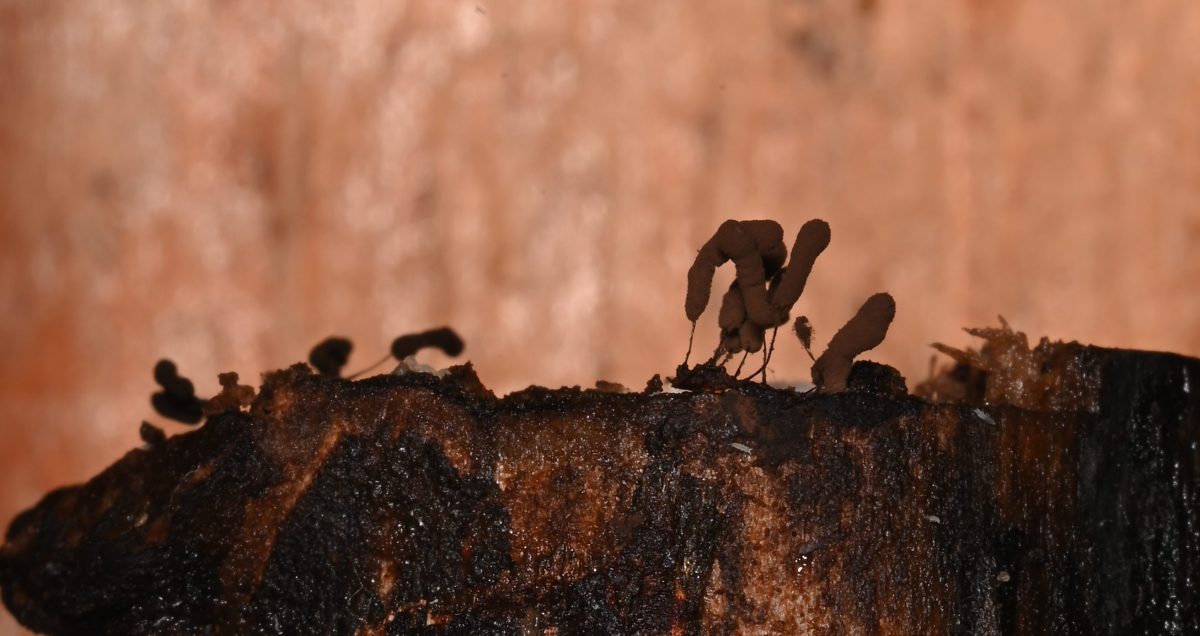
I looked at it once a fortnight or so but nothing seemed to be happening until last week when, on the point of throwing it out again, I saw some growths at one end which were certainly the sporangia of another kind of slime. This time they were more interesting, like sausages on sticks. My extremely tentative identification is that they might be some species of Stemonitis, but I’m really not sure – I certainly hadn’t seen them before. (It takes an expert with a microscope to identify most species.) But unidentified species or not, I was pleased that my patience had been rewarded. The piece of wood has been reprieved! Who knows what else will emerge?
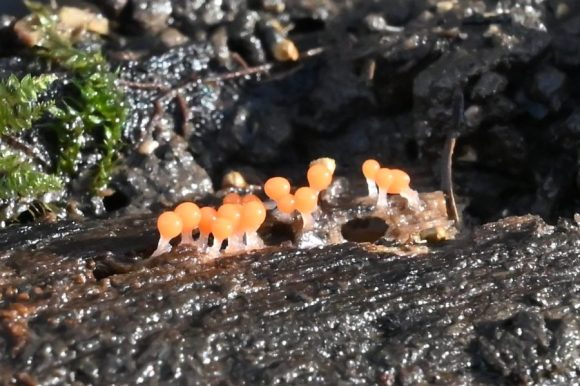
I was also pleased to find some more colourful sporangia, almost certainly Tricia decipiens, which seems quite common, when we went for a walk through Cornbury Park last Sunday.
But if you really would like to see some really fabulous photographs of slime moulds take a look at the exhibition at the Royal Botanic Garden, Madrid – I haven’t found anything as good as that yet but shall certainly keep looking.
John Cobb 24 February 2024
 WEST OXFORDSHIRE FIELD CLUB