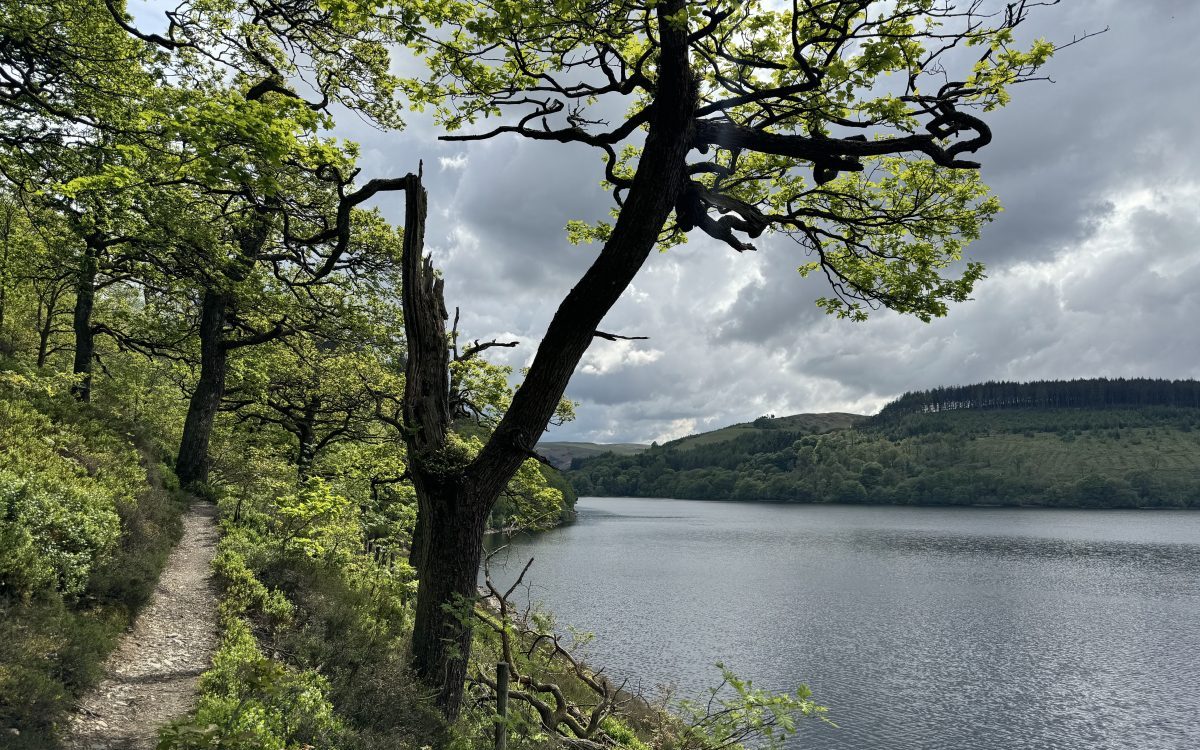
Sixteen club members plus two visitors recently ventured into a remote area of mid-Wales for a long weekend of bird watching in the Elan Valley near Rhayader, a very quiet area (in)famous for the four Victorian reservoirs which supply water to the West Midlands.
Frances Ashling reports:
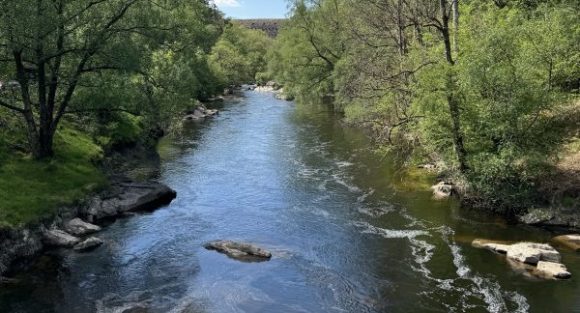
All eighteen of us having had a good supper at Elan Valley Lodge after our long journey westwards, several of us took a short walk alongside the river Elan to check out the birdlife and our new surroundings. Above the noisy rush of the water and the bleating of lambs and their mothers, there was some birdsong, but little sign of other human beings. A lovely quiet retreat from normal life.
In the morning we met up with our guide, Janice who led us into the adjacent SSSI Cnwch Wood Nature Trail. The sun was out, the sky a clear blue, the oak and birch trees at their greenest, fresh with new leaves, mosses and lichens adorning their branches. We were regaled with bird song on all sides, quickly identified by Janice, whose hearing was acute. Redstart, Warblers, Flycatchers, Wagtails, the list goes on. It was hard to keep up! We walked slowly, straining our ears for every bit of bird song as far as the Visitor Centre and then back to the Lodge with our packed lunches, over the rickety-rackety Bailey Bridge.

In the afternoons we boarded or followed the minibus for a drive around the reservoirs. We stopped at Pen-rhiw-wen on the mountain road which starts just before Rhayader, and were glad of our jackets as the wind was strong up there. Skylarks, a swallow and wheatear where seen here. The moorland was almost treeless, just a few rowan trees and hawthorns tucked into the little valleys or beside the streams. There was only one sign of habitation in miles of countryside, a farm called Hirnant, but several wind farms were visible on the northern edges.
In the almost endless expanse of empty moorland, other than a thin scattering of sheep, the flash of a lone cyclist slipping downhill in the far distance caught the eye, and often a string of brightly coloured motor bikes, lights on, the metal glinting in the sunshine accompanied by the roar of engines weaved past on the narrow, winding road.
A memorable stop was made at a little bridge over a peaty river where Tim watched a song thrush dive into a tuft of reedy grass and come out with a lizard in its mouth – swallowed in several gulps! A few of us were lucky enough to spot a dipper here, too, and wagtails and a common sandpiper, flying up river, close to the water, its scythe-like wings helping with its identification.

We had plenty of time to walk around looking and listening for more birds and admiring the engineering feats of the Victorians in making such a good job of converting the river into four huge reservoirs, with four large and impressive dams, all for the purpose of providing Birmingham with drinking water.
We had a beautiful picnic spot overlooking Pen-y-garreg Reservoir, the sun shining warmly, the grassy bank traced with the delicate shadows of the alders growing there. The return walk along the old railway track, now used by bikes, walkers, horses (rarely), back to the minibus, was an excellent way to get to see the landscape.

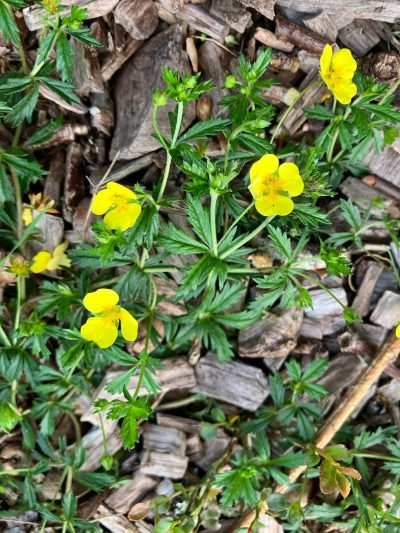

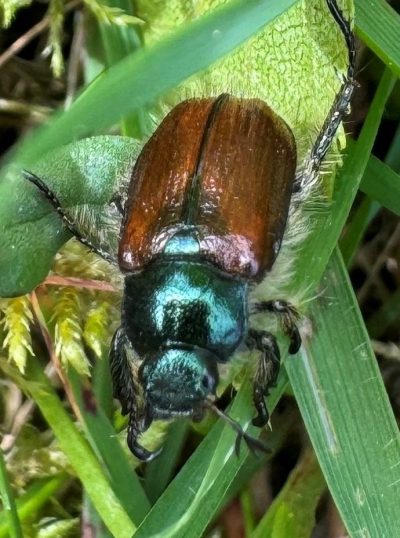
On the final morning, after some of our party left for the drive home, but six of us went in the minibus with Steve to a spot near the dam between Garreg Ddu Reservoir and Pen-y-garreg Reservoir and from there we had a lovely walk along the old track, up to the next dam across Craig Goch Reservoir, perhaps a couple of miles. Wonderful mixes of old oaks, large irregular rocks on steep hillsides, mossy banks, bracken and bluebells vying for the light and an interesting passageway between high rocks, known as the Devil’s Gulch, where a few years ago a large chunk fell from on high one Tuesday afternoon. No-one was hurt, but three years and nearly a million pounds later, both sides have been contained in a metal network, so the path is now clear again.
The Elan Valley is a joy to see: the mix of bare moors and thick woods, the steepness of the hills, the wonderful weather we were lucky enough to have – the thunderous clap at 6pm on Saturday night and the torrential downpour that followed when we were all indoors just added to the experience. Add to that the comfortable beds, the good company, the home cooked food, and the knowledgeable staff – it was a lovely place to be.
Frances Ashling 21 May 2024
The species lists (plants and birds) can be found here, thanks to Brenda and Maggie.
JC adds: The idea for this trip originated from Christo Impey, an old club member, now living in London, who visited there with his local RSPB group almost exactly a year previously.
 WEST OXFORDSHIRE FIELD CLUB