Whitecross Green Wood 8 August 2024
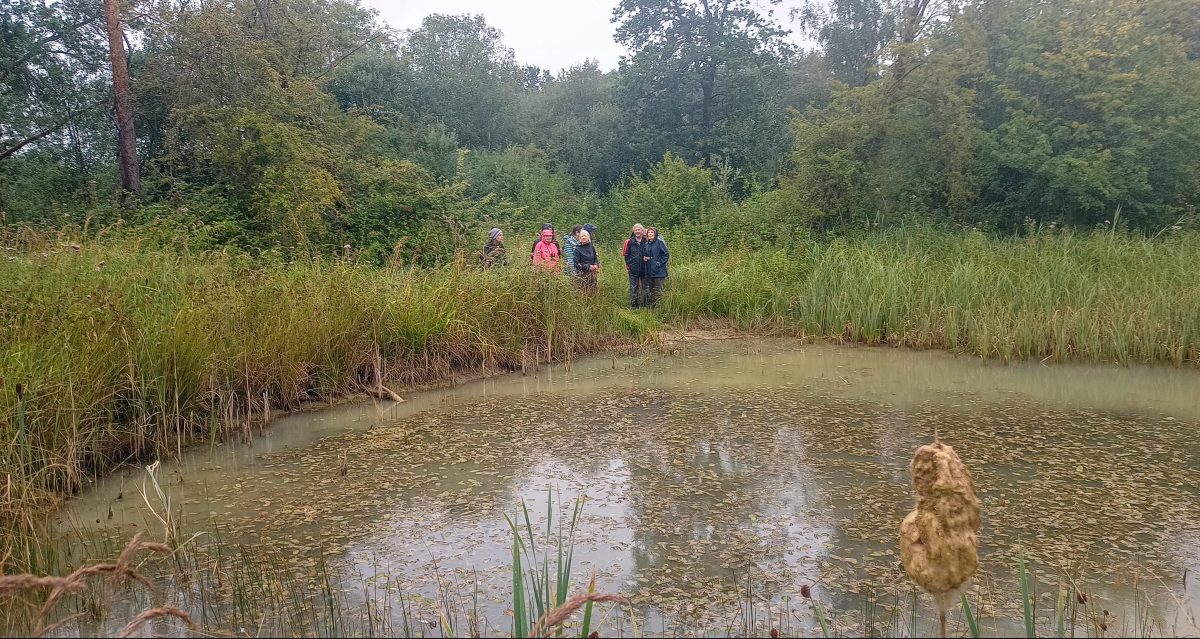
This ancient woodland once formed the Royal Forest of Bernwood. BBOWT have been felling the Scots Pines planted there in the 1960s and are replacing them with broad-leaved species. The mainly-straight rides are particularly wide, thus letting in plenty of sunlight to encourage growth of plants to encourage butterflies, moths and other insects. For the day of our visit, the forecast was for drizzle, and unfortunately this proved to be correct. Consequently the twelve members who attended got rather wet!
The reserve has plenty of information boards including at least one with a useful map. We followed a route that Valerie and I had walked ten days earlier. We turned left after a few hundred metres on the main ride and then continued almost to the south-east edge of the reserve. We then turned right to the perimeter, following the path along the southern edge of the reserve, then returning to the car park.
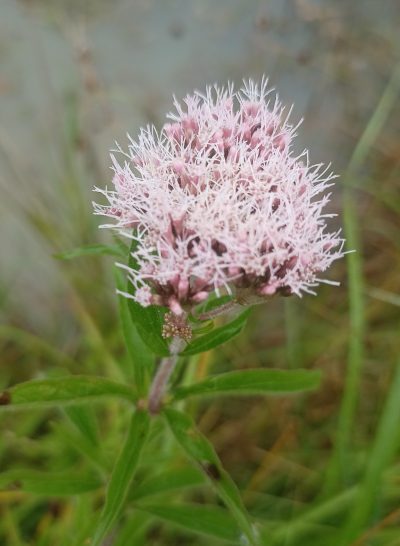
The main rides had been mown only a week or so before our visit, otherwise we would have got even wetter. At the very edge there were several wetland plant species of interest, notably Fleabane and Meadow Sweet. Several members found soldier beetles and there was a single sighting of a Dark Bush Cricket. The Speckled Bush Cricket (Green with tiny purple speckles) is normally present in large numbers here but none were seen.

Regarding butterflies, in a good year, in the absence of rain of course, one would expect a good chance of at least seeing Brown Hairstreak, White Admiral or Purple Emperor here at this time of year, but none were seen. However, despite the poor weather conditions we did see Meadow Brown, Small White, Small Heath, Gatekeeper, Marbled White and Green-veined White,
Just before our right turn we stopped at a small pond close to the ride to look for dragonflies and damselflies. Two male Common Darters were seen here, and a little further on, a female Banded Demoiselle damselfly appeared briefly. In the past I have seen a Migrant Hawker dragonfly on the reserve. This species has increased in numbers in the UK in recent years, probably due to global warming.
Despite the weather everyone seemed to have had a good time and some said they would be returning.
The species list can be found here
Malcolm Brownsword
 WEST OXFORDSHIRE FIELD CLUB