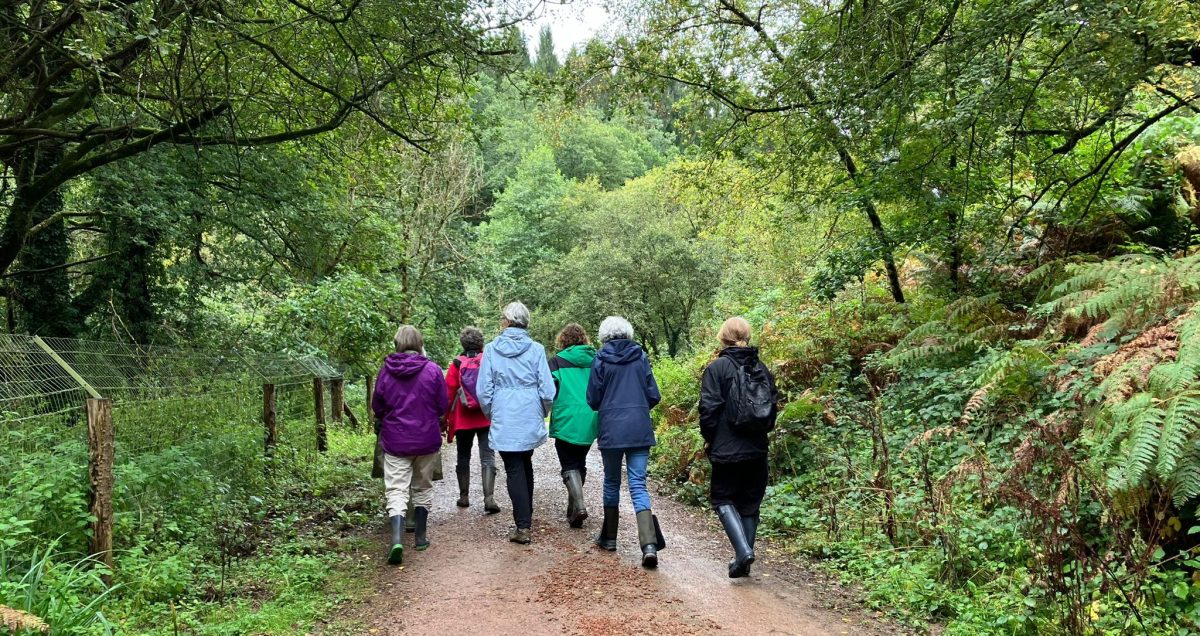
After a few days of very heavy rain and flooding, we all wondered whether this outing was a good idea. However, undaunted, seven of us set off to the Forest of Dean, appropriately clad in waterproof gear and wellies. One of the aims of the trip was to learn about a beaver reintroduction project in the area.
Our first stop was at the Nagshead RSPB Reserve. Set deep in the forest, this mature oak woodland promises a variety of wildlife. It was really beautiful and very peaceful in the verdant setting. Different mosses and lichens clung to branches and stony ground, while bracken and ferns were abundant.
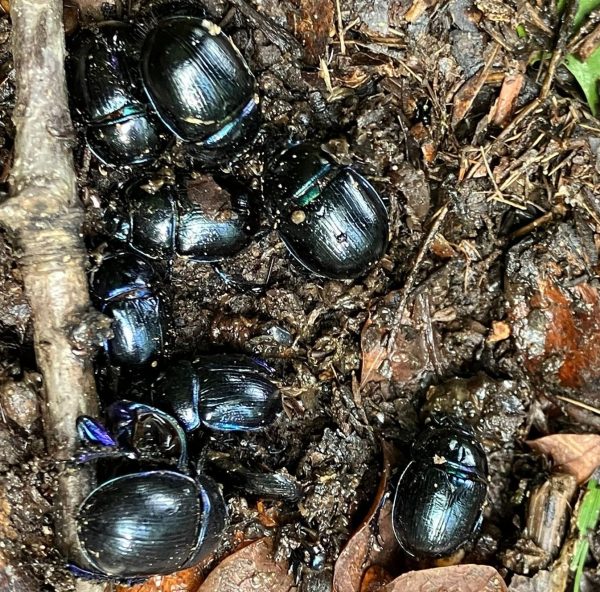
Various birds were heard, but few seen, (see list). The most striking find on our walk was an amazing amount of Woodland Dor Beetles. These compact, shiny black beetles feed on rotting vegetation, decaying fungi as well as dung. They mate in the spring and the females burrow under a pile of rotting vegetation or dung, creating brood chambers where the eggs are laid. Larvae develop through summer and adults emerge in autumn to feed, hence our sightings. Initially we saw only individuals scurrying about, but then found a collection of at least twelve appearing to be burrowing, so probably returning to winter underground. Later we walked through an area largely planted with conifers and saw no beetles, so it would appear that they have a preference for deciduous woodland.
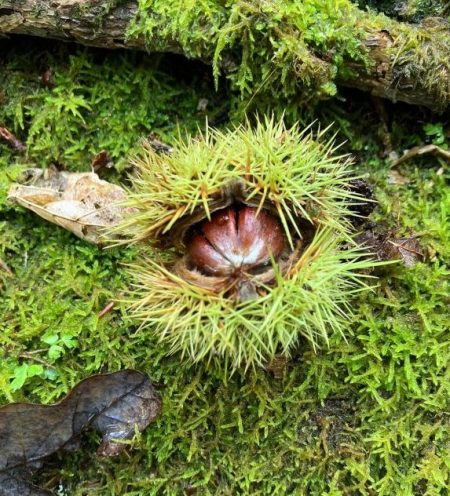
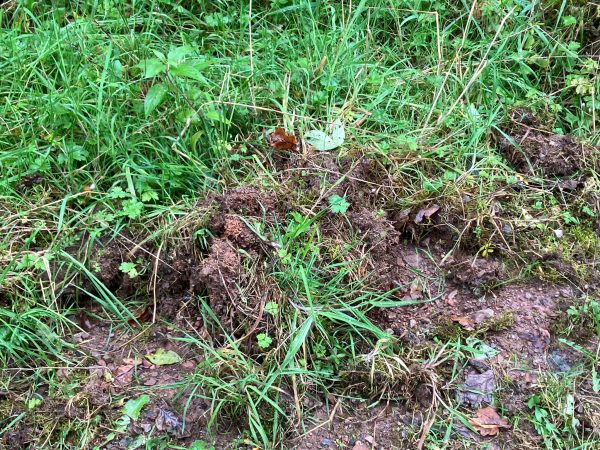
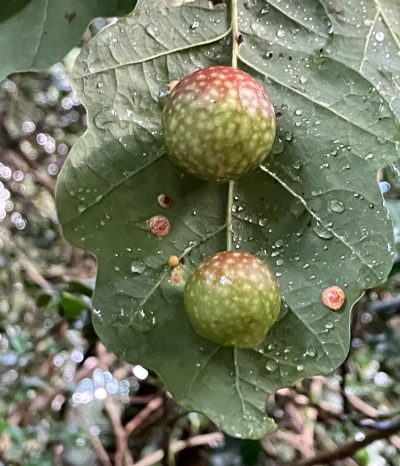
Some early fungi were noted, including a type of bracket fungi, found growing on a dead branch, as well as two unidentified species in trees, one possibly being oyster mushroom.
Later in the afternoon we drove down to Greathough Brook to meet leader Leoni Dawson for a tour of the beaver enclosure.
A few years ago, the village of Lydbrook endured devastating flooding. This prompted interest in the introduction of beavers further upstream to slow down the flow of water after heavy rain. A pair of beavers was selected by the Beaver Trust and brought over from Europe and introduced into the brook. They settled well but unfortunately a health problem was found to have arisen in the original European site and the beavers were removed. Since then two beavers from Scotland have arrived and are doing well, producing two kits. The area is only large enough to hold a maximum of six beavers, so further numbers are trapped and sent to another area in Britain.
The enclosure is surrounded by high fencing, not only to prevent beavers from escaping but to prevent access from wild boar and deer as well as well-meaning humans. Grids at either end of the brook keep the beavers within the enclosure, although one or two have managed to get through and have had to be tempted back into a trap using apples. It is thought that some have escaped into the River Wye where the water is deep enough for them not to be spotted!
Beavers are crepuscular so were asleep in their lodge. They initially burrow into the sides of the brook and sleep inside the earth in a chamber above water level. The lodge is made later.
We went into the enclosure to see the beavers’ handiwork in creating dams. In human terms these dams slow the flow of water to reduce the likelihood of flooding, while for the beavers, the advantage is to maintain deep pools of water which act as a means of escape from predators. To create the dams, the beavers chew off branches (alder, poplar and aspen are favourites), then collect mud which they carry in their front feet and cover the sticks. They maintain the dams constantly. It was amazing to see how these dams slow the water.

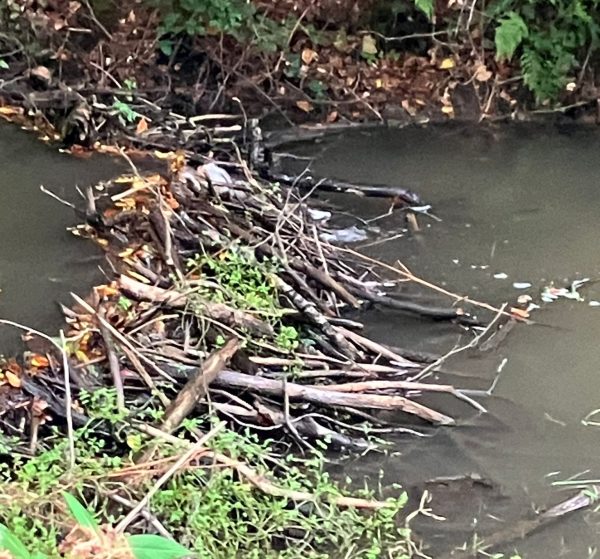
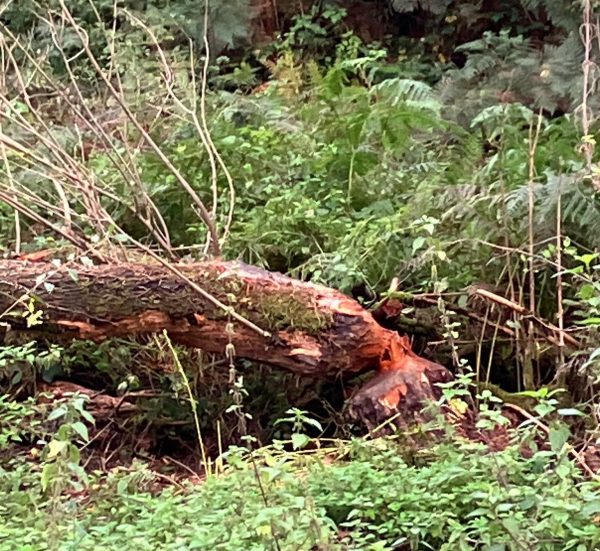

Trail cameras are installed along the brook to record beaver activity. Leoni showed us several photographs of the beavers in action as well as a variety of other wildlife observed, such as a pine martin and fox. Because the fencing prevents larger herbivores from entering, the vegetation grows up fast and has to be cut back fairly regularly.
I suppose most of us have enjoyed seeing beavers in wildlife programmes, but actually to see how they live in reality was a huge treat. Many thanks to Leoni for a fascinating and really enjoyable tour.
Oh, and Lydbrook hasn’t flooded since the beavers arrived!
The list of plants seen can be seen here.
Julia Reid
Birds:
Jay
Lesser Spotted Woodpecker
Blue tit
Great tit
Robin
Hawfinch?
Fieldfare?
Magpie
Buzzard
Blackcap
 WEST OXFORDSHIRE FIELD CLUB