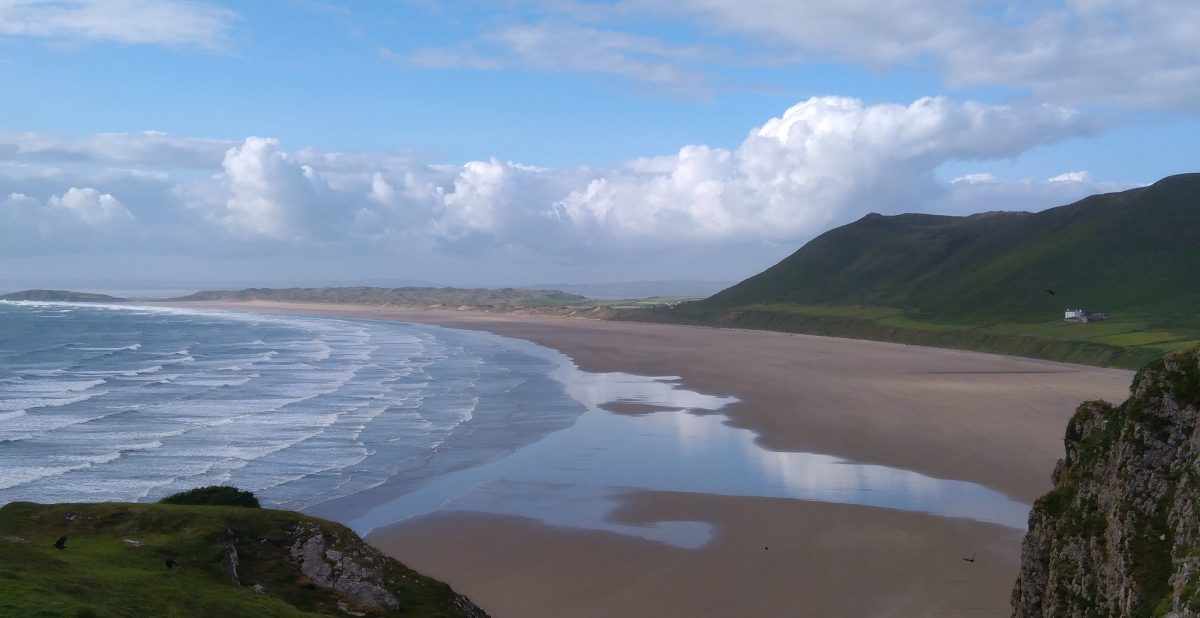
1st – 4th June 2025
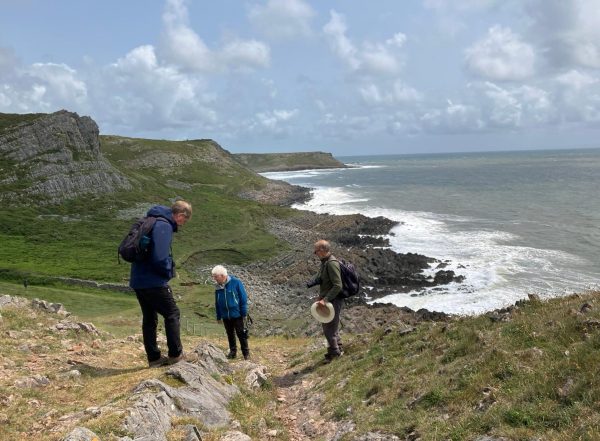
I’m sorry to have been so slow to post the report of the Club’s visit to the Gower back in June, but when you see the photos, you’ll marvel at the shots of green grass and people wearing warm jackets!
After the long drive down to Rhossili, 12 of us from the Club joined our leader Peter Creed at our comfortable base at the Worm’s Head Hotel and some of us headed out for a walk before supper. The obvious place to go was the end of the peninsula looking over to the Worm’s Head itself. This is a rocky tidal island that can be reached by the intrepid (or foolish) at low tide. There’s a board to tell you when it’s safe to cross – or not. I was amazed to see some tents pitched on the island and wondered how many of them would still be there the next morning. (In fact, I met the lads who had been camping on their way back when I was out on my pre-breakfast walk. They had enjoyed their night on the Worm, but were glad they had chosen a sheltered spot for their tents).

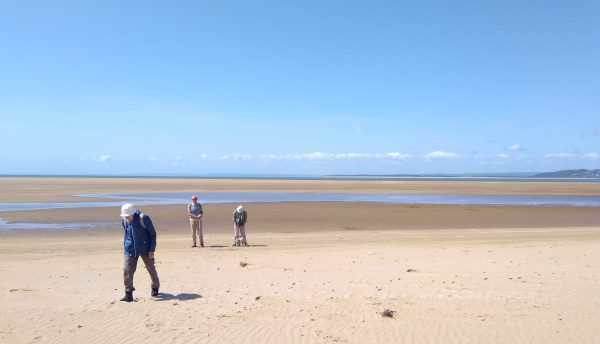
Our first outing, the following day, was to Whiteford Burrows, not far as the chough flies from our hotel, but quite a bit further by road. Those of us who had been on the Club visit back in 2018 certainly noticed the difference in the vegetation. The cool, dry weather before this year’s visit meant that everything was less lush than last time, with fewer flowers, but still with Peter’s expert help we were able to find what was around. After a rather taxing walk through the dunes, we arrived on the huge beach and looked for two species of beetle that Peter was hoping to find. The first, the endangered Strandline Beetle (Eurenebria complanata) is extremely rare in Wales, and probably absent from England. Whiteford Burrows is one of its strongholds. The beetles are large (about 2cm long) and an unusual sandy colour with darker markings, and they shelter under driftwood and other debris on the beach in the daytime, coming out at night. We carefully lifted up whatever we found, with no luck, until Peter actually spotted one sitting on top of some driftwood – it clearly hadn’t read the book – and he managed to get a couple of photos of it before it scuttled off.

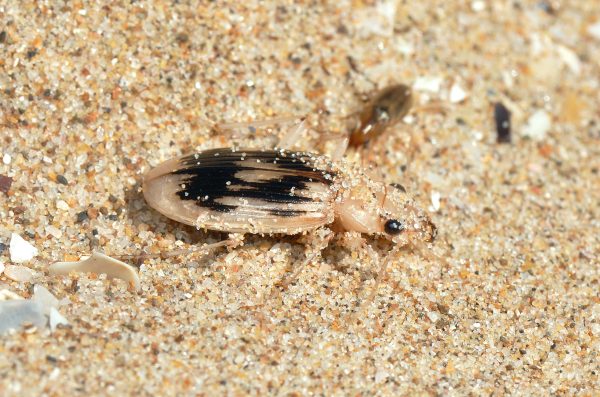
Strandline Beetle (Photo Peter Creed)
The next beetle to look for was the slightly less rare Dune Tiger Beetle (Cycindela maritima), which is brown with lighter markings and very long legs. We were lucky enough to see quite a few of these extremely active beetles running around on the beach at high speed.
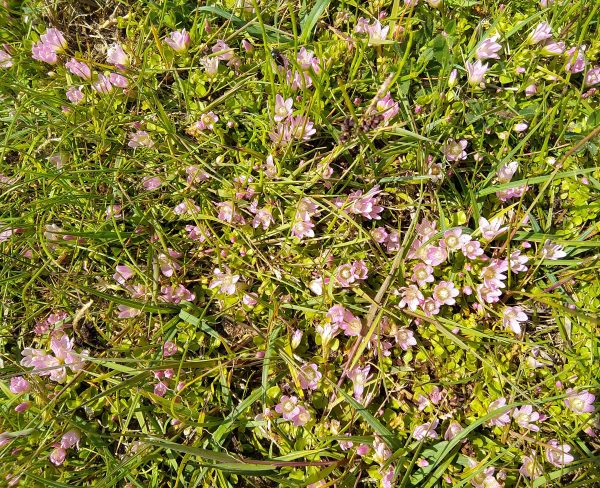
As we walked back towards our cars, we found large areas of Bog Pimpernel making a fine show.
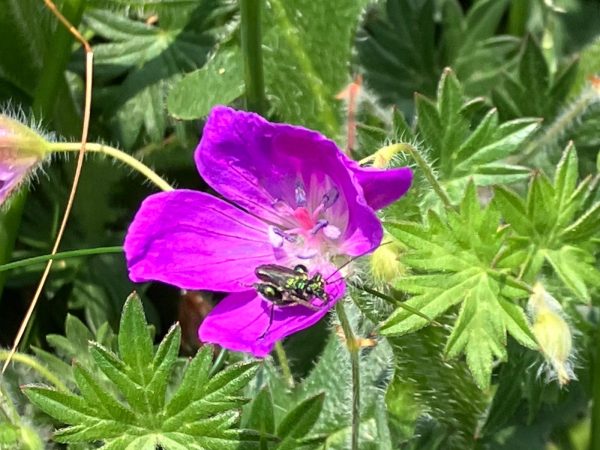
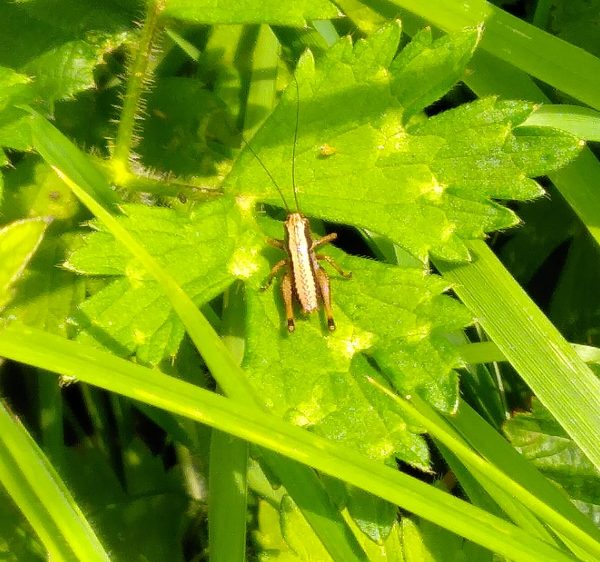
The following day, we parked in Port Eynon and followed the path along the undercliff back in the direction of Rhossili, with waves crashing against the rocks below us. Another good haul of plants were spotted with Peter’s help, and we particularly admired the colourful patches of Bloody Cranesbill and Rock Roses. During our lunch break we even saw a seal bobbing around off shore. Our return route led up a steep valley and back along a higher track down into Port Eynon. I was very pleased to find large numbers of nymphs of the Dark Bush-Cricket on the way back. These are chocolate brown with a broad cream band down their backs, and show up nicely when basking on vegetation.
Our third day was spent at Oxwich National Nature Reserve, walking through the dunes behind the beach. Here again the unusual spring weather meant that the flowers were few and far between compared to our last visit in 2018, and it was also noticeable that some of the dune slacks were becoming overgrown with scrub and bracken. In one area, a notch had been cut in the dune separating it from the beach, part of a project to restore the dune slack by allowing sand to blow back in from the beach. I also discovered after our return that in some areas diggers had been used to scrape away some of the soil so that the early colonising plants could get re-established without competition. Still, our intrepid recorder came up with another long list of plants, and we even found a sea potato on the beach – an unusual creature (a type of sea urchin) that lives in the sand and eats dead animals and plants. We refreshed ourselves with lunch at the beach cafe and then headed back to Oxfordshire after a very relaxing and interesting few days by the seaside.
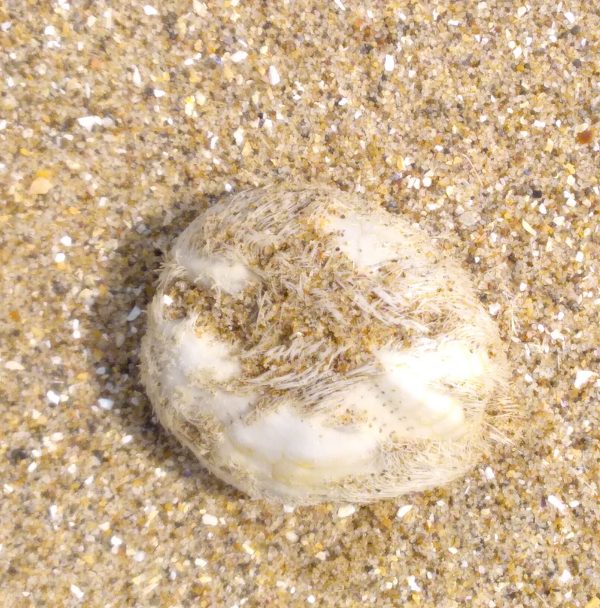
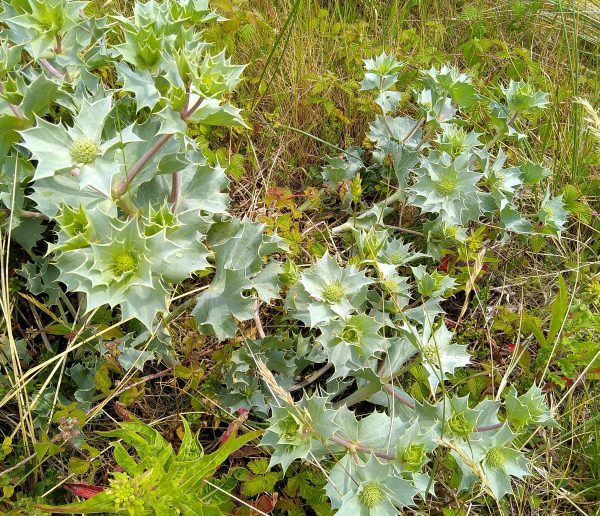
Sea Potato and Sea Holly (S. Morton)
Many thanks to Peter as always for his leadership, knowledge and enthusiasm. The list of plants seen can be found here.
There’s a rather sad PS to this report – a few weeks after our visit, the Worm’s Head Hotel was badly damaged by fire. As I fully intend to visit again one day, I really hope that this pleasant family run hotel with stupendous views over Rhossili Bay is able to reopen soon.
Sue Morton
 WEST OXFORDSHIRE FIELD CLUB