23 July, 2025
A glow worm walk wasn’t on the programme, but as a couple of other walks had to be cancelled because the very hot, dry weather had affected the plant life, we scheduled a pop-up. Would any glow worms pop up? My recce wasn’t very promising.
About a week before the advertised date, I spent a while in the dark in Swinbrook churchyard scanning the ground for the bright greenish light of female glow worms. Those who went on last year’s walk spotted 15, but on my recce I found just one, plus a hedgehog and a bat.
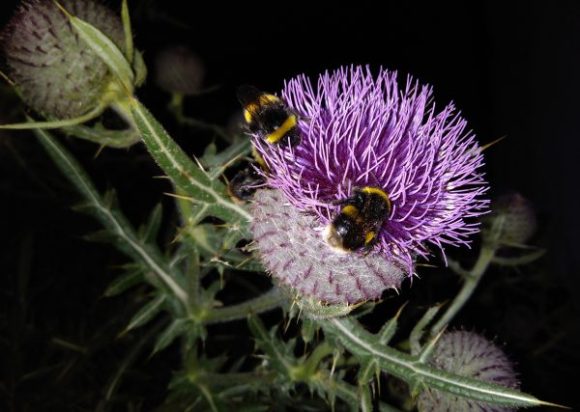
group of us met for our usual circular walk from Swinbrook to Widford, and back via Handley Plain while we waited for it to get dark. The roadside verges, normally very colourful, had gone over early due to the weather and numbers of flowers were down, but we still got quite a good plant list. We did find some very handsome woolly thistles, which seemed to be popular roosting places for bumblebees. We also admired the wild carrot flowers and noticed that each umbel had a small red flower in the middle. Brenda did some research on this afterwards and concluded that it was possibly to attract pollinators.
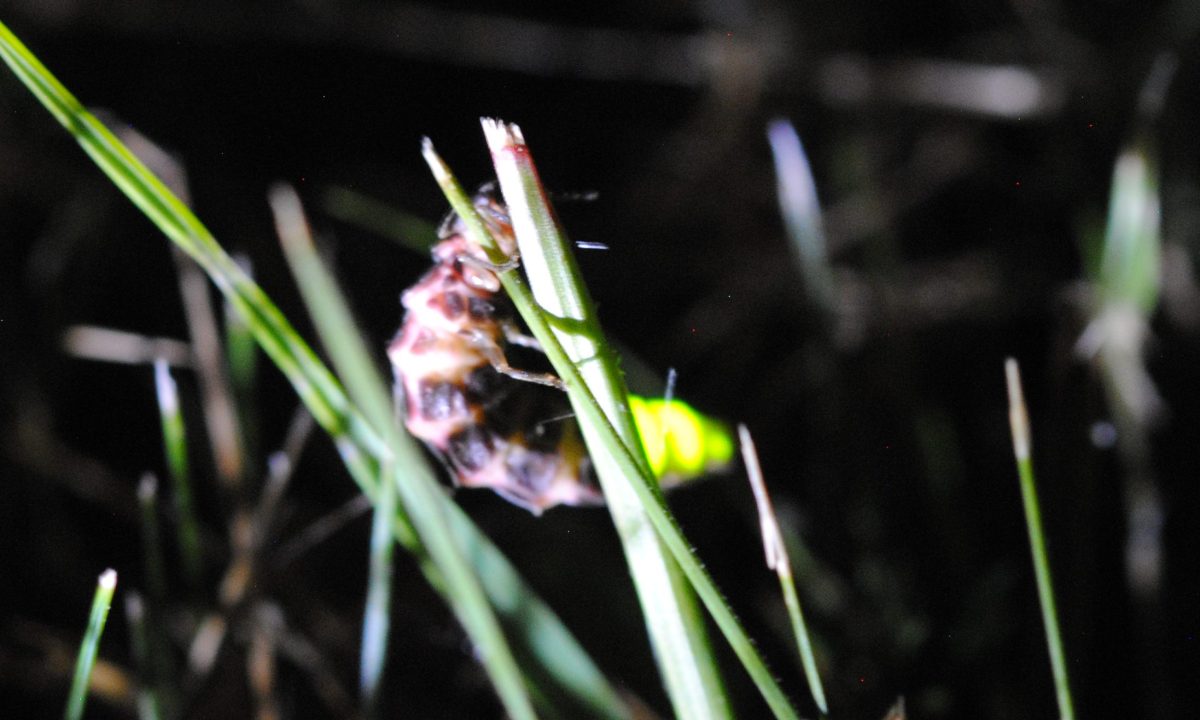
By the time we got back to the church, it was pretty much dark, and I was relieved that we managed to find 3 glowing females in the long grass of the verge just outside the churchyard. Not a very good total, but maybe next year will be better. Glow worm larvae typically spend two winters hibernating as larvae before emerging as adults, so the glowing adult females that we saw back in July probably hatched in late summer 2023. The larvae live on a diet of slugs and snails, which were in short supply in the hot weather this year. We’ll have to have another glow worm hunt next summer to see if numbers have recovered.
The species list can be found here. Thanks as always to Brenda for compiling it.
Sue Morton
 WEST OXFORDSHIRE FIELD CLUB