On 21 April 2024 eight of us embarked on a somewhat risky trip to Barnsley Warren in Gloucestershire, prepared for every challenge from safely parking in a small lay-by right next to a racetrack of a road (The Fosse Way), to climbing down steep steps on a half-hidden bank beyond a hedge, to climbing up and over a rickety ladder stile to land on the side of a precipitous hillside, where the only tracks were those formed horizontally by the age-old tread of sheep.
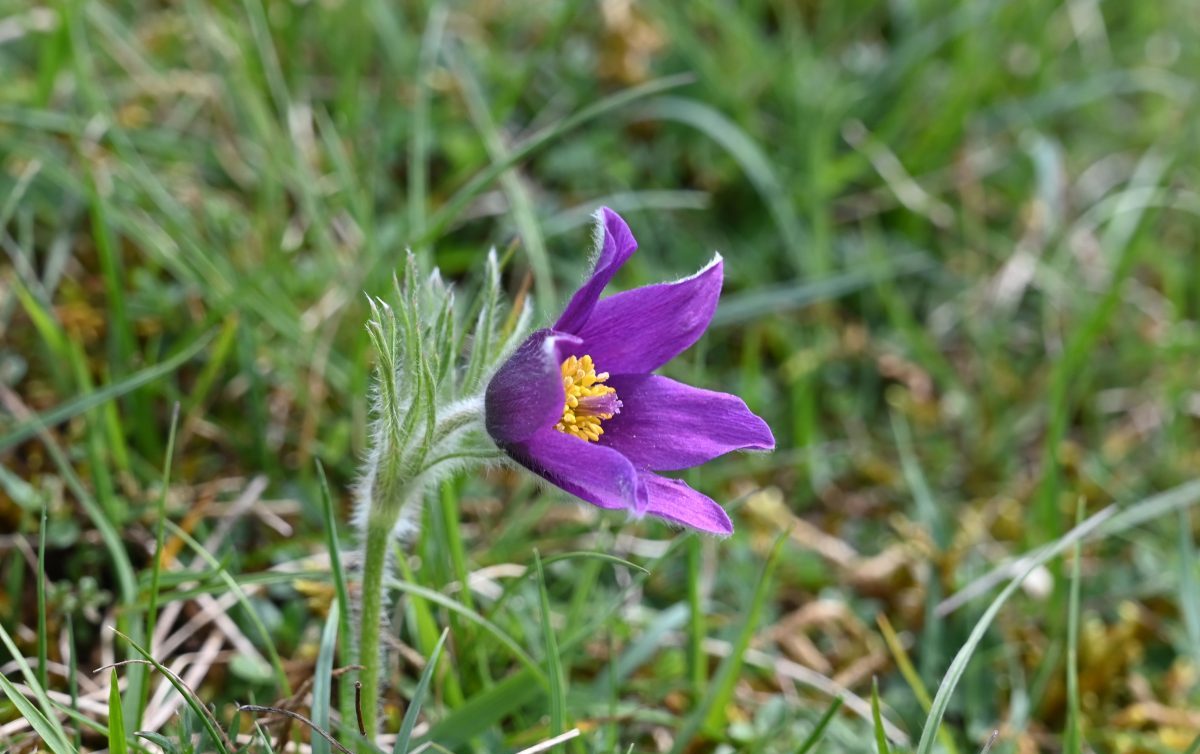
We had come to one of the 17 native sites where Pasque flowers (Pulsatilla vulgaris) still thrive and at this time of year, although hard to spot from a distance, they were coming into flower over large areas of the south facing slopes on this chalk and limestone grassland.
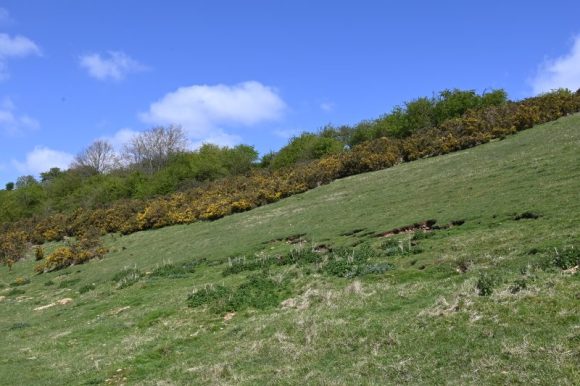
We slowly and carefully descended from one sheep path to the next, watching our step to avoid stepping on buds, gradually getting lower so that we could look at them above us. As they tend to hang their heads, this enabled us to better see the bright golden anthers inside the deep purple petals.
The rarity of this species, caused by a decrease in grazing and the short viability of the seeds, has put this plant on the list of those threatened with extinction. Hence, despite the difficulty of access to this spot, many people come to see them, including on this occasion, a score or so of ‘Wild Medicine’ advocates who had brought with them their yoga mats and spent some time on their backs meditating. (Sue and John made sure no precious plants were squashed in the process!)
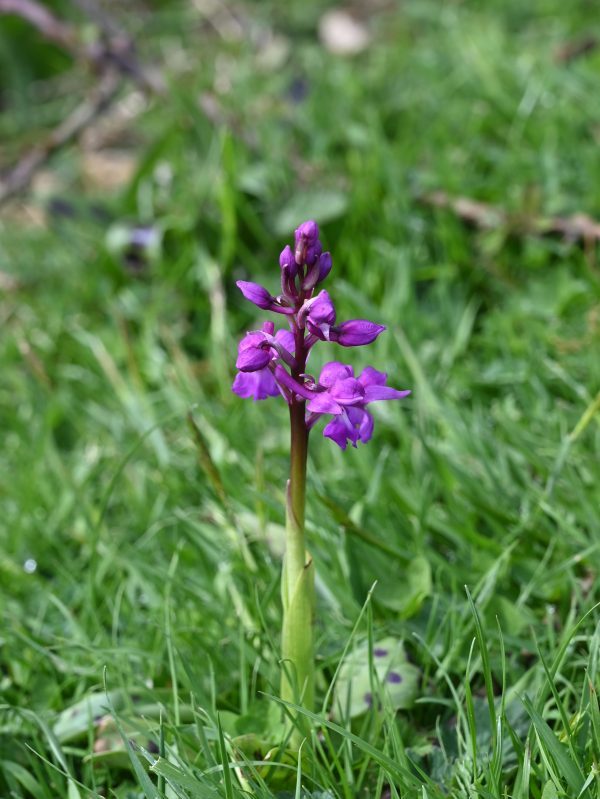
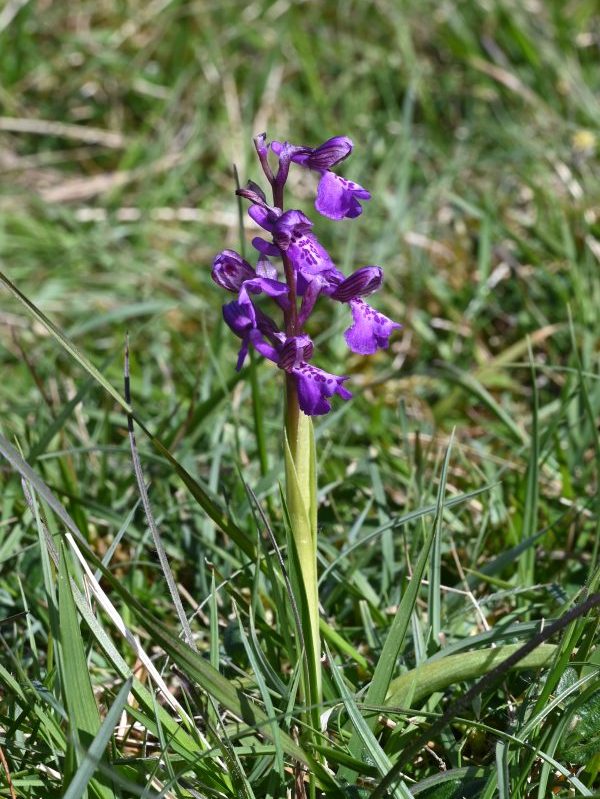
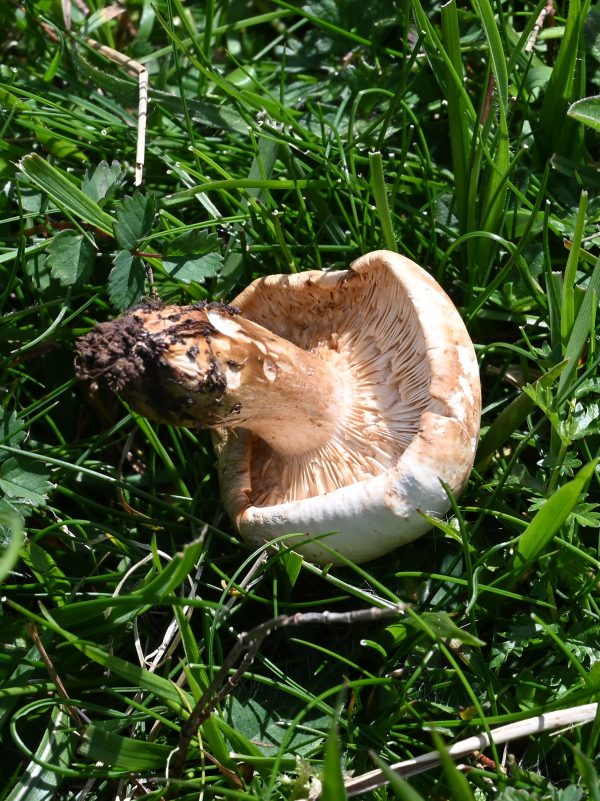
A fair number of other plants, as well as the Pasque flowers, were flowering. In particular the small, but deep blue Common Milkwort (Polygala vulgaris) and, further along the valley, both Early Purple and Green-winged Orchids which gave us the opportunity to study the differences between them. St George’s Mushrooms were growing on some longer, lusher grass nearby.

A pair of lapwings were calling over an arable field at the top of the slope and we were surprised to see a pair of chicks. We hoped that they would survive the attention of the red kites. Other than those, and a blackcap which was singing loudly (presumably in an attempt to be heard over the traffic!) by the layby, there were few birds in evidence.
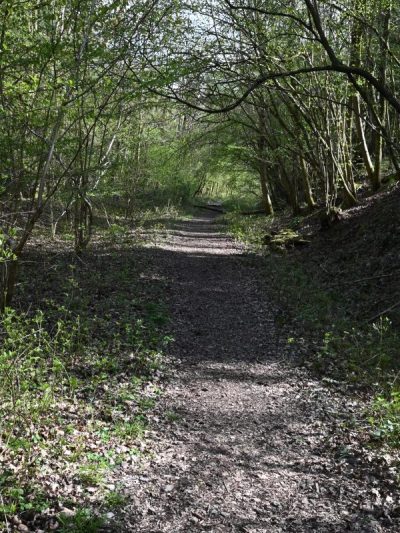
After a good couple of hours or so of serious botanising, and a circuit of the valley via a deep pool of the clearest water seen for some years, we retraced our steps to the cars and drove to Chedworth Roman Villa. There we enjoyed a drink and a snack before climbing up nearly fifty steps to the disused single track line railway line, constructed in late Victorian times, running high up, north – south through Chedworth Woods, but sadly only in operation for seventy years; now it’s a nature reserve managed by Gloucestershire Wildlife Trust.
It was a lovely setting between old rock faces, the winding roots of old trees running down between the stones, ferns and moss on all sides, trees of many types and sizes from recent saplings to huge ancient beeches on the steeply sloping land to either side of the track. A spring above one side of the track – used to supply water to the steam engines – has formed a basin of tufa from which water trickles down either edge.
Walking north along the line brought us to a bridge over a tunnel, through which the line once went, but access is now prohibited by a heavy metal door. To judge by the number of bat boxes there were in the trees, the tunnel must be used by bats as a hibernaculum.
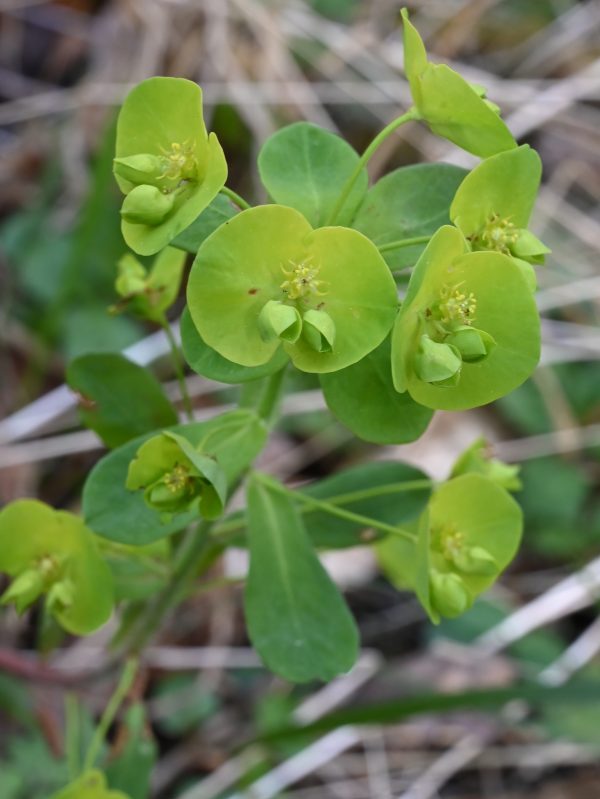
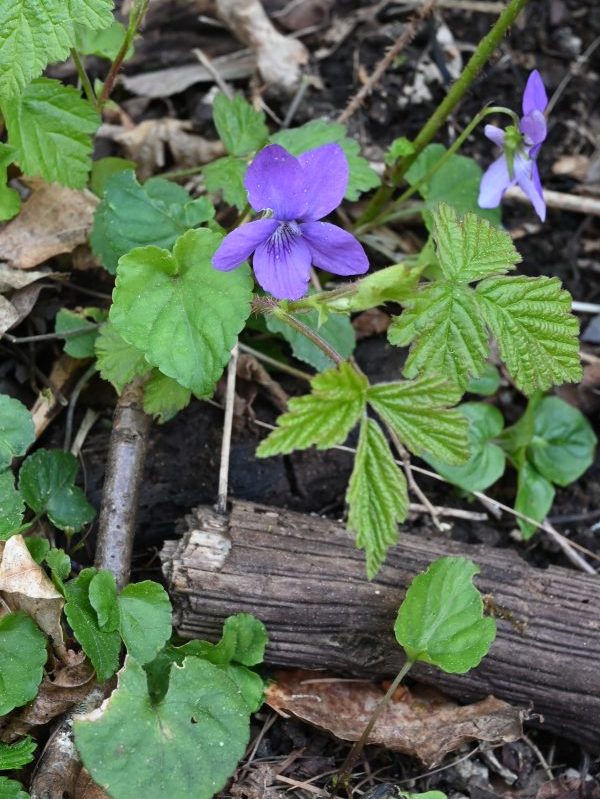
Being shady and damp, the flora of the cutting was quite different from that at Barnsley Warren. Wood Sanicle (Sanicula europea) was particularly abundant, as well as both Dog- and Early Dog-Violets, and Wood Spurge, which can be good for insects, but, perhaps because it was quite cool, there were very few about.
It was cool in the shade but walking back south brought us out into the sunshine and an open view where the ground drops away either side to fields of newly planted trees and far off vistas of forests. Lesley found a couple of Roman snails and we admired some attractive lichen growing on the branches of a small beech.
It was an interesting and varied day of blue skies and sunshine which, despite a very cold wind, was a memorable day enjoyed by all.
Frances Ashling 22 April 2024
The species lists can be found here.
 WEST OXFORDSHIRE FIELD CLUB