23rd April 2026
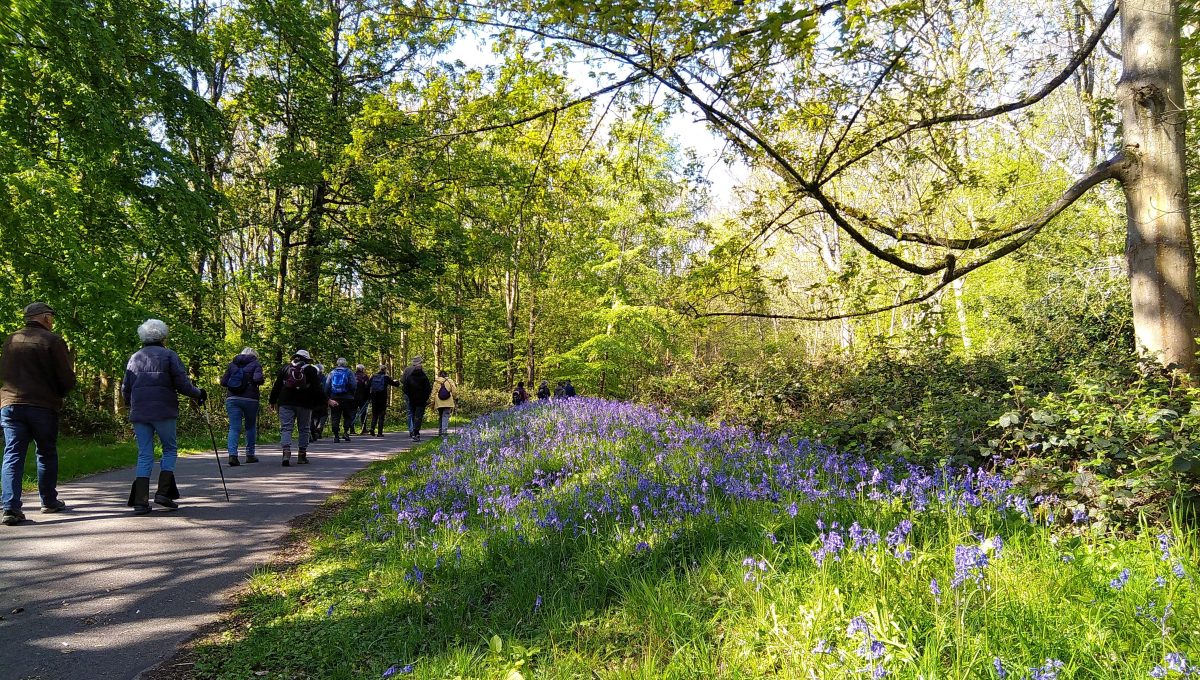
Despite the cloudless skies, it was a chilly start to our recent woodland wander through this celebrated SSSI on Oxford’s doorstep. Blackcaps chorused as about 20 of us gathered in the car park, lead singers over a backing group of chaffinches and other woodland birds.
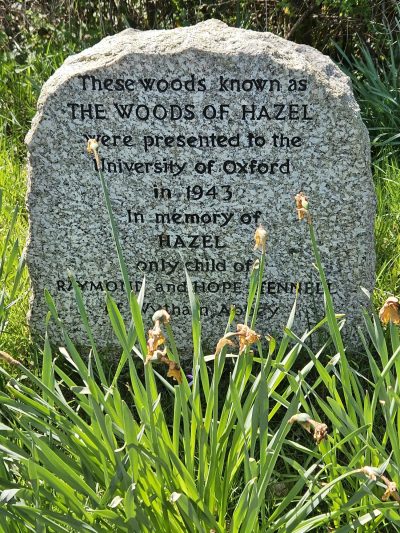
Most moths had sensibly opted for an early night rather than blunder into any traps, but our guide Julian Howe had managed to bag a few interesting ones to show us: among them a Scorched Carpet, well-named for its distinctive wing markings, and a Nut Tree Tussock moth, keeping warm with a furry neck muffler. Temperatures soon rose on the gentle climb towards the Sawmill, an easy stroll on a wide tarmac path. Julian stopped among bluebell carpets at the Three Pines to explain a bit about the history of these woods, generously bequeathed in perpetuity to Oxford University in 1943 in memory of the Ffennel family’s only child Hazel. In the intervening decades, the woodlands have hosted a huge range of scientific surveys and experiments. Over a thousand birdboxes are carefully monitored here, and this year the earliest ever great tit egg was recorded at Wytham on 23rd March. A canary in the climate change coalmine, perhaps?
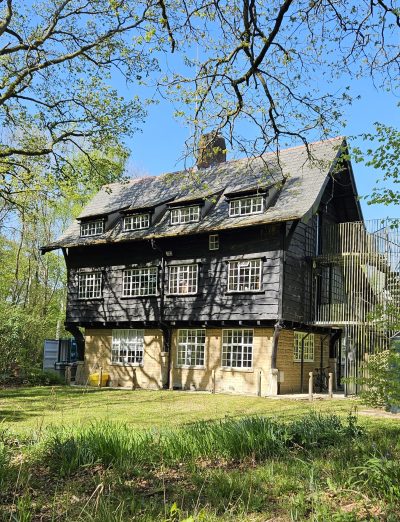
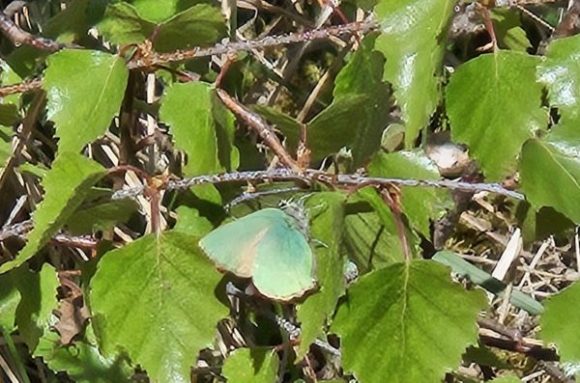
Another doleful development is the relentless march of Ash Dieback disease, now affecting up to 30% of Wytham’s deciduous trees. Among the canopy of newly verdant beech and birch loom the bare ruined choirs of dozens of stately ash trees. The more recently planted pines haven’t fared much better as the dreaded bark beetle takes hold. But our next sunlit glade was more cheering, where cowslips speckled the calcareous soils of an ancient coral reef, as our geology expert John Baker explained. And here, with uncanny precision, Julian alerted us to a low hazel bush, where two small butterflies were conducting a vigorous pirouette. Not, as we fondly imagined, some ecstatic courtship dance, but a furious battle for territory. Between bouts, the exhausted male pugilists obligingly settled right before our eyes and batted their jade-green wings at us, oddly conspicuous against emerald birch leaves. All the UK’s hairstreaks are found in these woods – these, of course, were the green ones. There are other butterfly rarities too: silverwashed fritillaries and dingy skippers, even purple emperors later in the summer.
Sadly, we didn’t hear any cuckoos, or spot goshawks displaying overhead, but on the return loop of our circuit through the woods, we enjoyed the sight of a few swallows prospecting for nesting sites around an outbuilding. Our last few steps took in extensive views towards Headington and Wolvercote, where the startling Red Hall dominates the scene, an innovative contribution to Oxford’s scientific workspace, or a blot on the landscape? Discuss.
Lindsay Fisher
1 May 2026

