10 August 2026
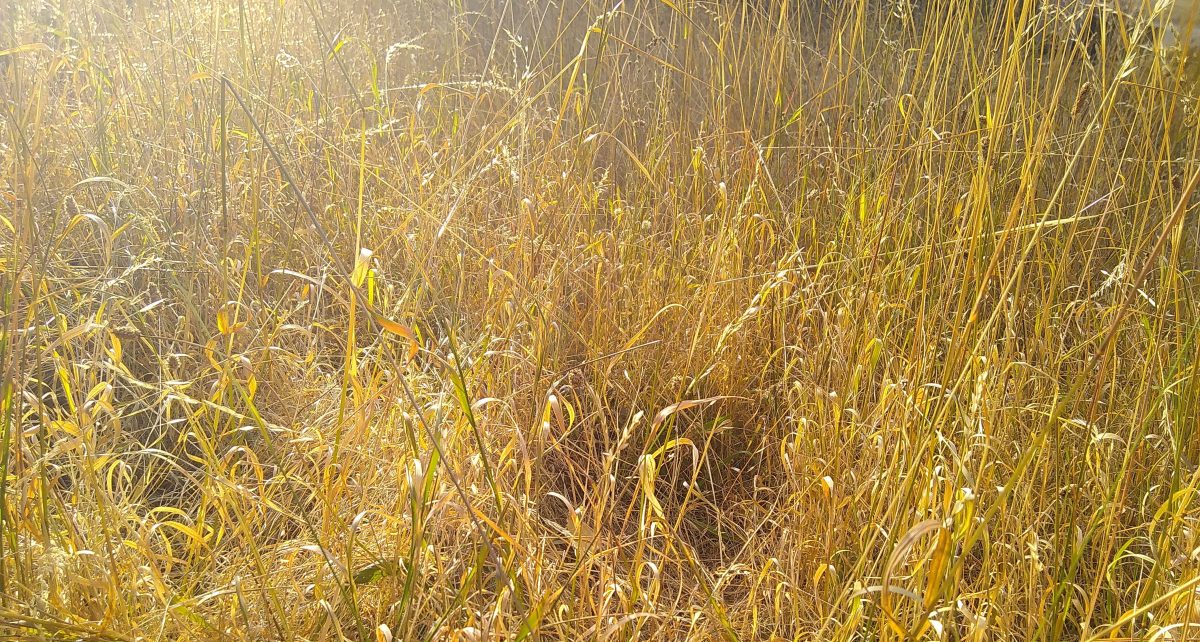
For some years I have left part of my lawn uncut after the cowslips have finished flowering. “No Mow May” has gradually turned into No Mow June, July and August, and various plants and insects have moved in. Then the other day I made a startling discovery – read on to find out what it was.
By this time of year, my “meadow” is looking pretty rough, and I was wondering if it was time to get the shears out and start cutting it, when I saw what looked like a large wasp low down in the grass. When I looked more closely, I saw that it was in fact a female wasp spider sitting in a web that she had spun between the grass stems. It was only the second one I have ever seen, and I certainly wasn’t expecting to find it in my garden.
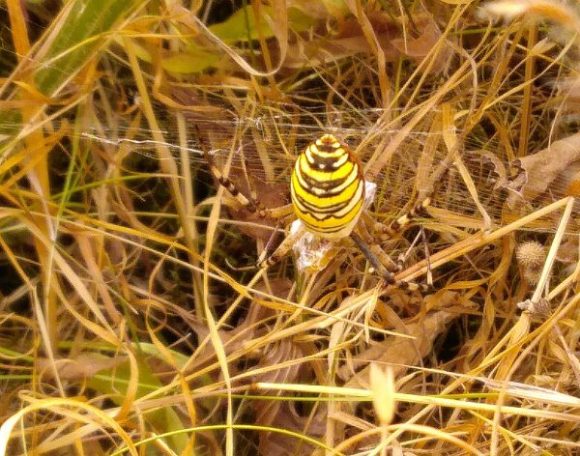
After a bit of research, I discovered that wasp spiders arrived in the UK in the 1920s and have been slowly spreading north since then. They build their webs low down in “rough grassland”, the better to catch grasshoppers and crickets. Indeed, today’s lunch for the spider appeared to be an orthopteran of some sort, although I couldn’t see exactly what through its silk wrapping. It certainly had long back legs, though.
I also discovered that male wasp spiders are much, much smaller than the chunky females and are at high risk of being eaten. Apparently they lurk around on the edge of the web until the female has just moulted out of her old exoskeleton, then dash in to mate while her jaws are still soft. Unfortunately that plan often ends up with the male being eaten anyway. Who’d be a male spider?
This gives me an excellent excuse to delay cutting the meadow for a bit longer, at least until the spider’s large egg-sac has been found and moved to a safer place. According to other enthusiasts posting online this is likely to be in September. Crickets are less trouble!
Sue Morton

