31st March 2026
It’s quite a long drive to Salisbury Plain, but the draw of being able to see Great Bustards was enough for twelve members of the Field Club to make the journey.
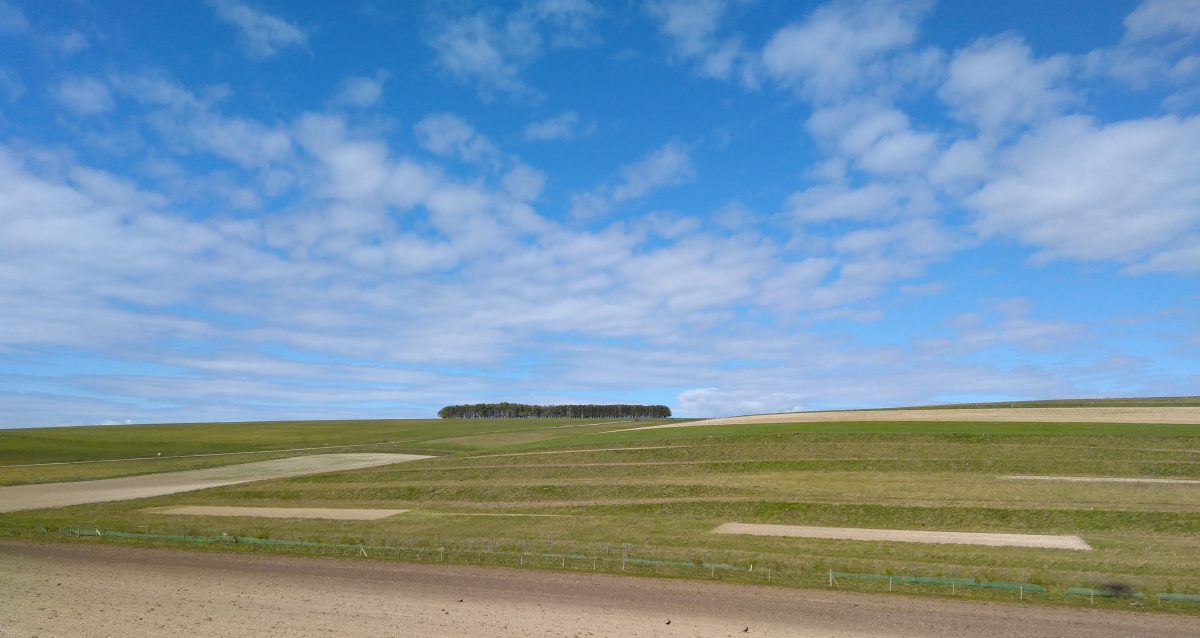
We were met by two volunteers from the Great Bustard Group who gave a preliminary overview of the history and behaviour of the Great Bustards before we climbed into proper old-fashioned Land Rovers to drive up rather bumpy MOD tracks to look for them. The views across the Plain were stupendous.
Great Bustards were native to this country but went extinct here in the 19th century due to hunting and habitat change. The Great Bustard Group initiated a programme of reintroduction, with the first chicks being brought over in 2004 from Russia but with limited success. However, eggs were then brought over from Spain in 2014 from birds that are genetically more similar to our native bustards and have established rather better. There is now a population of approximately one hundred and with no further need for reintroduction.
The birds are large; females weighing in at about 10kg while males are 20kg. The ratio of males to females is 1:3. For most of the year the sexes remain separate, only getting together from Spring until late April/May. The females lays three eggs but only one generally survives and this chick will remain with its mother for up to seven months.
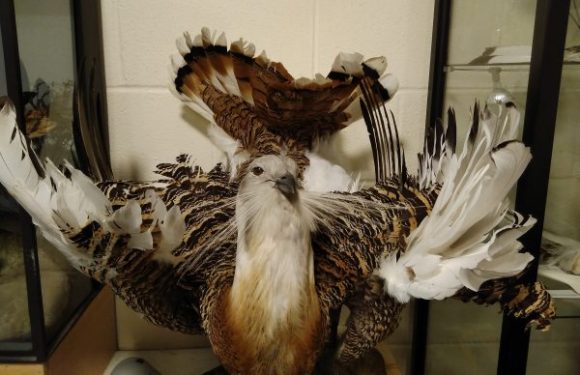
We stopped for a view of the bustards from quite a distance. The birds are very shy of humans, (although quite oblivious to gunfire coming from the ranges!) The males were in full plumage and displaying their finery whilst strutting about looking stately. The females appeared disinterested..
Driving on to a hide, we could see the pens where eggs hatch and where the young are fed manually. Some of the eggs would previously have been sent to a specialist unit at the Cotswold Wildlife Park where technology can establish exactly when the eggs are about to hatch, at which point they are returned. Later the chicks are moved to an aviary and later released. Rearing of chicks is precarious due to predation, weather conditions etc, so following this regime increases the likelihood of survival.
In front of the hide, areas are laid out in rectangles for different purposes. One, to attract Stone Curlews, although, sadly, we didn’t see any, while others are for egg laying. The Great Bustard Group works closely and very successfully with local farmers who are really involved in creating the right habitat for the Bustards, sowing and harvesting a variety of crops to feed and protect the birds.
The long journey was really worthwhile. Our guides were very informative and we all learned so much about these birds. Many thanks to the Great Bustard Group and a very big thank you, too, to the weather, which was perfect!
Julia Reid

