31 May to 3 June, 2026
The Wyre Forest, near Kidderminster in Worcestershire, is a hidden gem, little known outside the area but rich in wildlife. Luckily for us, the Club’s President, Peter Creed, knows it well and led us on a three day visit in late May/early June.
After our arrival at our comfortable accommodation, we decided to go for an introductory walk in the forest before supper, as there was a bridleway leading into it just over the road. Everthing we saw had the preface “wood” – Wood Speedwell, the slender leafed Wood Dock, Wood Melick, Wood Rush, Wood Anemone and the very industrious and ubiquitous Wood Ants that were scurrying across the forest floor and building their large rounded nests. Peter told us about the Shining Guest Ants that share the nests, but no-one volunteered to burrow into the nest to find one!


Click on an image to enlarge
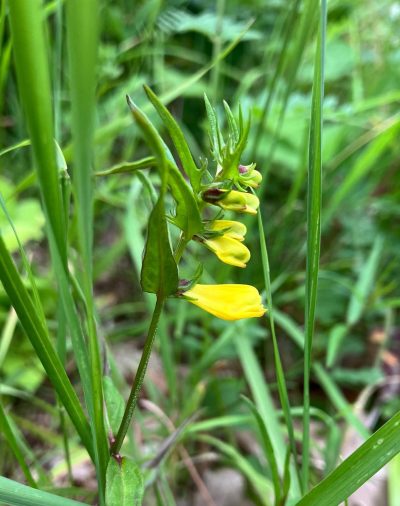
On Monday we set off along the disused railway line high above the Dowles Brook finding a large range of trees, plants and insects. It is the more acidic soil that produces the variation – the Ling heather, the Western Gorse with its much thinner spines and less bushy than the Common Gorse that we get at home. Highlights were the rare Brown-banded Carder Bee, a large Drinker Moth caterpillar and a black-headed scarlet coloured Hazel Leaf-roller Weevil. Peter was delighted to find the drooping Mountain Melick grass, now a very rare plant, and the unusual Wood Poa grass whose leaves grow out at right angles. We all agreed that Cow Wheat, the yellow flowered, semi-parasitic plant was “flower of the day” as it covered one of the steep woodland banks near Knowles Mill, a former paper mill standing by the Dowles Brook as it made its way to the River Severn. The white flowered pignut was growing beside the path (so named as pigs used to root up its substantial nut-like root), with common valerian. Our last interesting plant find was along a damp path where the blue flowered Brooklime was growing, its name derived from its habit of breaking through limen (limen is the ancient name for mud) but Brenda taught us the Latin name of Veronica beccabunga which we all learned. We enjoyed the almost continual sound of Song Thrush, Blackcap and Chiffchaff as we walked, with a good view of a fallow deer in this National Nature Reserve. Tea in the friendly Bewdley Community Café was the icing on the cake!
Click on an image to enlarge
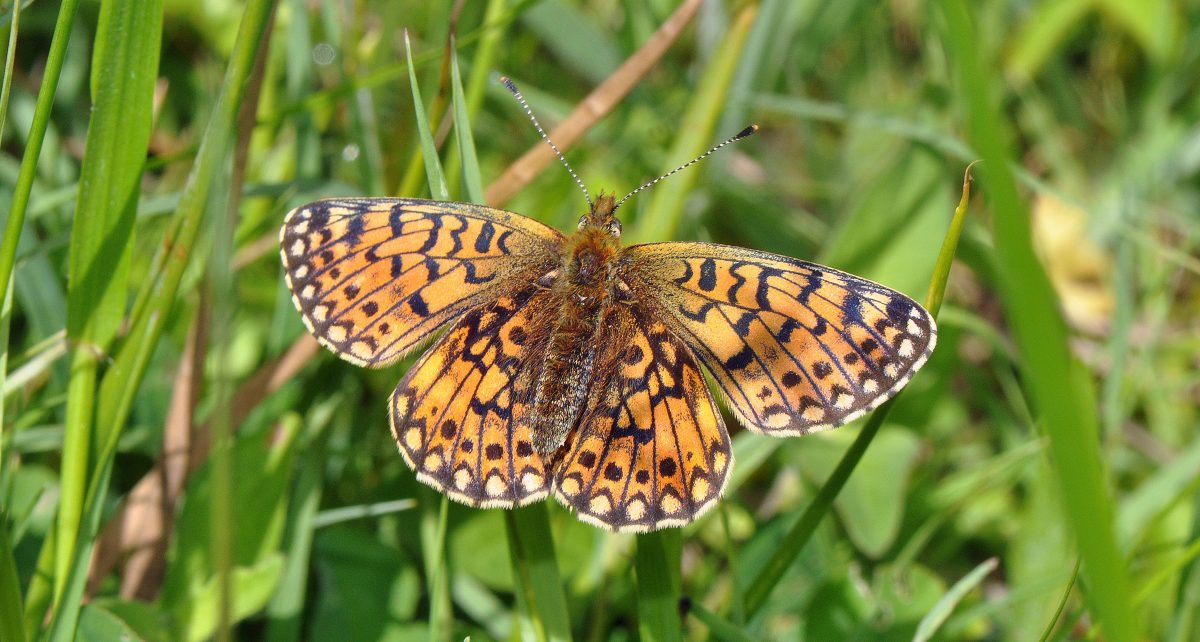
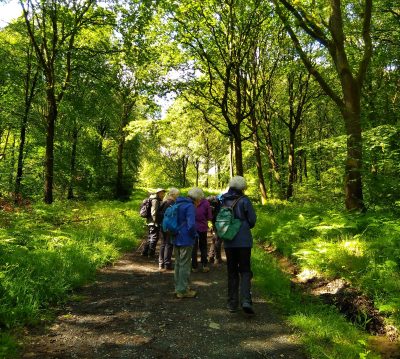
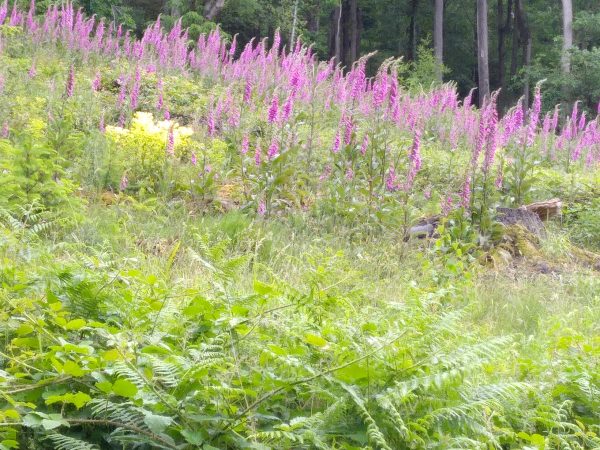
On Tuesday we followed the track from the Buttonoak car park south to the Dowles Brook. Sun shone on the tall oak trees, again with the glorious sound of Song Thrush. There were numerous Common Spotted Orchids and Speckled Wood butterflies. A wide ride in the forest (cleared originally for the Elan Valley pipeline) yielded many riches. It started with the flowers – so many orchids, Eyebright, Thyme-leaved Speedwell, and the pink flowering and low-growing Lousewort. There were also big stands of Foxgloves in the cleared sections of the woodland and the curiously named Wood club-rush, which is actually a sedge. We did triumphantly find one flower of the pale purple Wood Cranesbill, here at the southern limit of its range, compared with the more vividly coloured Meadow Cranesbill. It was the butterflies, however that created one of the greatest excitements of the day – first a Common Blue then the Small Pearl-bordered Fritillary, all with the strong aroma of the water mint growing in the damp soil. Sue found a piece of wood with the green colouring made by the Green Elf-cup fungus.

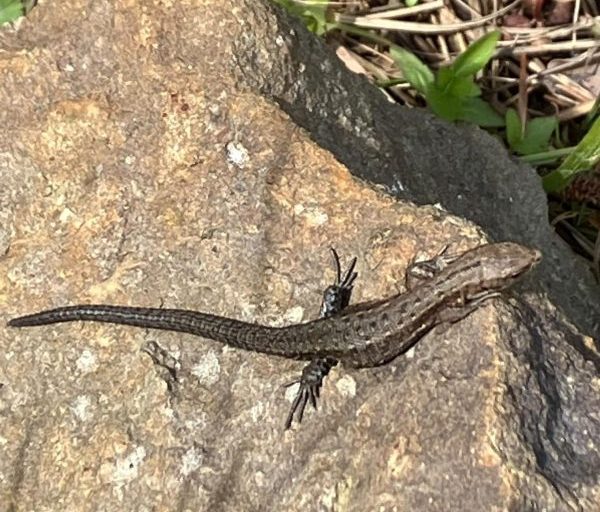
Alongside the path was a shallow ditch filled with a hundred or so small newts, a water boatman and some very thin worms. At lunchtime a nearby Alder Buckthorn tree was humming with bees, with a brimstone butterfly fluttering around – this is its foodplant. We’d seen the weird effect that a gall had made on the sloe’s fruit turning them oblong and pale-yellow ochre so that they looked like tiny bananas on the trees. Further on – lizards basking on the warmth of the rocks, then passing the enclosure where some beavers were released in 2024, with either an artificially or naturally made beaver dam (it was hard to tell), certainly it had dammed the water back. Down to the Dowles Brook again, now resembling cream of tomato soup after heavy rain had washed the local red soil into the water – to watch the Beautiful Demoiselles and catch a glimpse of two Redstarts and a Nuthatch.
Back to another welcome tea at the café in Bewdley to end with a visit to Thomas Telford’s fine stone bridge spanning the River Severn to see a goosander with her eleven young.
On our final day, some of us headed home while the remainder went with Peter to Hartlebury Common just outside Stourport, a sandy heath with different flora to the oak woods, and interesting insect life. Sadly the weather wasn’t good for insects, but we saw some different plants as we walked round.
Thank you Peter for your patient and enthusiastic leadership as ever, to Brenda for her meticulous plant list which can be found here and to Sue and others for all the arrangements.
Elaine Steane

