10 June 2026
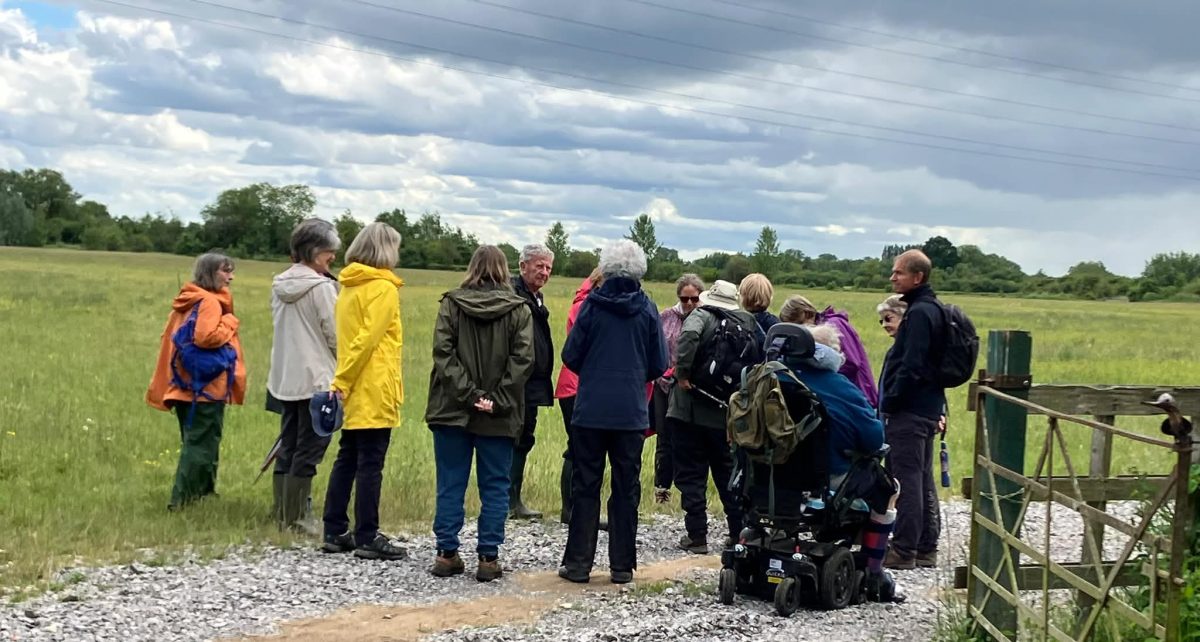
The visit to Long Mead Meadow at Swinford, near Eynsham, was arranged following a talk given to us by Catriona Bass in the autumn and presented a great opportunity to see what we had learned about for real.
Long Mead is a small site of 10 hectares, much of which is a 1000 year old flood plain meadow, and also includes some woodland and a traditional orchard. Since the 14th century, villagers were known to have drawn lots for a piece of land for grazing and hay. The Long Mead Foundation has owned the site for 25 years, producing nutrient rich hay and grazing without pesticides or fertilisers. The meadows are usually cut for hay in July, dependent on weather conditions, then grazed by sheep in the autumn. Over the winter, the river floods, adding silt and enriching the land.
Click on an image to enlarge
The Foundation is working on creating a meadow network and is already restoring meadows across the road from Long Mead as well as on the Cherwell, Christ Church Meadows and other sites.
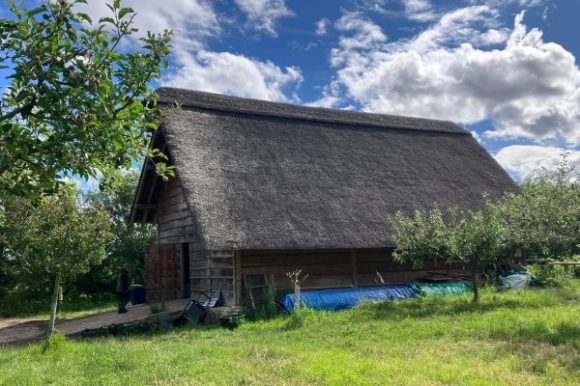
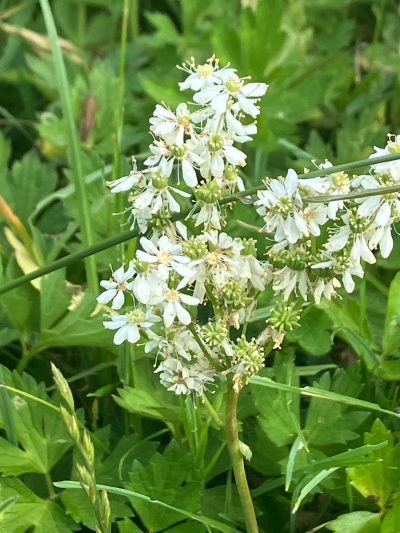
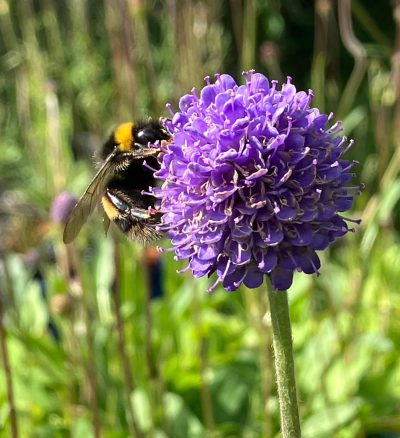
We were met by Jodie, Long Mead’s propagation expert, who walked with us across the meadows, pointing out the different varieties of plants and discussing management and potential for the meadows. A wonderful array of flowering plants greeted us, including Tubular Dropwort, Great Burnet, masses of Yellow Rattle and Devils Bit Scabious. Heavy flooding over the winter has led to an abundance of sedge in the meadows. Nothing can be done to alleviate the problem and it is hoped that next year will be less wet.
Seed from the rare meadow plants is collected and sown in pots in Spring by volunteers. The resulting plants are then potted up and planted in the Autumn. Everything from pots to labels is reused or recycled and no chemicals are ever used.
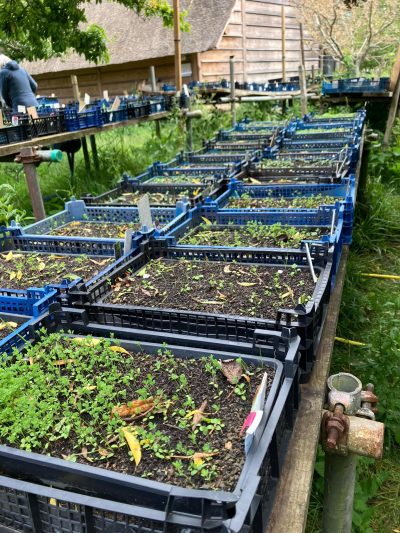
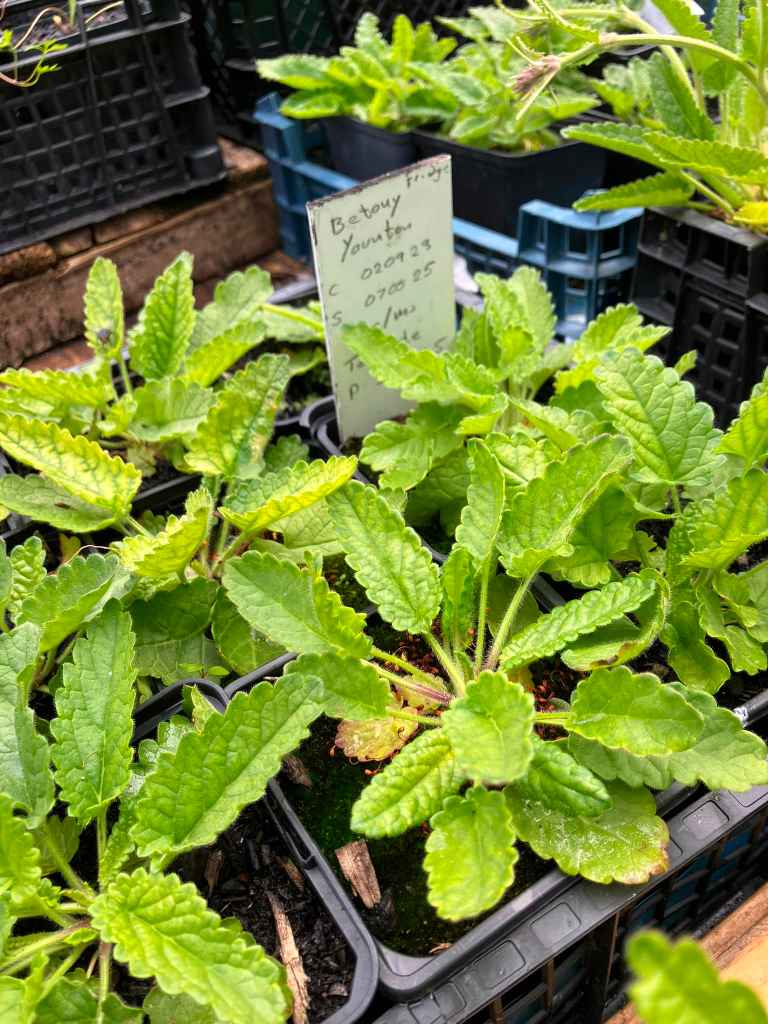
There was no doubt that the gods were kind to us today. Rain had been torrential until our arrival and then suddenly stopped, allowing us to enjoy the meadows in a mix of sunshine and cloud.
Many thanks to Catriona and Jodie for organising and leading a fascinating walk. I think most of us were struck by the sheer dedication in creating this network with so many volunteers, community involvement and hard work. Thank you also to Brenda for compiling the plant list, which can be seen here.
Julia Reid

