6th September 2026
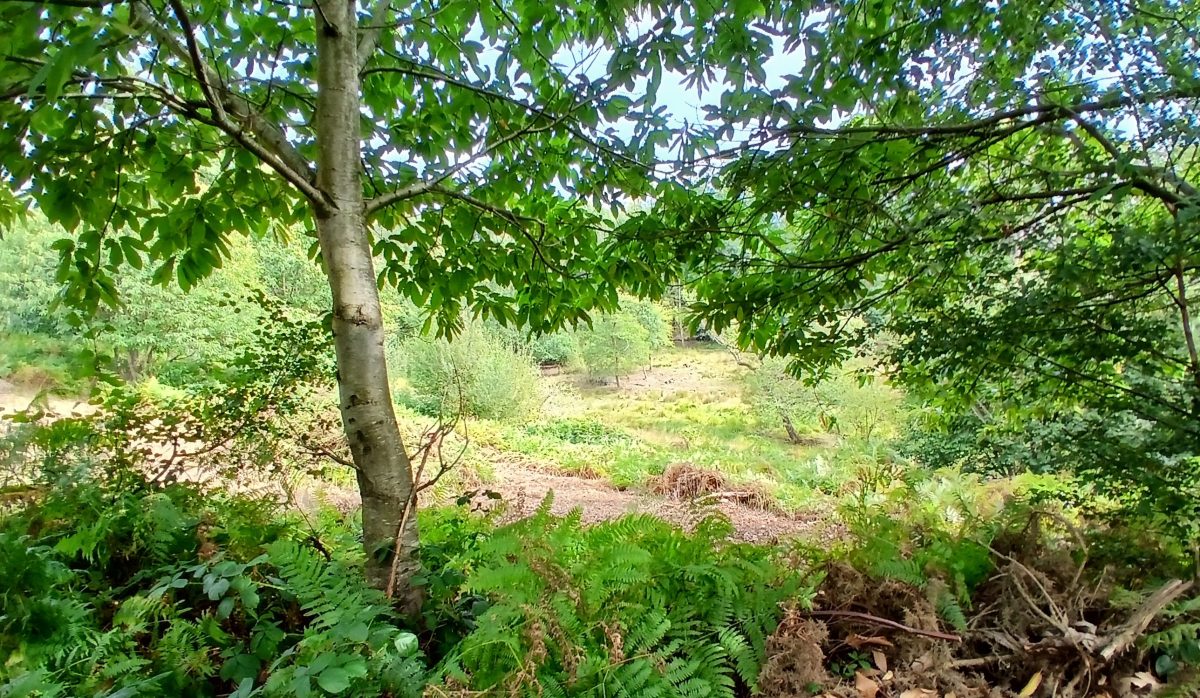
This BBOWT reserve just outside Oxford has it all – limestone grassland, broadleaved woodland, heathland, a stream and a fen, all in a 20 hectare area. A small group met to explore this interesting site at the end of a prolonged dry spell, but before the rains started in earnest, so the going underfoot was still good.
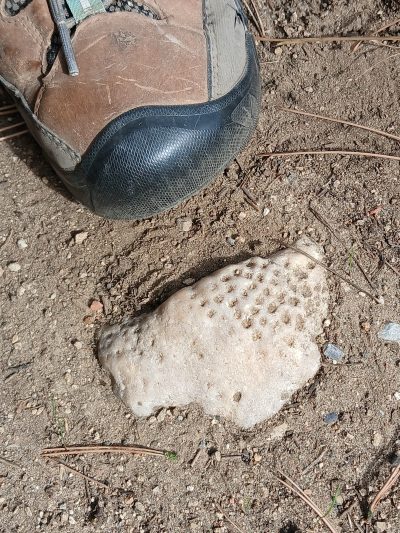
We could have done with an expert to tell us about the geology of the area. The bridleway access track from the road was pretty much pure sand, but areas of the reserve are on limestone. We found an interesting fossil on the track, which the Club’s go-to geologist, John Baker, has since identified as probably being a colonial coral, commenting that it’s possible to see the hexagonal skeletal structure of several polyps quite well.
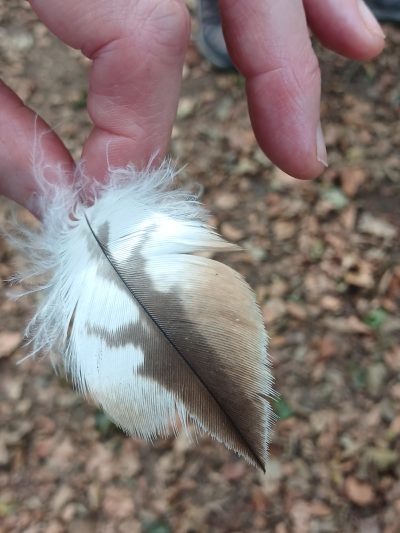
The entrance to the reserve is through an area of broadleaved woodland, and one of the first thing we found was this unusual feather, which Adrian later identified as belonging to a juvenile buzzard.
We continued on to an area of limestone grassland full of the seedheads of plants such as knapweed, scabious, wild liquorice and rock roses. Brenda did a grand job of identifying the plants from their dried-up remains, and her list can be found here.
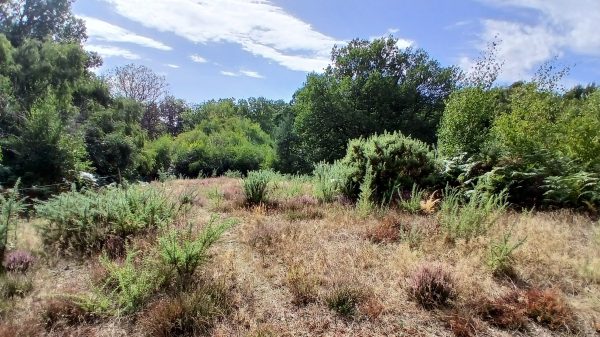
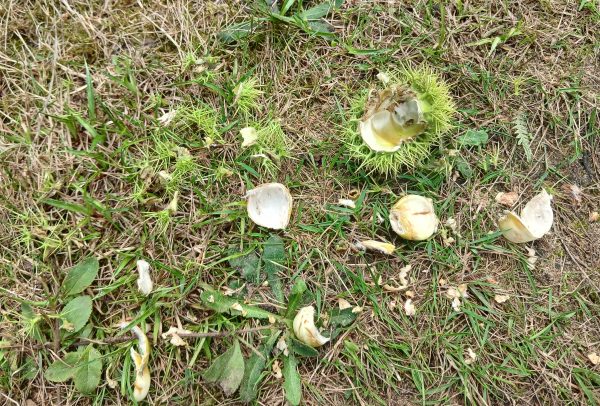
Our route took us down a flight of rough steps to the lower part of the reserve, where the damper conditions produced much lusher vegetation. Once back up on higher ground we found ourselves on an area of sandy heathland (which is rare in Oxfordshire) with bracken, gorse and heather. The trees in this area were mainly sweet chestnut and scots pine. There were many prickly sweet chestnut husks on the ground; some of them had been opened and the chestnuts inside nibbled by something – bird or mammal? Maybe a grey squirrel?
Altogether an interesting afternoon, much enjoyed by all.
Sue Morton

